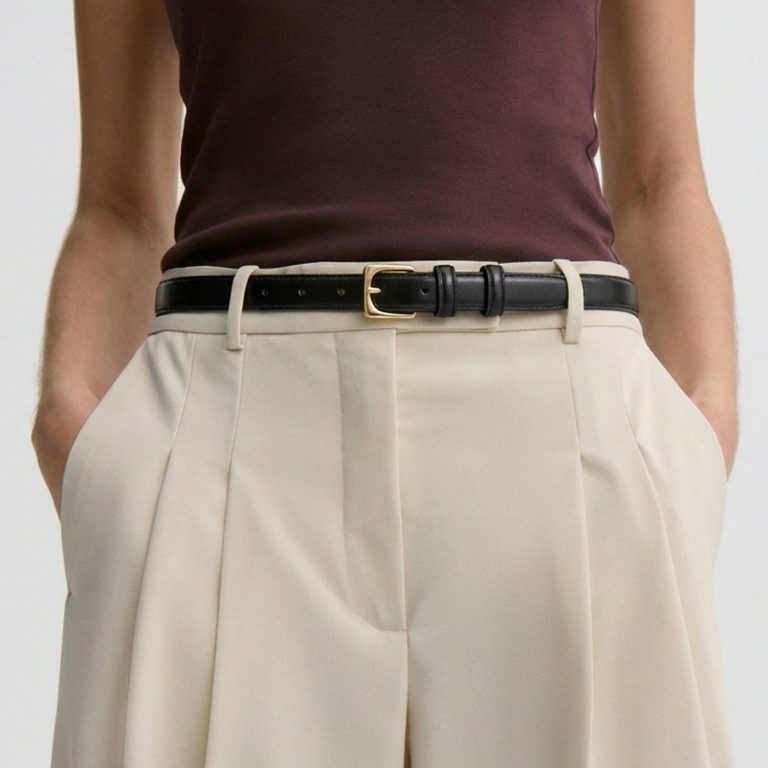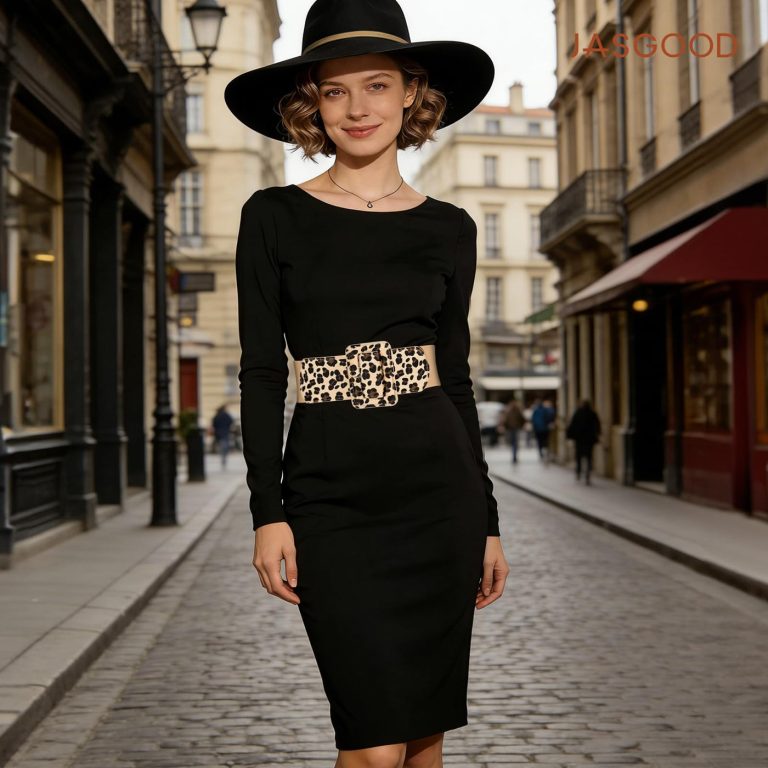
Belt placement changes both the shape of an outfit and the length you need. A belt through trouser loops follows the garment’s waistband; a decorative belt over a dress gives you more freedom to experiment.
In this guide
Separate support from decoration
For trousers, start where the waistband is designed to sit. Pulling it higher with a tight belt can distort the rise, pockets and leg shape.
For a dress or long top, try a loose ribbon at two positions before buying. Measure around each position over the clothing, keeping the tape comfortable rather than compressed.
Compare adjustable options in JASGOOD women’s belts using those measurements. A product that fits your natural waist may not have enough length for a hip placement, especially if you want a hanging tail.
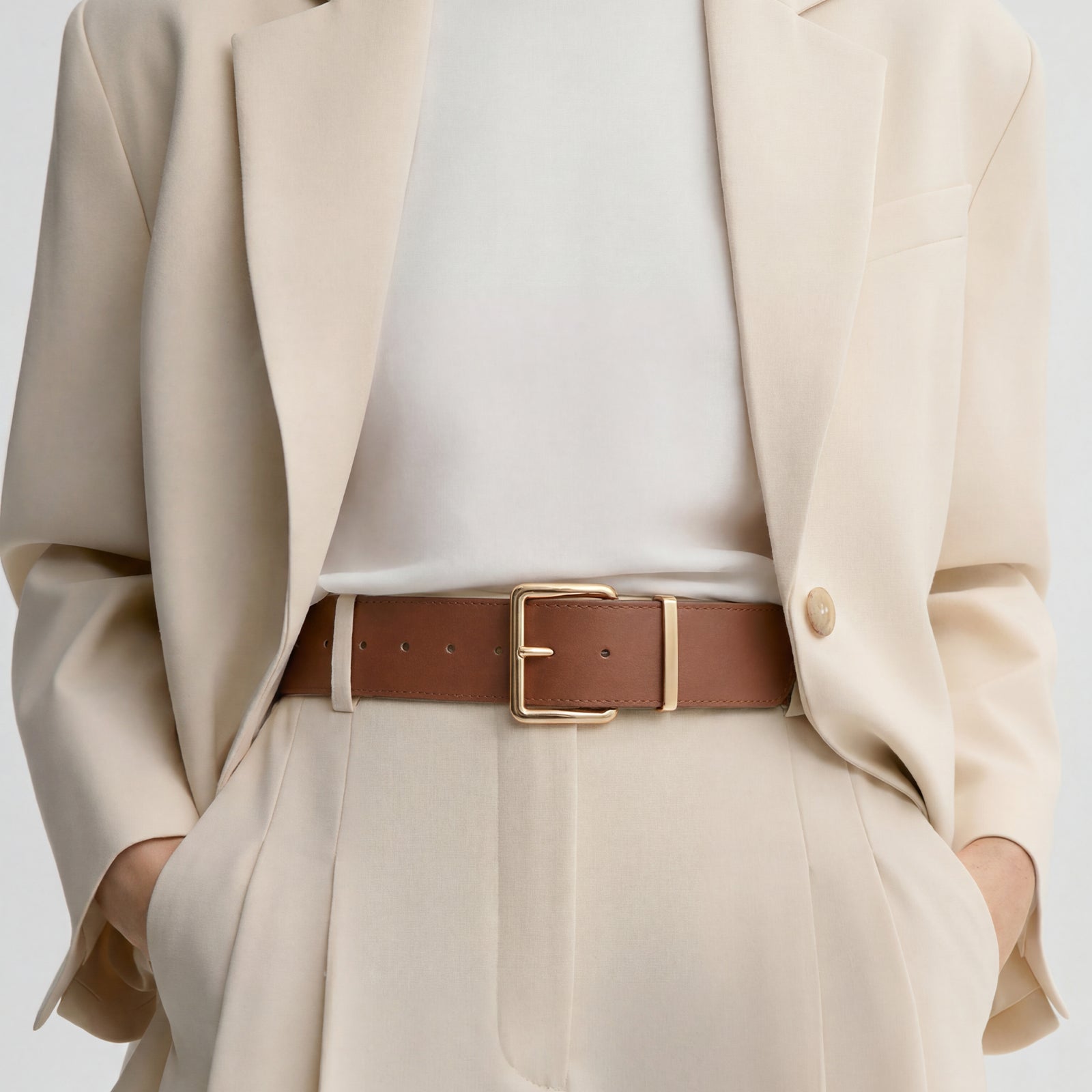
At the natural waist
This placement can gather a loose shirt dress or give a cardigan a defined middle. Start with a moderate amount of fabric beneath the strap and spread the gathers evenly.
Check the distance between the top of the belt and your ribs while seated. If the belt folds or presses, try less width or a different position.
For a tucked blouse and high-rise trousers, follow the waistband rather than trying to impose a separate waistline across it.
At the upper hip
A lower placement can give a straighter dress or long knit a relaxed feel. Keep the garment smooth above the belt instead of tightening until it bunches.
A decorative chain is useful for experimenting with a draped line. Walk and turn to see whether the chain stays where you intend or slips to a wider part of the hip.
Low-rise jeans set their own position through the loops. Measure there, not at a different waist point used for another pair of trousers.
Slightly off-center
A side clasp or short diagonal drape can add interest to a plain outfit. Check the side that carries the extra weight and keep any tail clear of pockets and seating.
If the arrangement constantly rotates, a more centered fastening may be easier to wear.
Choose by the garment and your comfort
There is no single correct position for every body or outfit. Compare front and side views, then sit, reach and walk in each version.
Keep the option that gives the shape you want without requiring excessive tension. Record its measurement separately so future shopping reflects where you actually wear the belt.