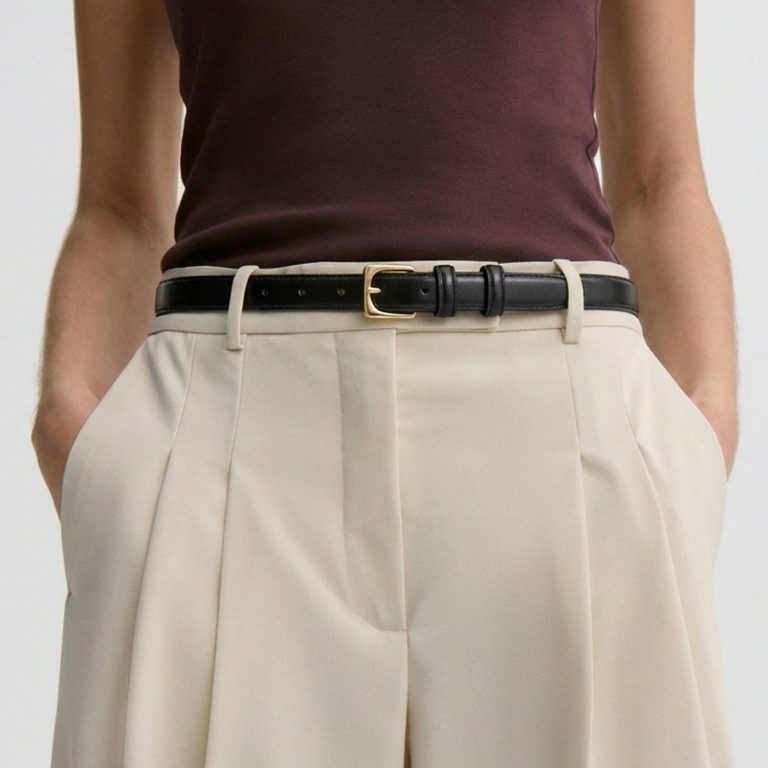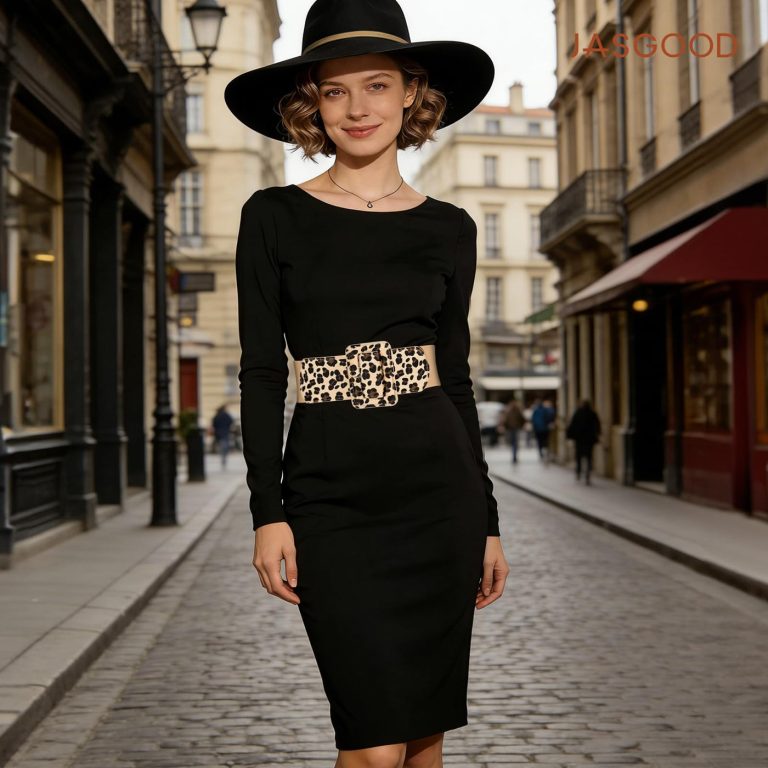
Belt trends are easier to evaluate when you separate the styling idea from the urge to buy the exact item in a picture. Look at what has changed—placement, width, hardware or contrast—and test that change with your own clothes.
In this guide
Name the visible idea
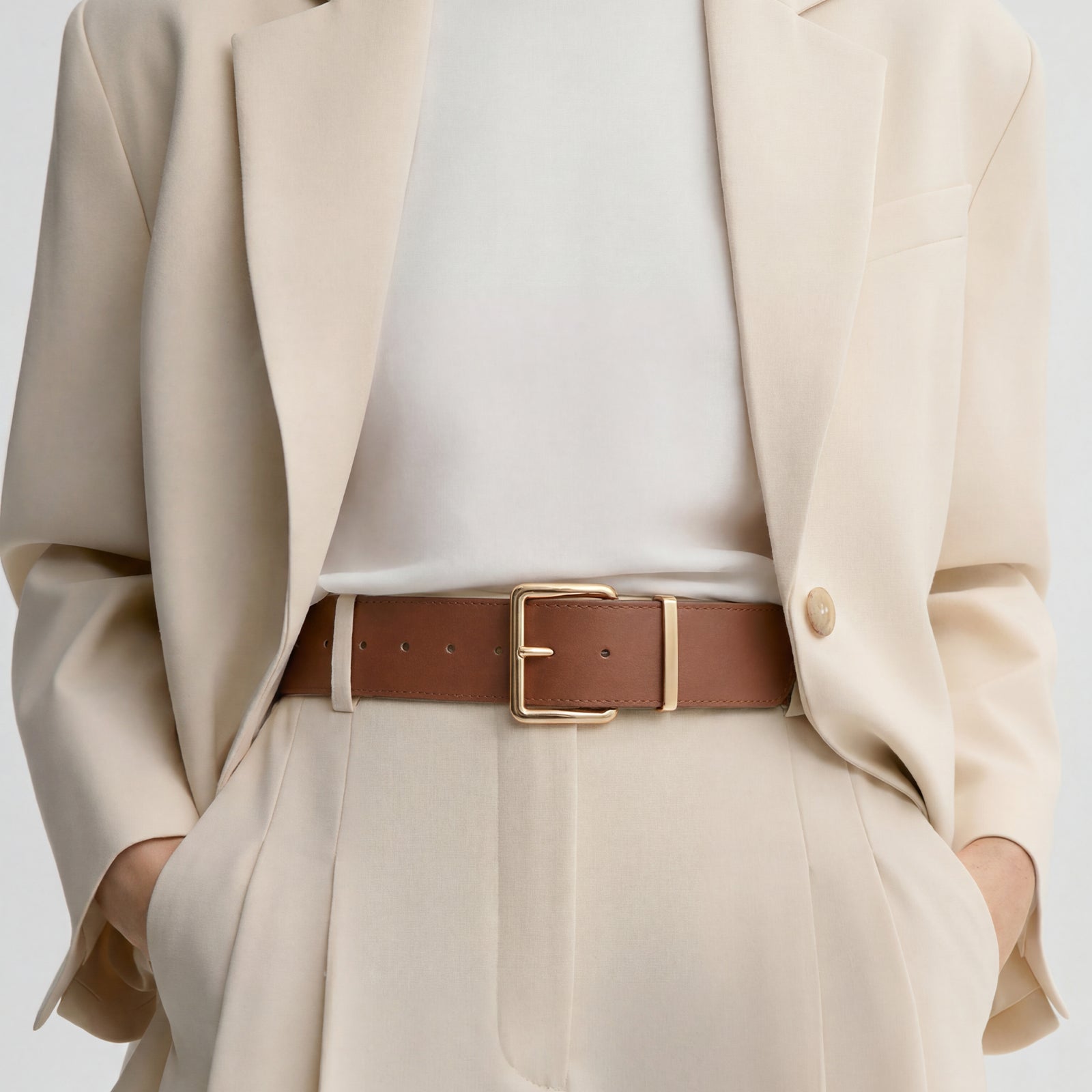
A low chain drape, a broad waist belt and a small buckle on tailored trousers solve different visual problems. Describe the feature that interests you rather than treating them as one general trend.
Also consider the photograph’s styling. A pose, open jacket or carefully arranged hem may make an accessory more visible than it will be during an ordinary day.
Use JASGOOD women’s belts to compare relevant shapes after identifying the idea you want to try. Check dimensions and fastening before choosing a similar look, and avoid buying solely because a product resembles a reference image.
Test four elements separately
Scale
Try a narrower or broader belt with the same outfit. Keep the top, shoes and bag unchanged so you can see what the width contributes.
Measure the loops and test seated comfort before deciding that a larger scale is practical.
Placement
Compare the natural waist with a lower decorative position when the garment allows. Measure each position separately; the same belt may not fit both well.
Hardware
Swap a quiet buckle for a more visible one, or try a compatible chain. Notice whether the new detail improves the outfit or competes with existing buttons, jewelry and bag hardware.
Contrast
Compare a tonal strap with one that stands out against the clothing. A color change may capture the idea without requiring a completely different belt construction.
Make a three-outfit test
Before buying, name three outfits you would actually wear with the new belt. They can serve different occasions, but each should work with clothes you own or already need.
If the belt only works in a highly specific photographed arrangement, decide whether that limited use is still worthwhile to you.
Keep useful experiments
A trend can introduce a shape you continue wearing long after it stops appearing frequently in your feeds. Conversely, you can enjoy an image without turning it into a purchase.
This guide does not rank what is currently fashionable or predict the next season. It offers a way to assess new ideas through your wardrobe, comfort and habits, so the result remains personal and practical.