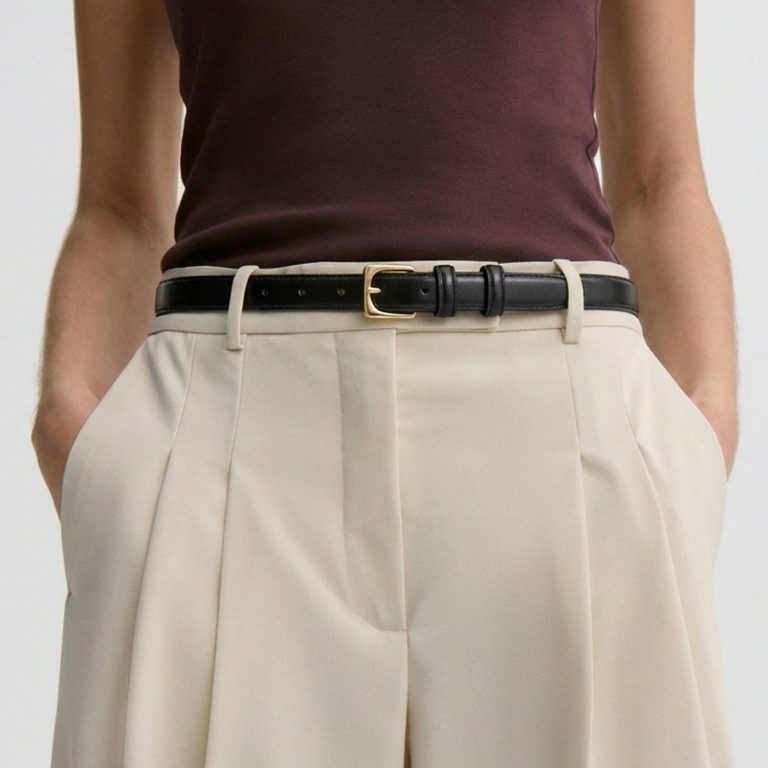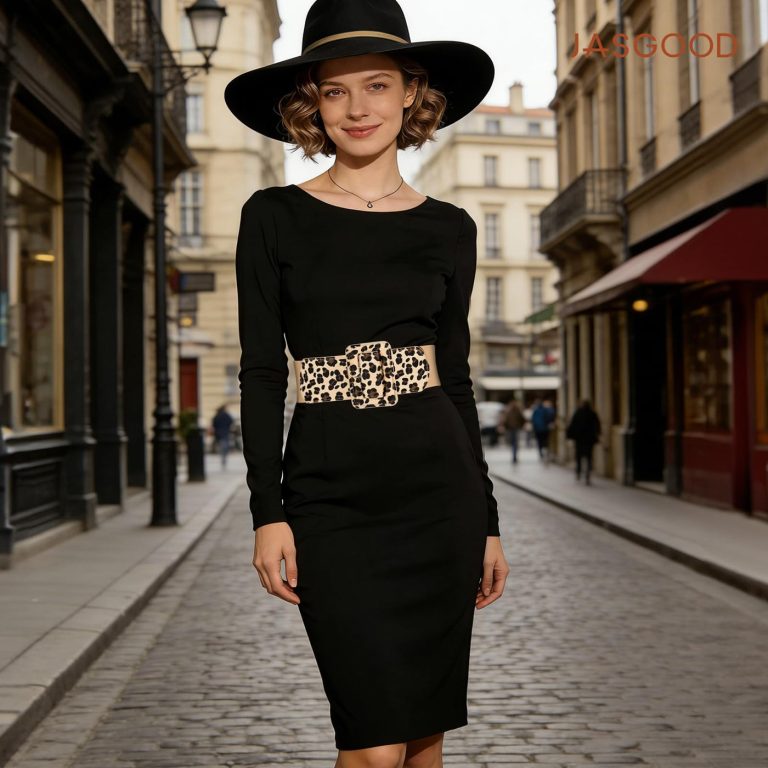
Belts with tweed or checked clothing work best when they give the eye a clear place to rest. Start by assessing the garment’s pattern and texture, then decide whether the belt should blend quietly or add a deliberate accent.
In this guide
Read the pattern from a distance
A small check may look almost solid from across a room, while a large windowpane remains prominent. Tweed can also carry texture and several colors even when the pattern is subtle.
Choose one quiet color from the fabric as a starting point for the strap. You do not need to reproduce every tone in the garment.
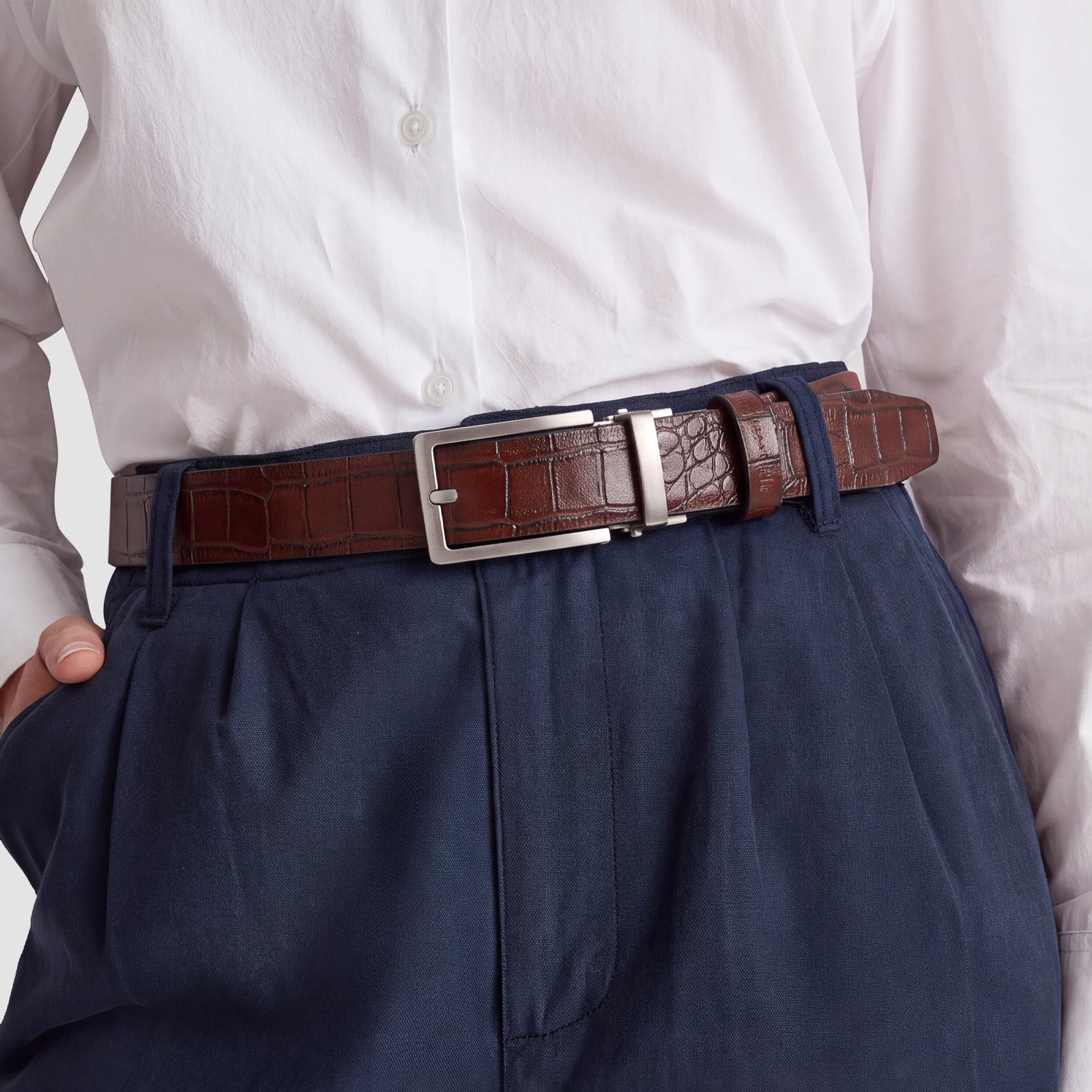
Compare JASGOOD office wear belts for a simple strap and suitable buckle. Check the chosen product’s surface, dimensions and fit with the actual trousers rather than matching only a color swatch.
Three outfit combinations
A checked jacket and plain trousers
Use a restrained belt with the plain trousers so the jacket remains the main pattern. Relate the strap to the shoes or one darker color in the jacket.
Check the buckle with the jacket open and closed. A thick closure can interrupt otherwise neat tailoring.
Tweed trousers and a plain knit
Try a smooth strap as a contrast to the textured fabric. Keep the knit tuck light so the waistband does not become bulky beneath the buckle.
Measure the loops carefully; the trousers’ substantial fabric does not automatically mean they accept a wide belt.
A checked skirt and a blouse
Choose a belt that picks up a quieter tone in the check. A compact buckle lets the pattern remain visible instead of covering a large part of the waistband.
If the blouse also has a print, compare the two scales before adding a patterned belt as a third element.
Decide how much texture to repeat
A textured belt can work with tweed, but inspect the combined effect in normal light. If every surface is busy, a smoother strap may make the outfit easier to read.
The same applies to hardware. A decorative buckle adds another pattern-like feature, even if it is only one color.
Finish with practical fit
Spread the tuck evenly and keep the belt tail secured. Sit and bend to check the buckle against the waistband’s seams and closures.
If the outfit feels visually crowded, simplify one element at a time. Begin with the belt because it is easy to swap, then keep the version that connects the colors without competing with the fabric you wanted to showcase.