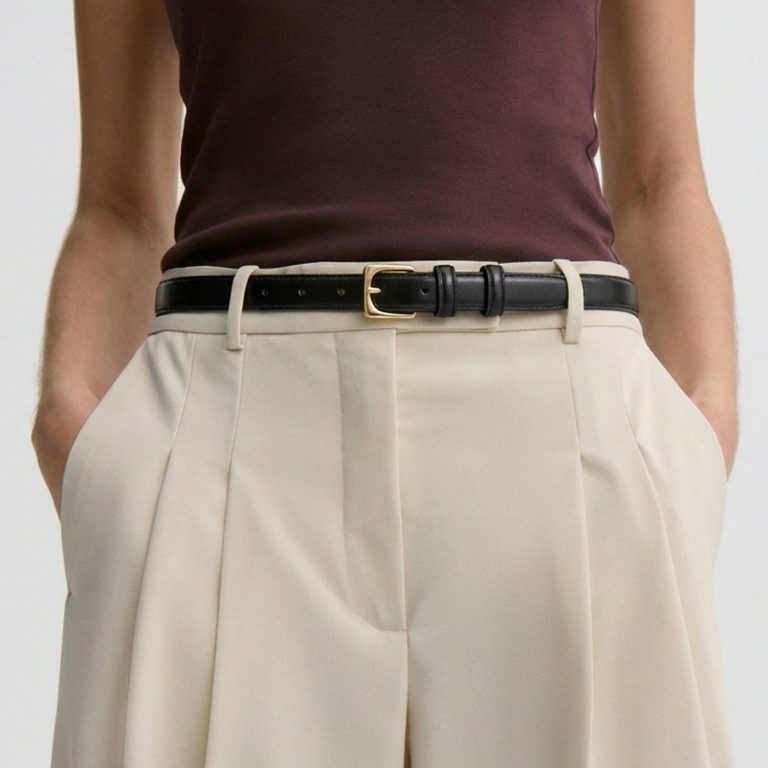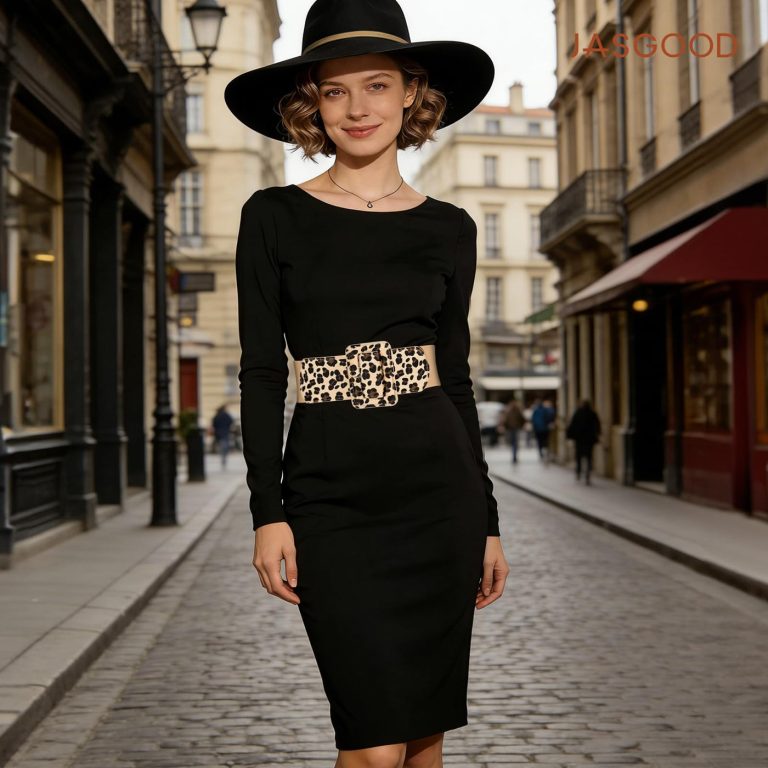
Belt layering works when the fastening has room for the clothes underneath it. A belt fitted over one thin shirt may feel different over a cardigan, so choose the wearing position before choosing the size.
In this guide
Separate two different jobs
A belt through trouser loops supports that waistband. A belt around a shirt, dress or light coat is a separate styling choice, with a different measurement and different fabric to manage.
You do not need to fasten both tightly. If the trousers already fit securely, a decorative outer belt can rest more lightly against the layers.
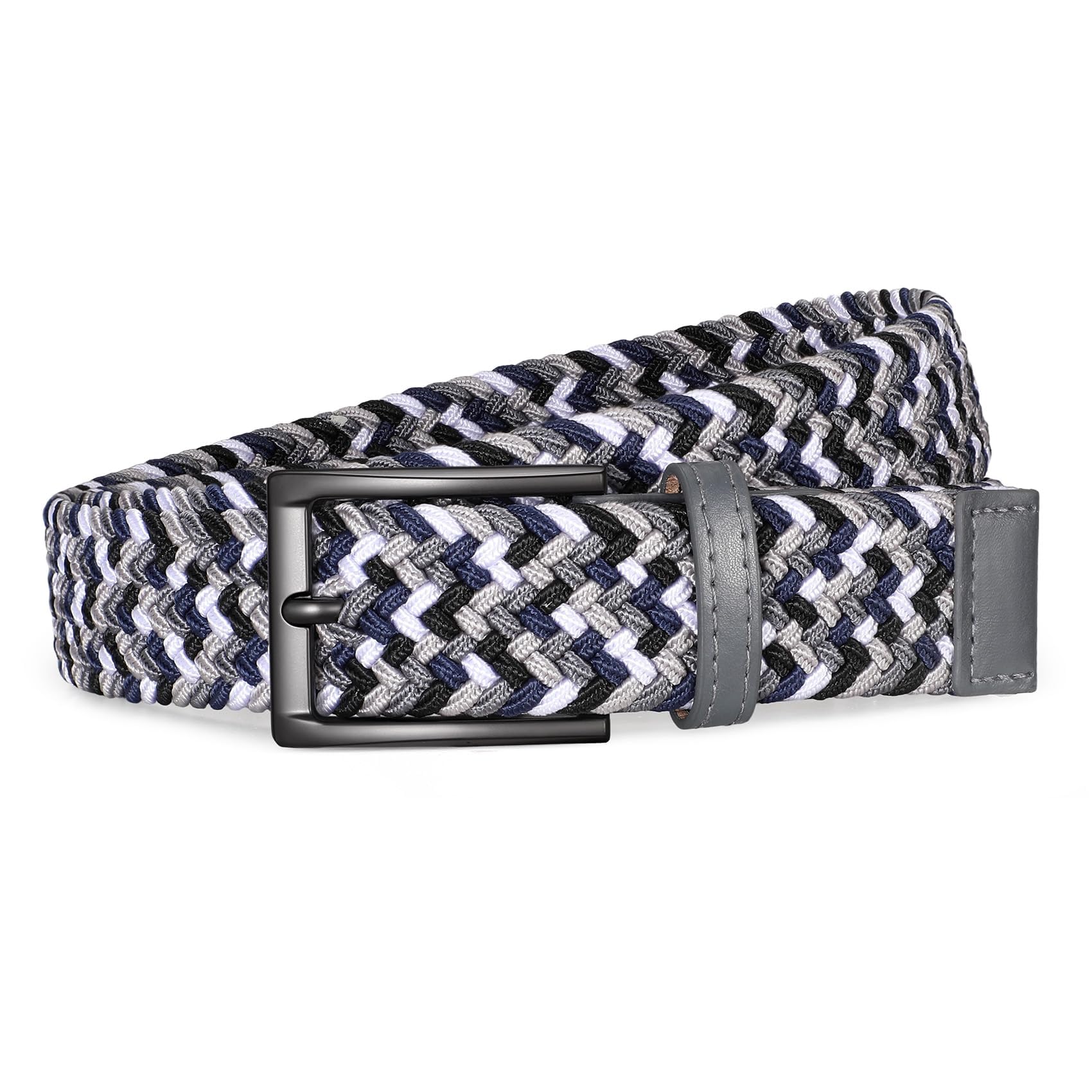
For changing layers, browse JASGOOD fabric and stretch belts and check each design’s composition and usable fit range. Do not assume every fabric belt stretches or that stretch replaces correct sizing.
Build a morning-to-afternoon outfit
Start with straight-leg trousers, a lightweight tucked shirt and a cardigan. Put the functional belt through the trouser loops, then wear the cardigan open so removing it does not disturb the waist fastening.
If you prefer a belted cardigan, test the outfit both with and without that layer. The same belt may need a different adjustment or may work better reserved for one version.
Keep the bag and jacket easy to remove. A belt that traps several unrelated hems can make a simple temperature change unnecessarily awkward.
Reduce bulk in three places
At the buckle: smooth the shirt tuck before fastening. Avoid stacking a shirt placket, thick waistband seam and large buckle directly over one another when a small shift helps.
At the sides: spread small folds evenly. Pushing all the extra fabric to the back can leave a lump when you sit against a chair.
At the belt tail: use the keeper supplied with the belt. If the tail is consistently excessive, check the size rather than improvising a permanent cut.
Choose the adjustment that suits your day
Closely spaced holes, an adjustable slide, a ratchet or an elastic section can each offer different ways to change the fit. Read how the actual model works and practise releasing it before wearing it out.
A compact buckle may be more comfortable under layers than a heavy raised one. Strap thickness and stiff edges can matter as much as the buckle itself.
Test the whole outfit
Sit, bend, reach and remove the outer layer. Check that the trousers stay comfortable, the shirt remains where you want it and the buckle does not press through the fabric.
If the outfit only works with the belt pulled very tight, change the arrangement. A lighter tuck, a shorter top or an open cardigan can solve the bulk without requiring another accessory.