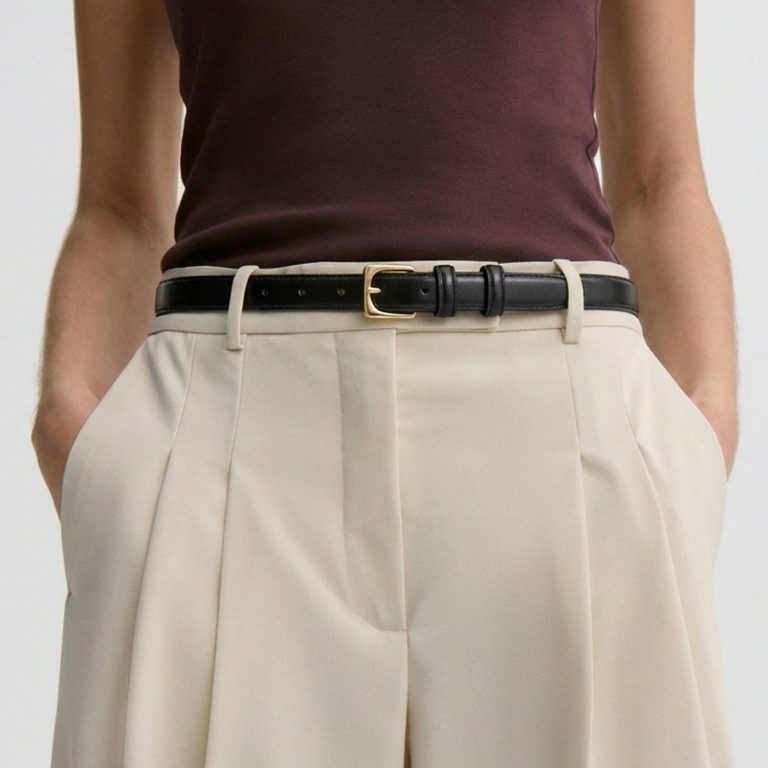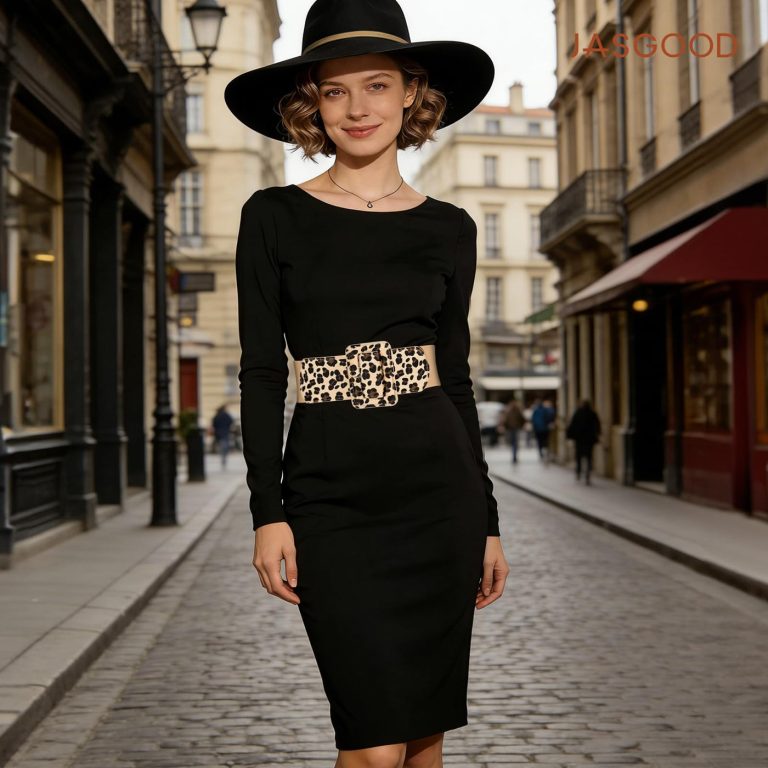
The right belts for corduroy and other heavy trousers start with the loops, not a rule that thicker fabric needs the widest belt. Check the actual opening, then balance the texture and buckle with the rest of the outfit.
In this guide
Measure the part that must fit
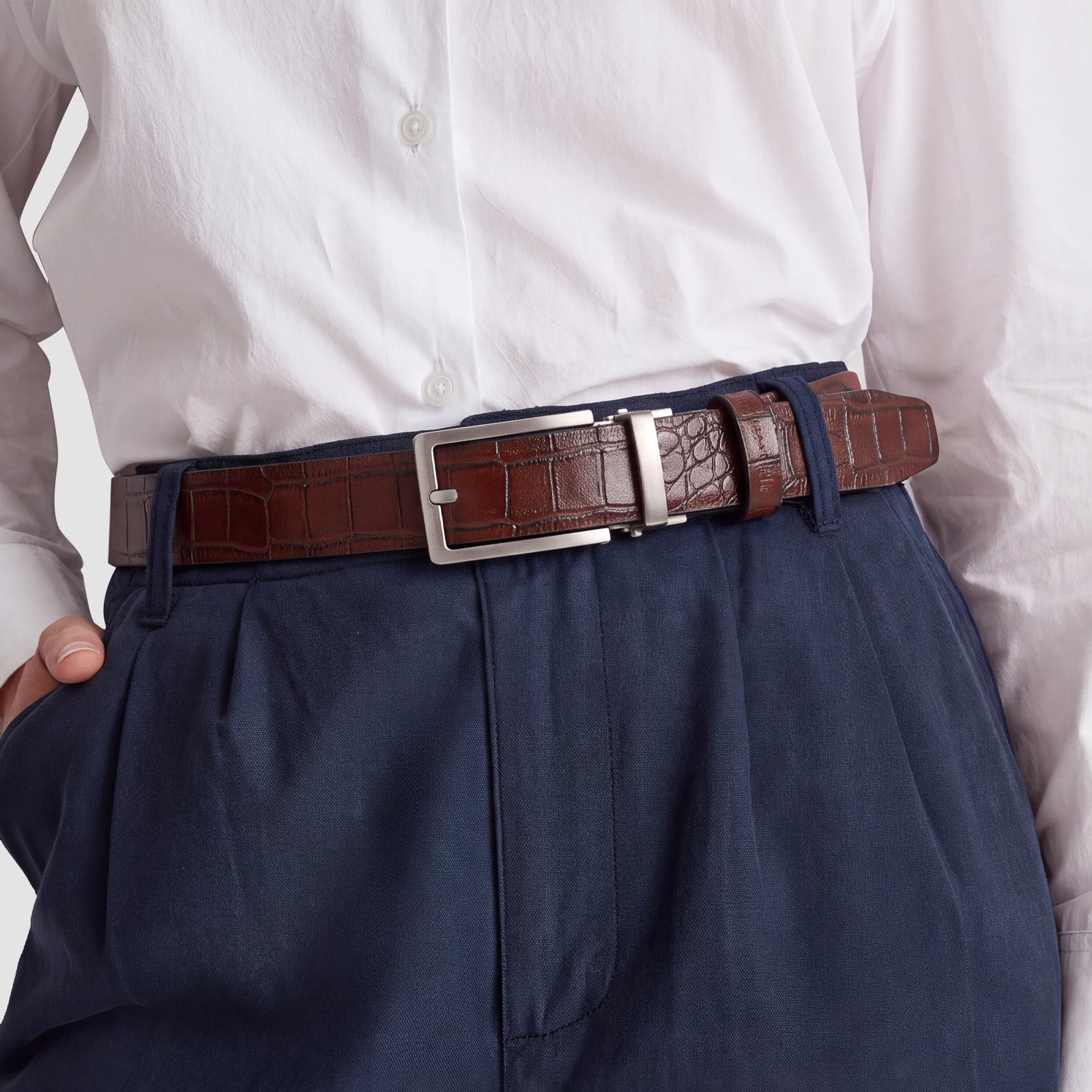
Measure the usable inside height of a belt loop and compare it with the strap width and finished tip. The belt should pass through without folding its edges or stretching the stitching.
Fasten it over the trousers while wearing your usual tucked layer. If the waistband gathers into deep folds, investigate the trouser fit instead of relying on extra belt tension.
Compare JASGOOD everyday men’s belts once you know the required width. Look at the side-view photos and fastening details as well as the front: a thick strap or raised buckle can feel bulky at the waist.
Three combinations to try
Olive corduroy and a cream knit
Try a medium-brown belt with a restrained buckle and casual boots. Brown connects easily with the warm texture, but a black belt can also work when repeated in the footwear.
Leave a heavy sweater untucked, or use a light front tuck only if it sits comfortably. The belt does not have to remain visible to do its practical job.
Rust corduroy and a denim shirt
Keep the belt simple while the trousers and shirt supply the texture. A smooth-looking strap can provide a useful contrast; it does not need to imitate the corduroy’s surface.
If you choose a decorative buckle, reduce competing hardware on the bag or jacket to keep the waist detail easy to read.
Dark heavy twill and an overshirt
Pair dark trousers with a plain tee and an open overshirt. Try a matte or subtly textured belt for a relaxed finish, checking the buckle does not catch beneath the shirt hem.
Check stiffness separately from width
A wide, flexible strap and a narrow, rigid strap can feel very different. Bend the belt only as intended and look at how it sits against the waistband when fastened.
Choose a buckle you can release easily. If your trousers have close-fitting loops, check whether any detachable buckle or adjustment mechanism changes how you thread the belt.
What to avoid
Do not force a belt through a loop simply because the stated width is close. The finished tip, thickness and loop seam can affect the real clearance.
Do not assume a rugged appearance means water resistance or heavy-load suitability. Follow the product’s stated use and care instructions.
Before leaving, sit with the overshirt or jacket closed. A comfortable waistband should remain the priority even when the fabric and accessories have a substantial look.