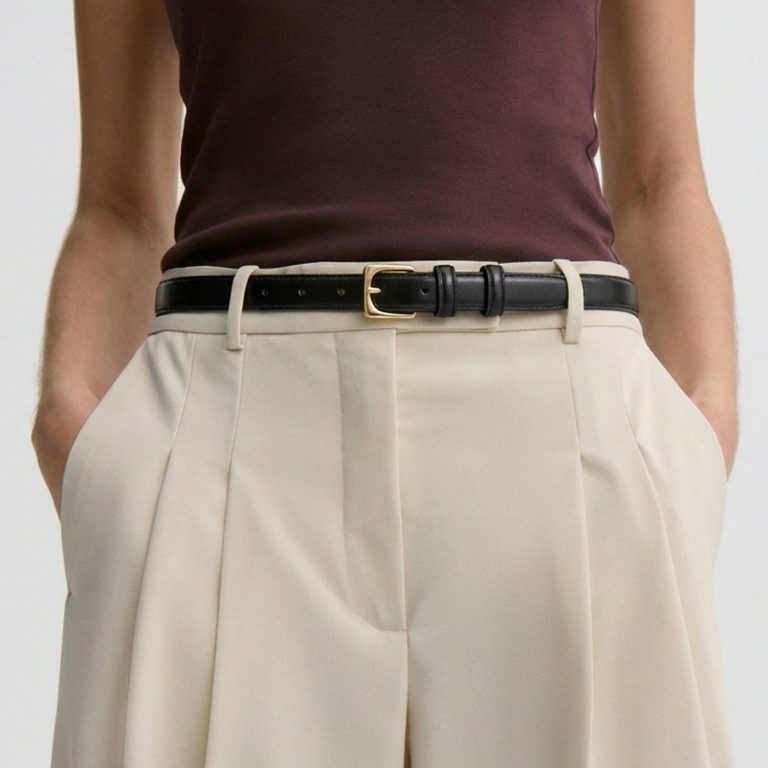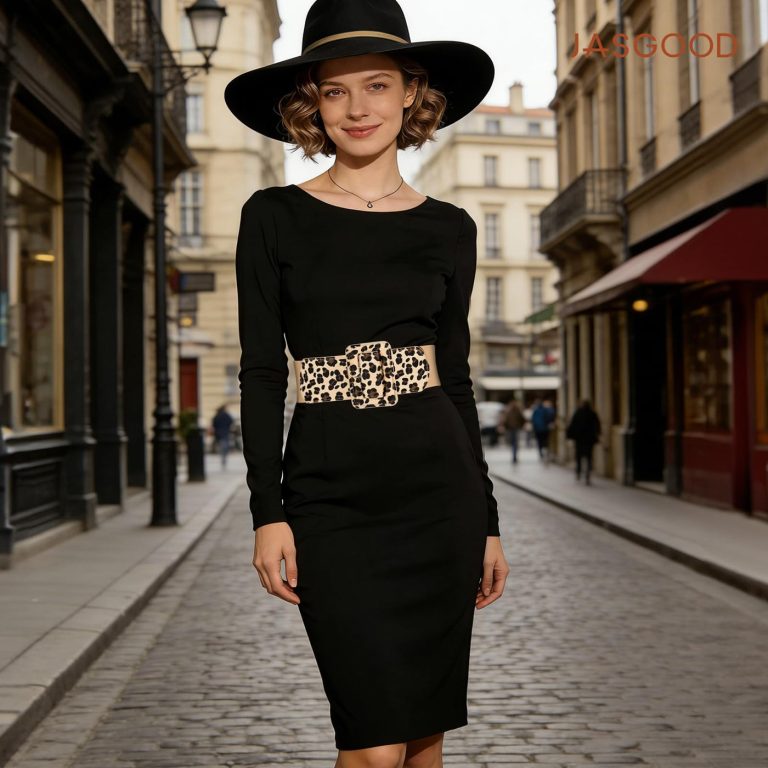
Belt and shoe matching is a useful starting point, not a rule that every accessory must share an exact shade. Begin with the outfit’s formality, then decide whether the belt should connect with the shoes or add a separate accent.
In this guide
Match the mood before the color
A simple belt with polished shoes creates a different impression from a woven strap with casual loafers. Even two black items can look unrelated if one is heavily decorated and the other is very understated.
Look at the buckle, surface finish and clothing together. The belt’s width still needs to fit the trouser loops, regardless of the color you choose.
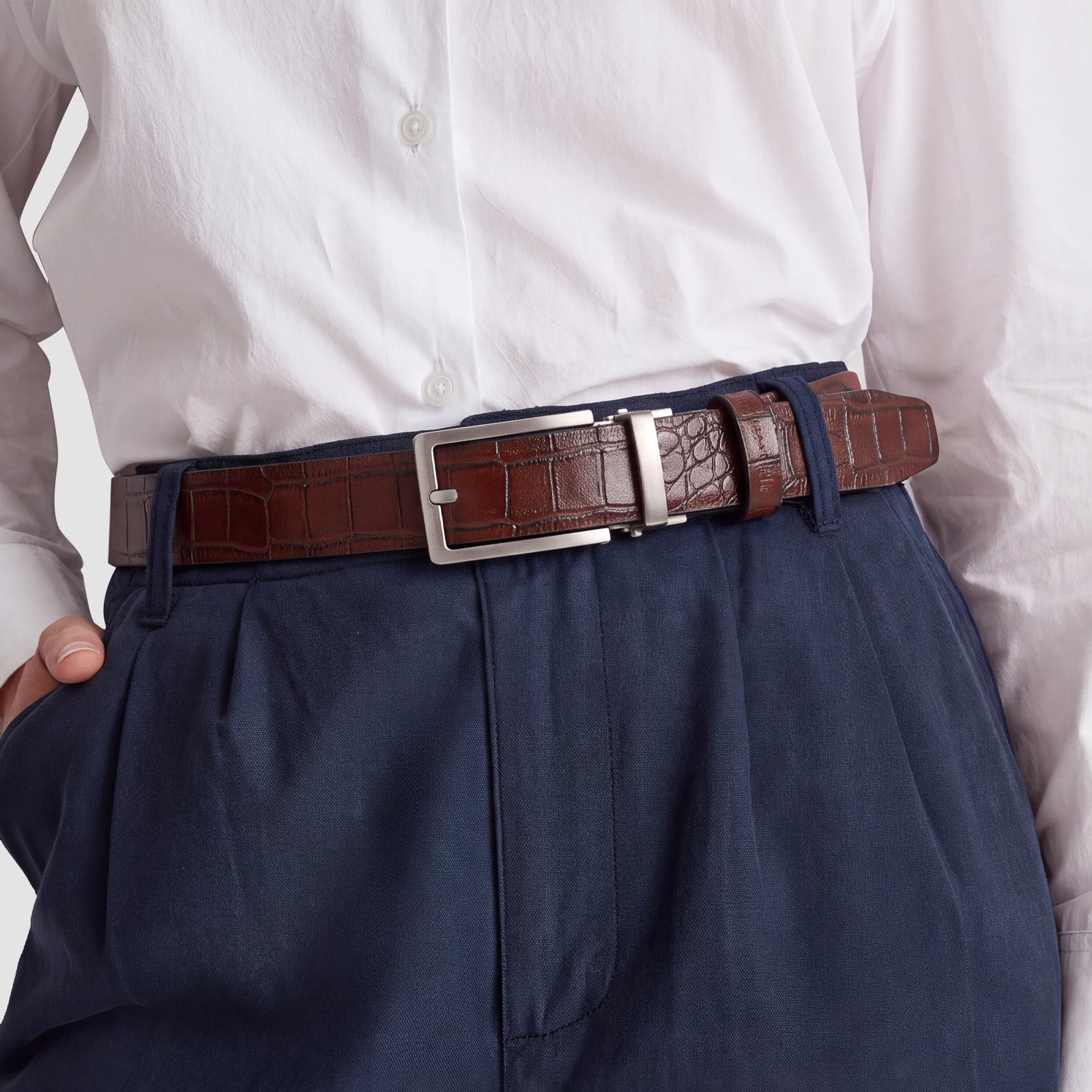
Use JASGOOD men’s belts to compare buckle profiles and strap finishes alongside your shoes. Check the selected variant in its own photos, then choose the level of detail that fits the whole outfit.
Three reliable starting combinations
Black shoes and tailored trousers: try a plain black belt with a compact buckle. It connects the dark accents and leaves the tailoring as the main feature.
Brown loafers and stone chinos: start with a brown belt in a similar warm or cool family. A small difference in shade can look natural; it does not automatically look like a failed match.
Sneakers and denim: use the belt to connect with the jeans, top or bag if the shoes do not suggest an obvious color. White sneakers do not require a white belt.
What to do with different brown shades
Place the shoes and belt together in daylight. Compare the overall temperature and depth: reddish, golden, muted or very dark. Decide whether the relationship feels coherent with the trousers between them.
If it feels awkward, try a quieter belt close to the trouser color, or change one accessory. There is no need to force an exact match from two pieces you do not enjoy wearing together.
For suede shoes, the belt does not have to be suede. A smoother strap can provide contrast while staying close enough in color or formality to connect the outfit.
Coordinate hardware without overthinking it
A buckle can echo a watch case or bag clasp, but mixed metal finishes can also work. Small, restrained pieces are usually easier to combine than several large, highly reflective ones.
If the buckle is the focal point, keep the nearby accessories quieter. If the shoes are the statement, let the belt provide a simpler finish.
A quick mirror test
Put on the complete outfit and stand far enough back to see the shoes and waistband together. Try the top tucked and untucked if either arrangement suits the clothes.
Keep the combination that looks intentional to you and feels comfortable while seated. Matching is a tool for making decisions, not a reason to buy a separate belt for every pair of shoes.