Choosing a wide or skinny belt is about the effect you want and the space the clothes provide. Body-shape labels cannot tell you which belt will fit a waistband, sit comfortably beneath your ribs or work with a particular neckline.
In this guide
Start with the garment
For trousers, measure the belt-loop opening before considering appearance. For a dress or outer layer, check the waist seam, buttons and amount of fabric you want to gather.
A belt worn over clothing has a different job from one threaded through trouser loops. You can compare widths without expecting one design to serve every outfit.
Compare JASGOOD wide belts with the skinny belt range. Check the actual dimensions and fit range, then choose a width that leaves comfortable room at your intended wearing position.
What each width changes
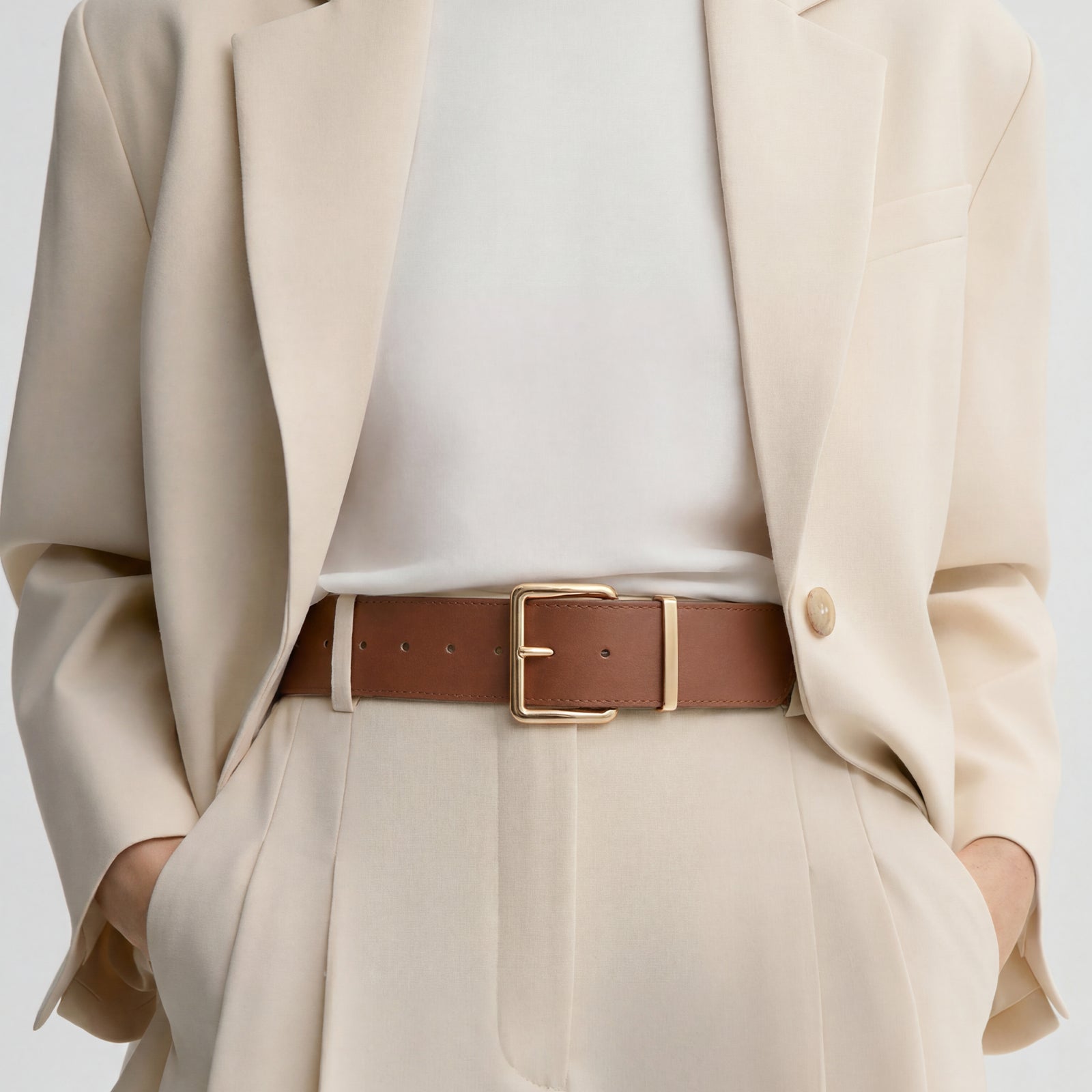
A wide belt creates a more substantial horizontal band. It can become the main waist detail over a plain dress or relaxed layer, but may crowd a short visible space between the neckline and waistband.
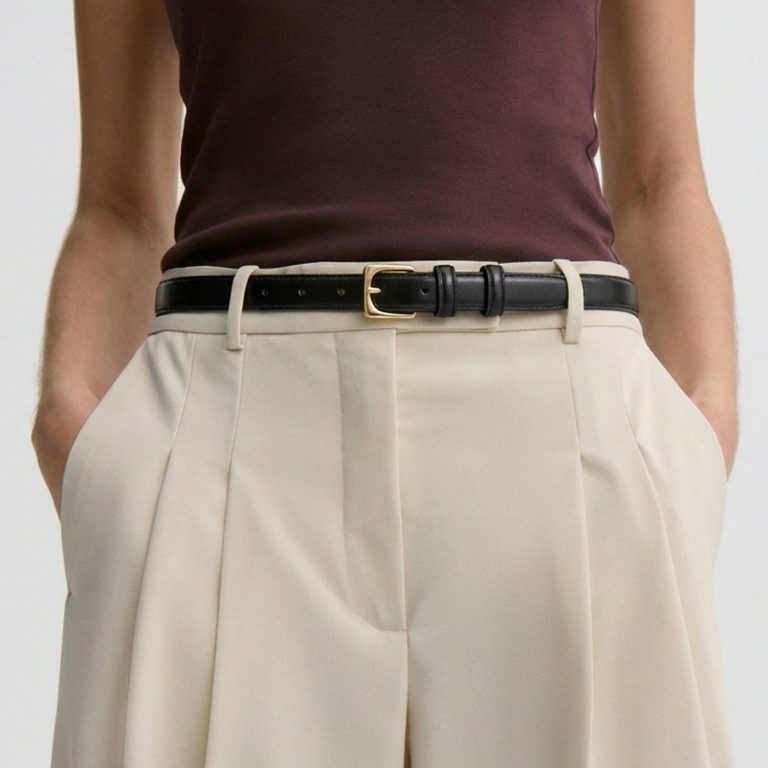
A skinny belt creates a lighter accent. It can suit a fine blouse or subtle trouser finish, though it may twist or move inside much taller loops.
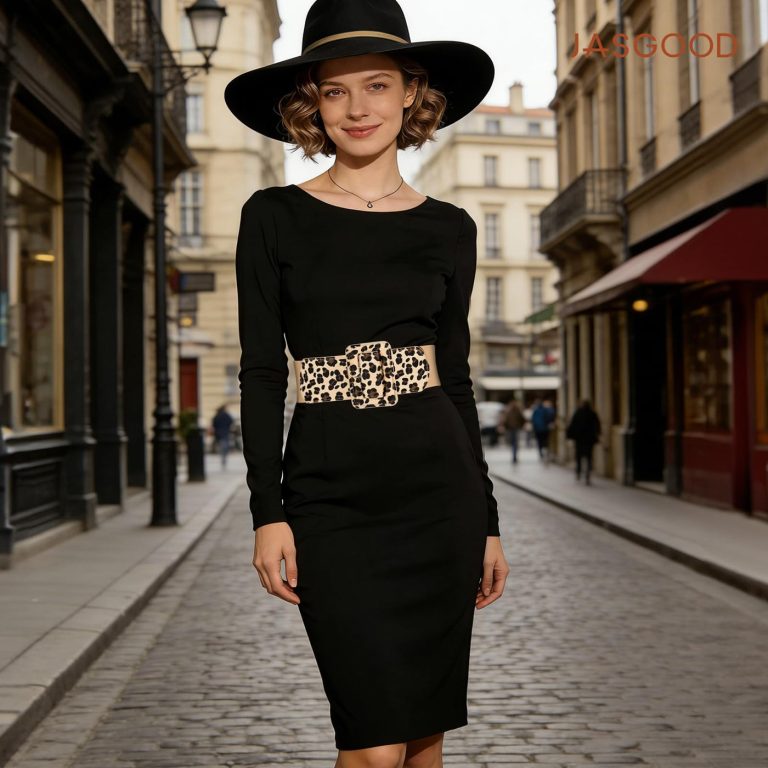
The buckle changes both effects. A narrow strap with a large decorative buckle can still be a strong focal point.
Compare the same outfit two ways
A plain midi dress
Try a wide belt with light tension and note how the fabric falls below it. Then try a skinny belt at the same position. Choose whether you prefer a clear band or a more delicate line.
High-waisted trousers
Use only widths that fit the loops comfortably. Compare the belt with a full tuck and a lighter front tuck; changing the visible amount may give you the emphasis you want without a wider strap.
A cardigan or light coat
Check the layers beneath the fastening. A wider belt may create a deliberate waist accent, but it does not automatically flatten bulky knitwear. Try less tension or a lighter arrangement if the fabric bunches.
Test comfort in movement
Sit, bend and reach while wearing each option. Check the upper and lower belt edges, the buckle and any hard buttons or seams underneath.
If one width presses uncomfortably, adjust its position or compare another shape. You do not need to force your body or clothes to accommodate a styling rule.
Make the final choice
Take a full-length photo with the intended shoes and outer layer. The strongest waist accent is not always the one you will prefer in the complete outfit.
Keep the belt that achieves your chosen effect and remains comfortable. Owning both widths is useful only if they solve different needs in clothes you actually wear.