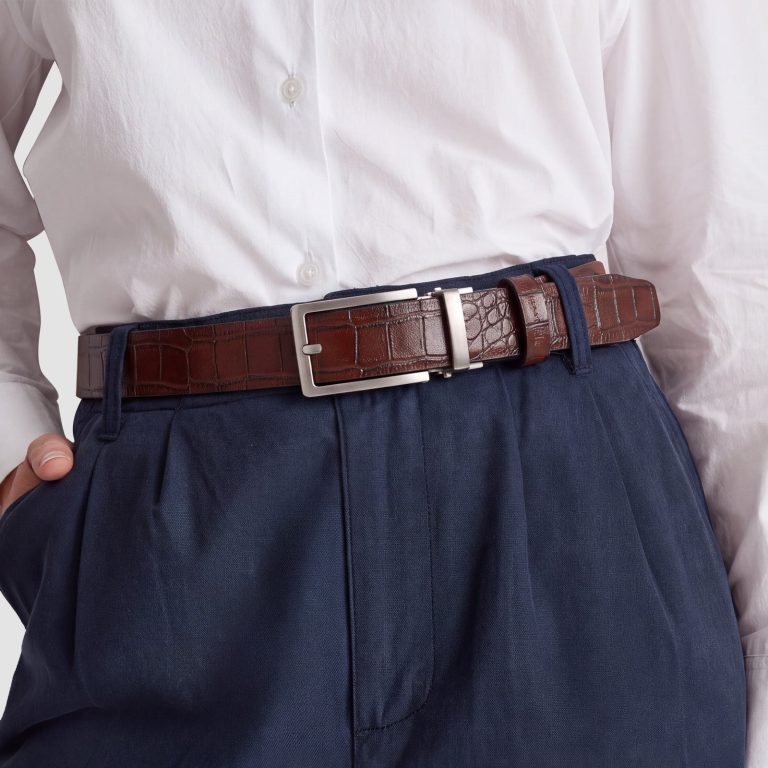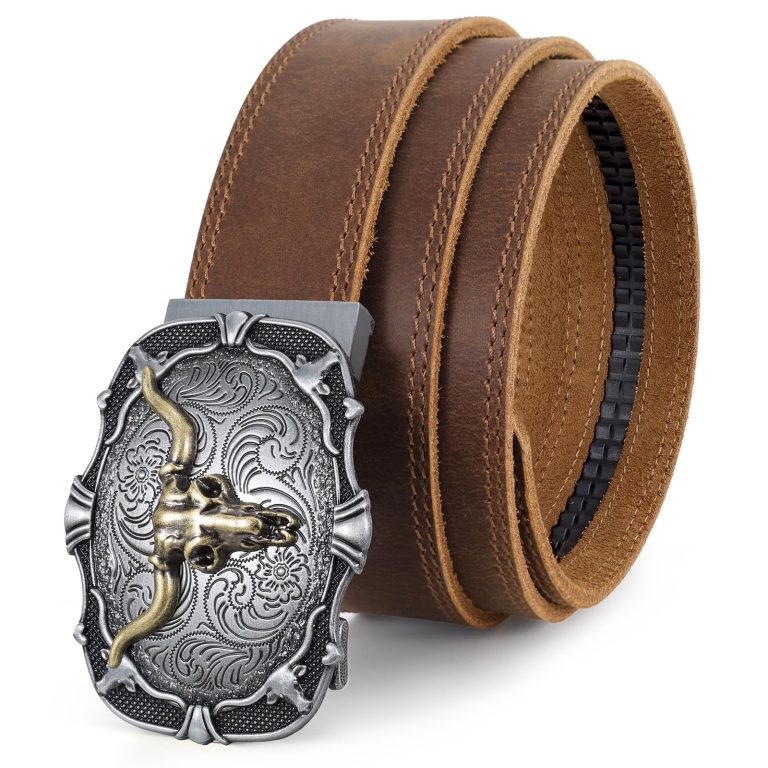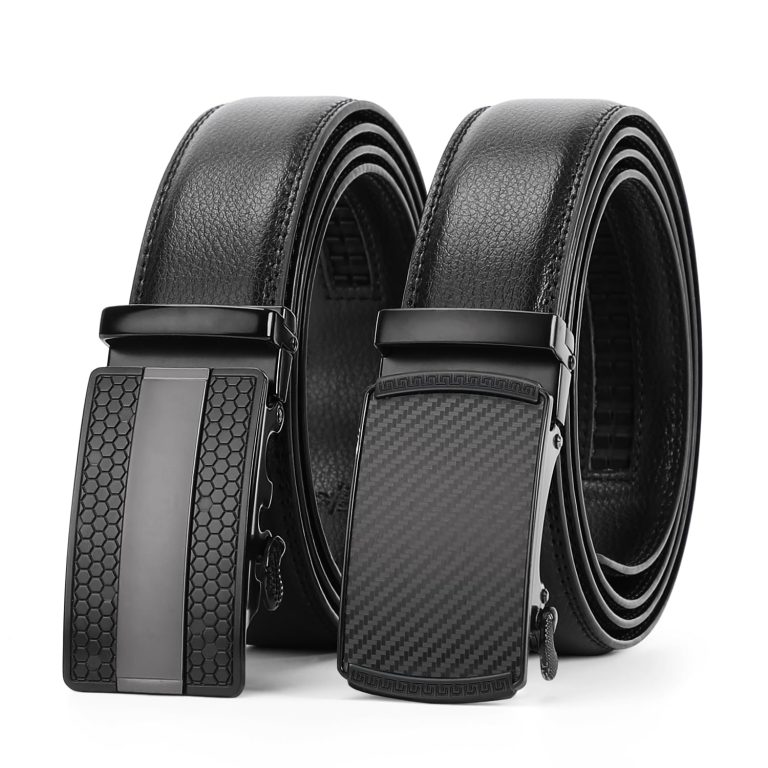
Men’s belt buckle sizes can describe several different measurements. A buckle made for a particular strap width is not necessarily that width on its outside, so check what the listing actually measures before buying.
In this guide
Separate the three measurements
Strap compatibility describes the belt width the attachment accepts. This matters when replacing a buckle or buying a removable-buckle strap.
Visible height and width describe the hardware across the front of the outfit. These determine how much space the buckle occupies visually.
Depth or profile describes how far it projects. A buckle can look modest from the front but feel bulky beneath a shirt or jacket.
Compare the dimensions and attachment photos in JASGOOD pin-buckle belts. Use the selected product’s measurements to judge trouser-loop fit and front-buckle space separately.
Measure against a belt you own
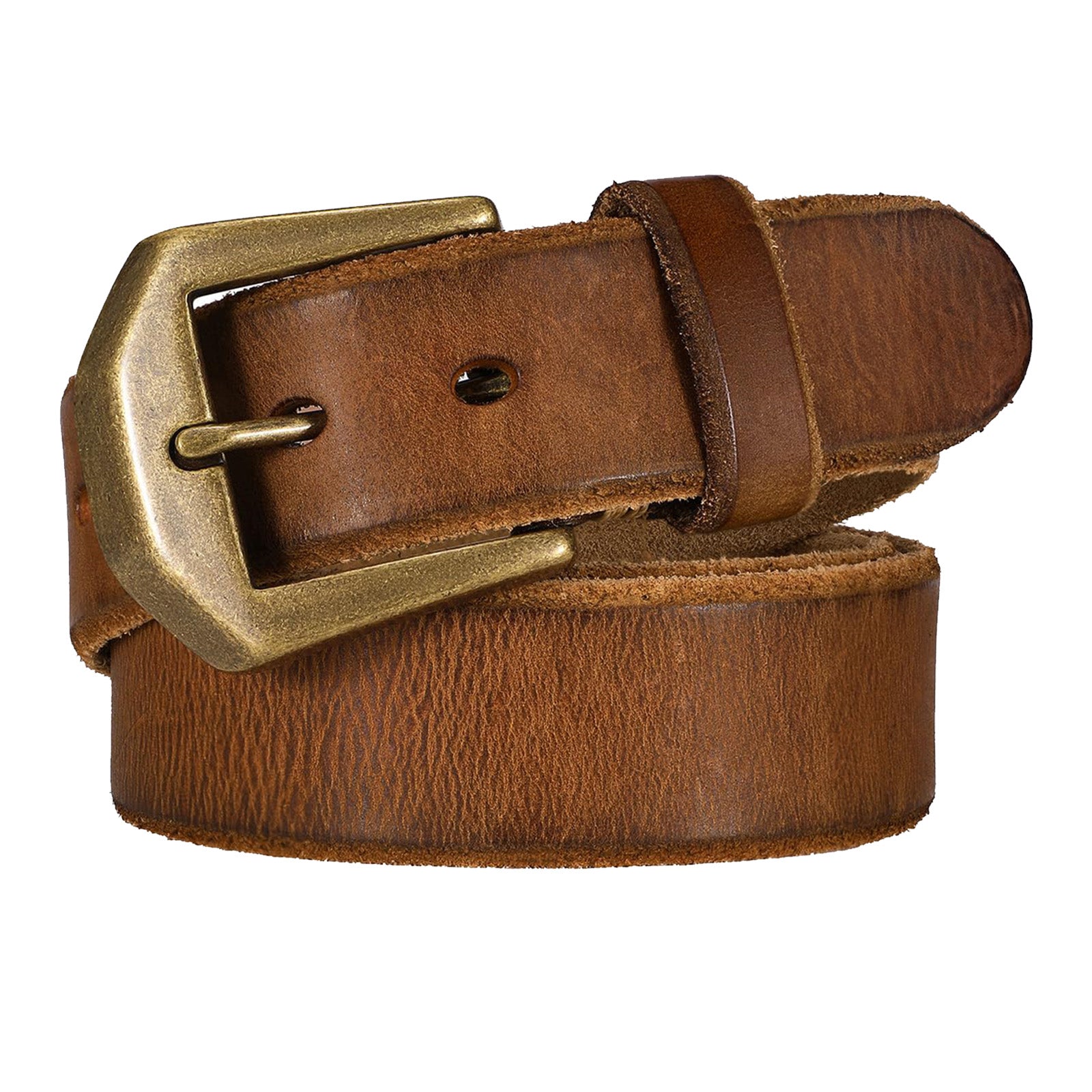
Lay a comfortable belt flat and measure its strap width. Then measure the buckle’s visible outline and note how it sits when fastened.
Use that example to evaluate a new listing. If a seller gives only the strap width, do not treat it as proof of the buckle’s overall size.
Three outfit checks
With tailored trousers
Check the buckle beneath a tucked shirt and jacket. A low-profile design may leave the front smoother, but the actual seated fit is the deciding test.
With jeans
A more substantial buckle can suit heavier denim visually. Still check that it does not cover the fly awkwardly or press over a thick seam.
With a statement plate buckle
Measure the available space at the front of the waistband and try the outfit seated. The plate’s decorative face may extend well beyond the strap beneath it.
If you are replacing hardware
Confirm the attachment type: a removable snap, screw, clamp or stitched connection is not interchangeable by default. Check the maker’s instructions before removing anything.
The buckle must suit both the strap’s width and its construction. A part that appears to fit loosely may still fail to secure properly.
Choose proportion without rigid rules
There is no single buckle measurement that suits every body or occasion. The rise of the trousers, layers beneath it and the amount of visual emphasis you want all matter.
Compare the new buckle with a comfortable reference, verify the listed dimensions and test normal movement. That is more reliable than choosing from a label such as small, standard or oversized alone.