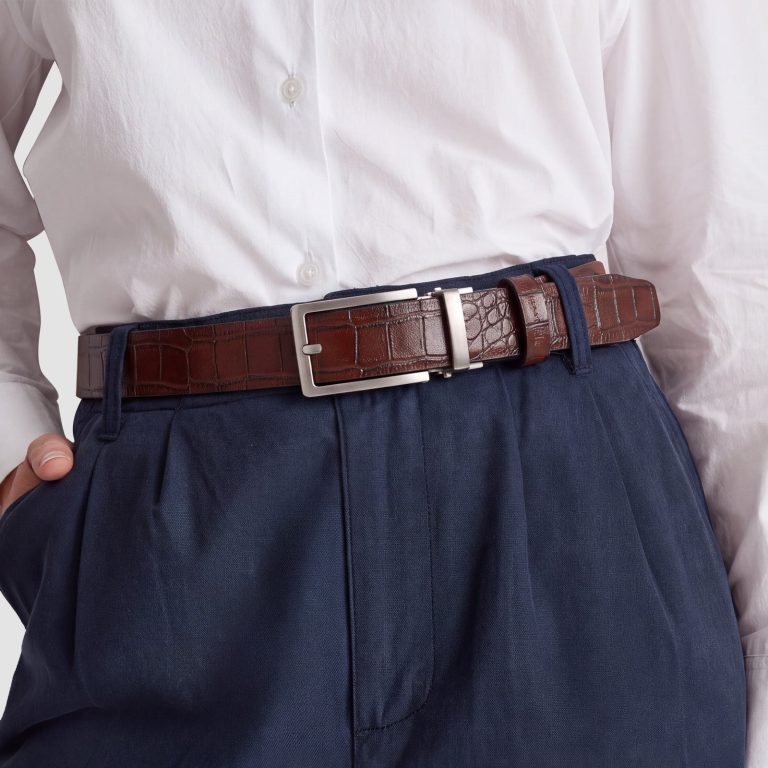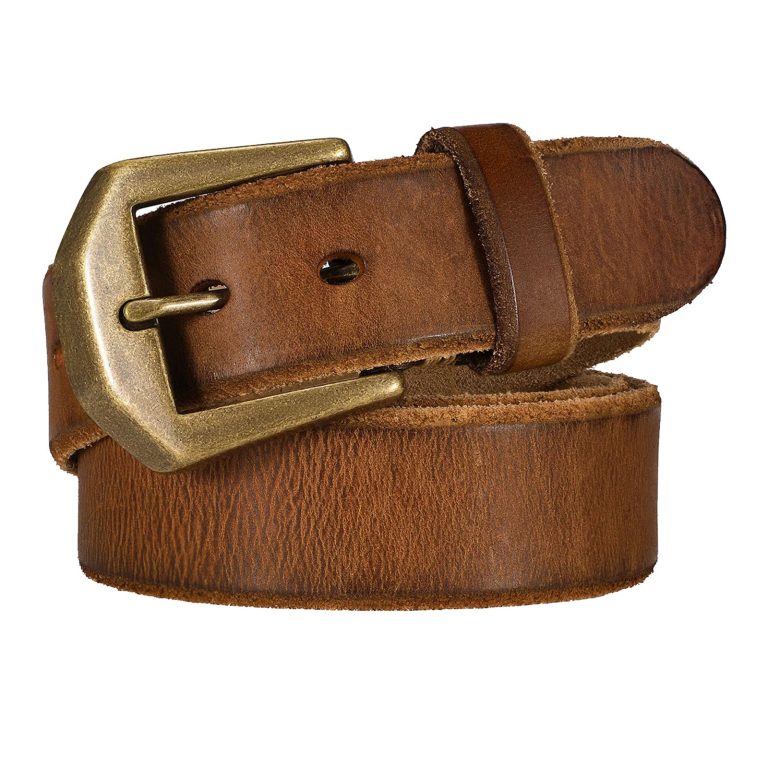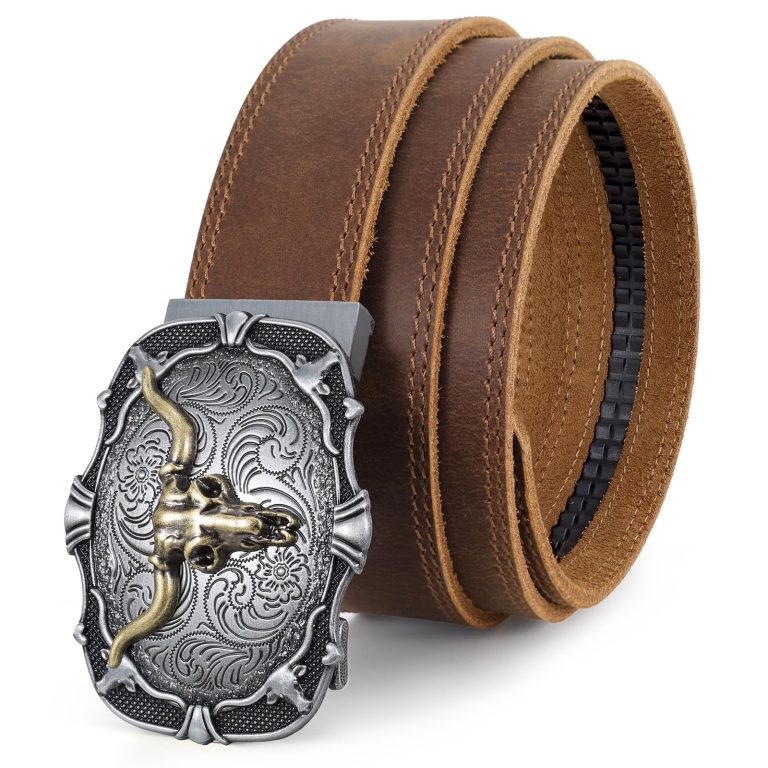
A belt that is too big needs the right adjustment for its construction. First check whether the fastening range is wrong, the belt tail is merely long, or the trousers themselves are too loose. Those are different problems.
In this guide
Measure the actual mismatch
Put on the trousers and layers you normally wear. Fasten the belt at a comfortable position if one is available. Note where the buckle sits and how much tail remains beyond the keeper.
Compare your wearing-position measurement with the maker’s fit range. Total strap length may include a buckle or decorative tail and is not automatically the waist size it fits.
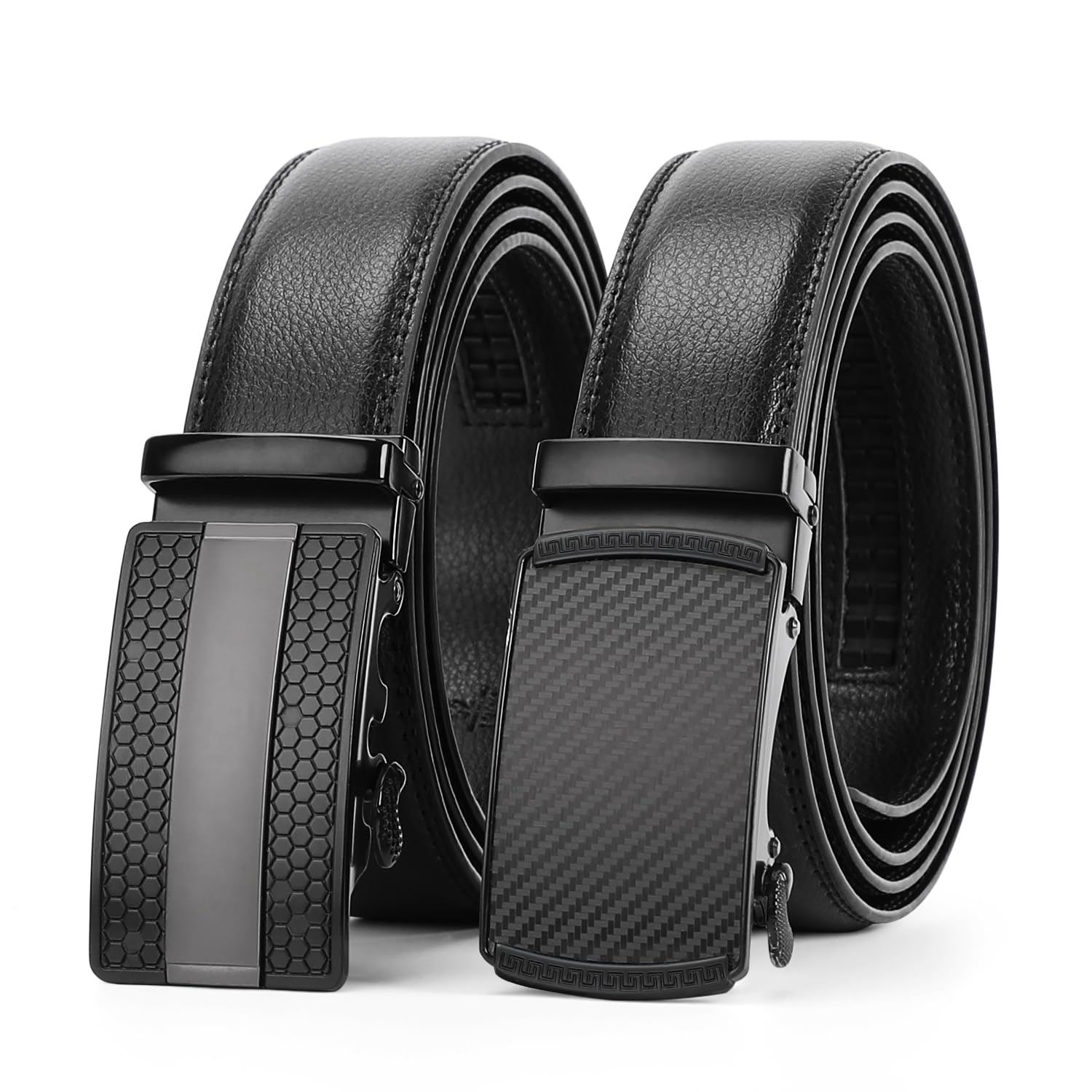
If your current belt cannot adjust far enough, compare the fit ranges in JASGOOD ratchet belts. An adjustable mechanism can offer another option, but check the specific size and trimming instructions before buying.
Choose the appropriate fix
The belt fits, but the tail is long
Use the belt’s keeper and assess whether the remaining tail gets in the way. A longer tail may be part of the intended design; it does not always mean the fastening size is wrong.
If it bothers you, ask the maker whether that model can be shortened. Do not cut through a finished tip, track or fixed buckle attachment without instructions that permit it.
A pin-buckle belt needs another hole
Check whether the strap has enough suitable material for an additional hole and whether the new position would leave an awkward tail. A leather repair specialist can assess the construction and appropriate tool.
Avoid improvising with scissors or a nail. A rough or badly placed hole can damage the strap and may not hold the pin securely.
A removable buckle allows trimming
Some belts are designed to be shortened at the buckle end. Others have fixed stitching, rivets or tracks that make the same approach unsuitable.
Only follow the instructions for your model. Measure twice, remove a small amount at a time if instructed, and check that the buckle can be reattached securely.
A worked decision
Suppose the belt fastens comfortably but leaves a tail that wraps beyond the next trouser loop. That points to excess tail length, not necessarily a need for a tighter hole.
If the tightest setting still leaves the waistband loose, compare the usable size range. If tightening bunches the trousers heavily, consider the trouser fit as well.
When replacement makes more sense
A cracked strap, loose buckle attachment or damaged adjustment track may not be worth resizing. Ask a repair professional about a structural problem rather than adding another hole around it.
Keep the old belt’s useful measurements for the replacement. Choosing the correct wearing range can save another round of cutting or improvised fixes.