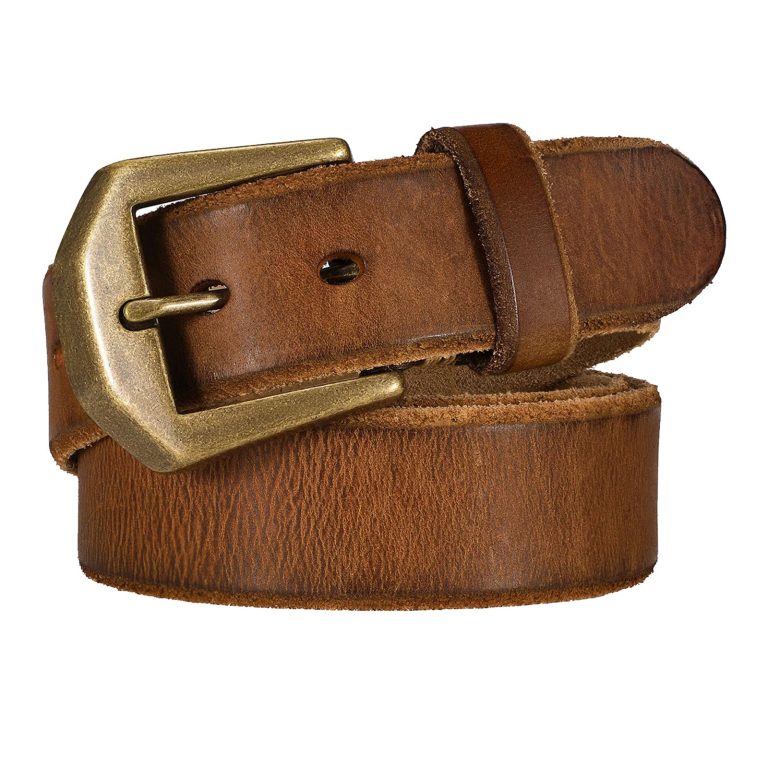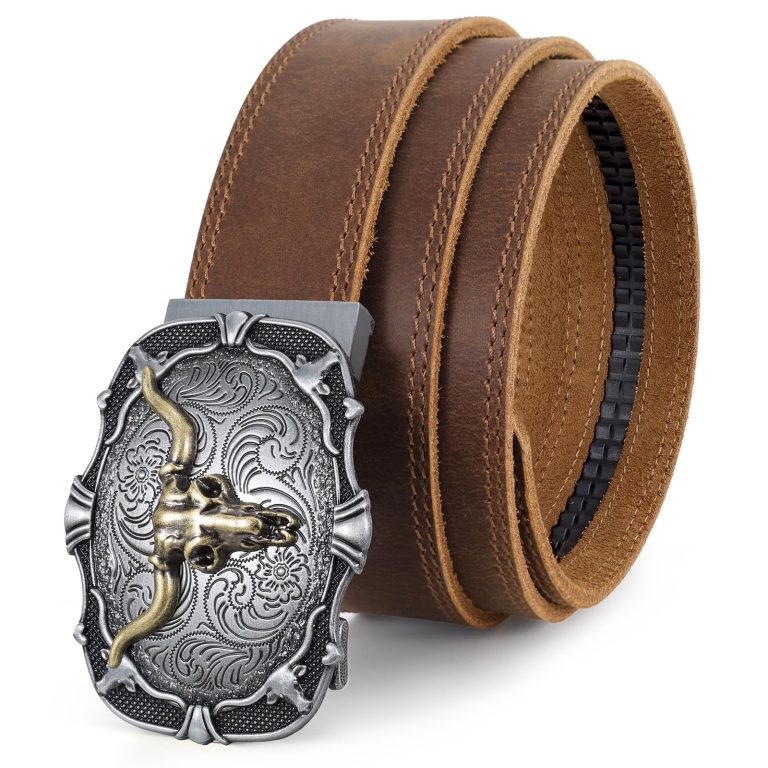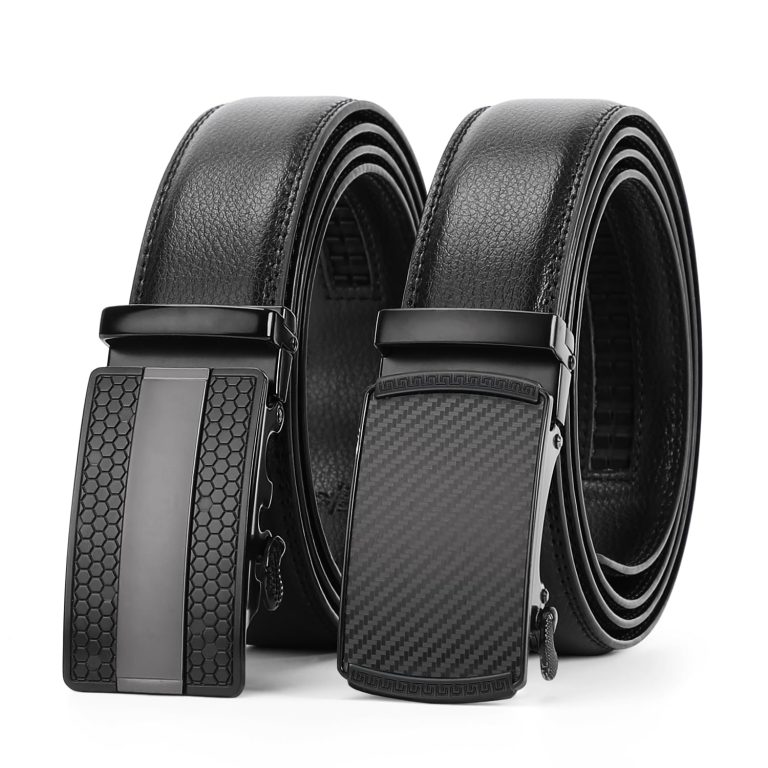
Belts for tall and big frames should be chosen from actual measurements and clothing, not assumptions about how large the buckle or strap ought to be. Height and waistband circumference answer different fitting questions.
In this guide
Measure where the belt will sit
Measure over the trousers at their normal wearing position. A natural-waist measurement may not match the place where lower-rise jeans sit.
Compare that number with the manufacturer’s method. Total strap length, length to a particular hole and an intended waist range are different measurements.
Compare the available fitting ranges in JASGOOD men’s belts. Check the selected variant’s size, strap width and closure so the belt fits your waistband without leaving an unmanageable tail.
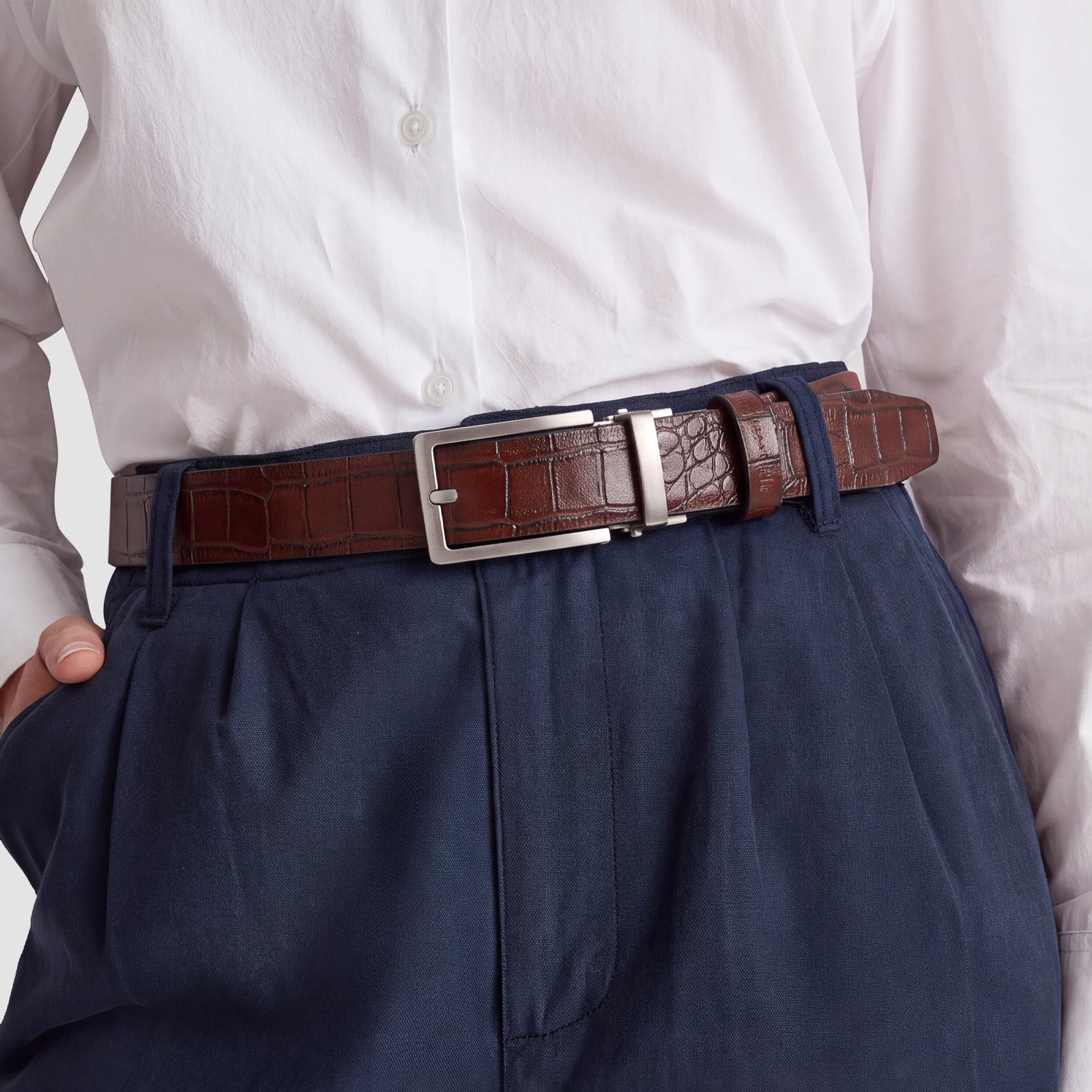
Separate length from width
A longer belt does not automatically need a wider strap. Measure the trousers’ loops and choose a width that passes through comfortably without folding.
Likewise, a tall person may prefer a quiet buckle, and a larger waist does not require statement hardware. Choose the visual emphasis you enjoy after meeting the practical fit requirements.
Three fit checks that matter
Adjustment around your normal setting
Look for a useful range around your wearing measurement. A belt that only closes at its shortest or longest possible setting may leave little flexibility for different trousers or tucked layers.
A secure tail
Check where the tail ends when fastened. It should reach the intended keeper without hanging so far around the body that it becomes awkward to manage.
Comfort while seated
Try the buckle over the actual trouser button and shirt tuck. A broad or deep buckle can press in a way that is not obvious while standing.
Build two reliable outfits
For jeans and an everyday top, choose a compatible width and a fastening you can adjust easily. Let color or surface texture provide interest if you prefer a simpler buckle.
For office trousers and a shirt, compare a lower-profile design beneath the jacket. Spread the shirt tuck evenly so the buckle does not rest on a thick bundle.
Avoid sizing shortcuts
Do not rely on a universal instruction to add a fixed number of inches to your trouser label. Clothing sizes and belt-sizing methods vary.
If the listing is unclear, ask for the relevant measurement before ordering. A correct size is the foundation; proportion and style can then be personal choices rather than rules imposed by a body category.