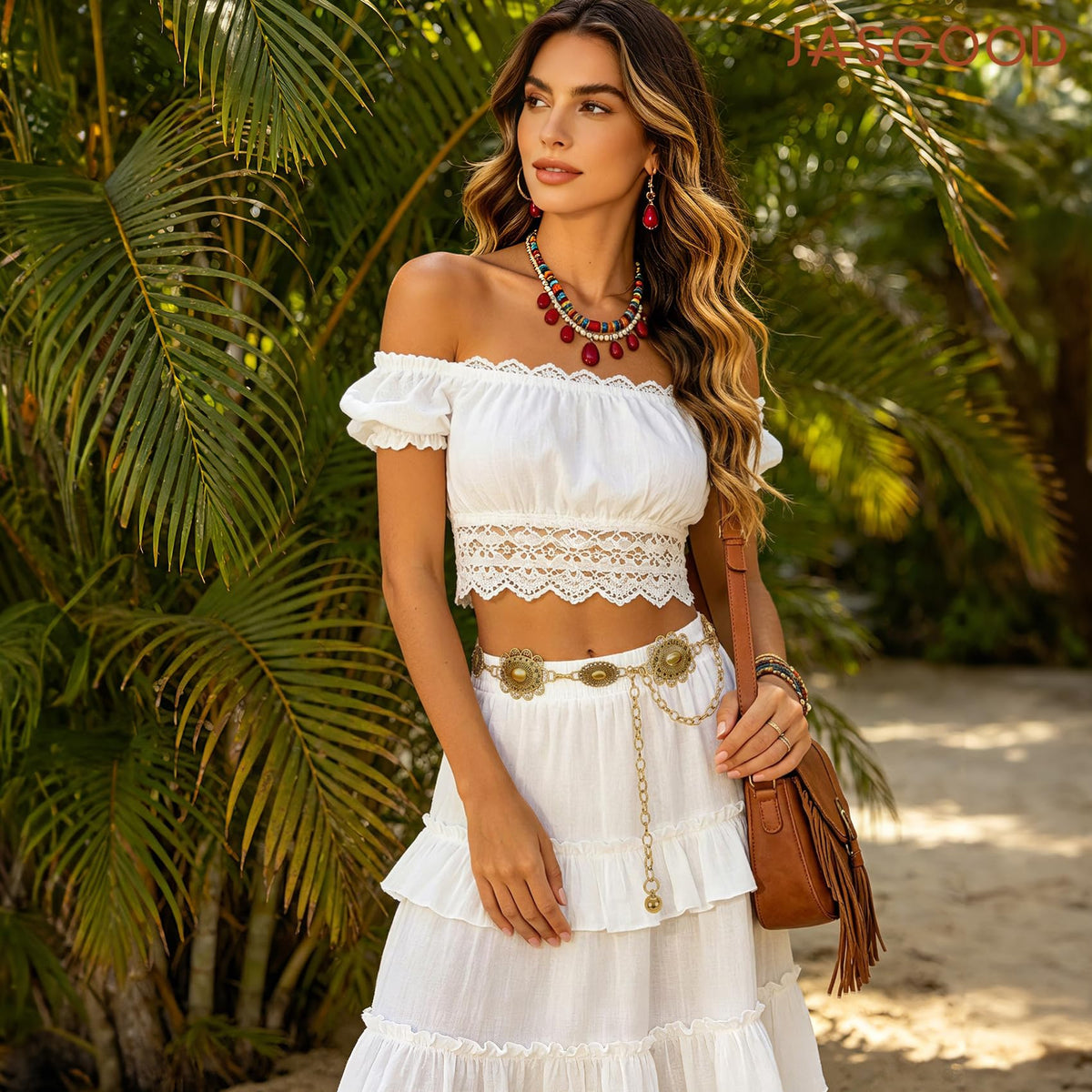
The JASGOOD chain belt edit treats metal as part of an outfit’s visual language. A line of linked elements can introduce repetition, a decorative focal point or a different rhythm around the waist.
Unlike a plain strap, a chain-style accessory asks you to notice the spaces between its elements. The clothes behind it remain part of the composition.
In this story
The JASGOOD chain belt edit: follow the repeated detail
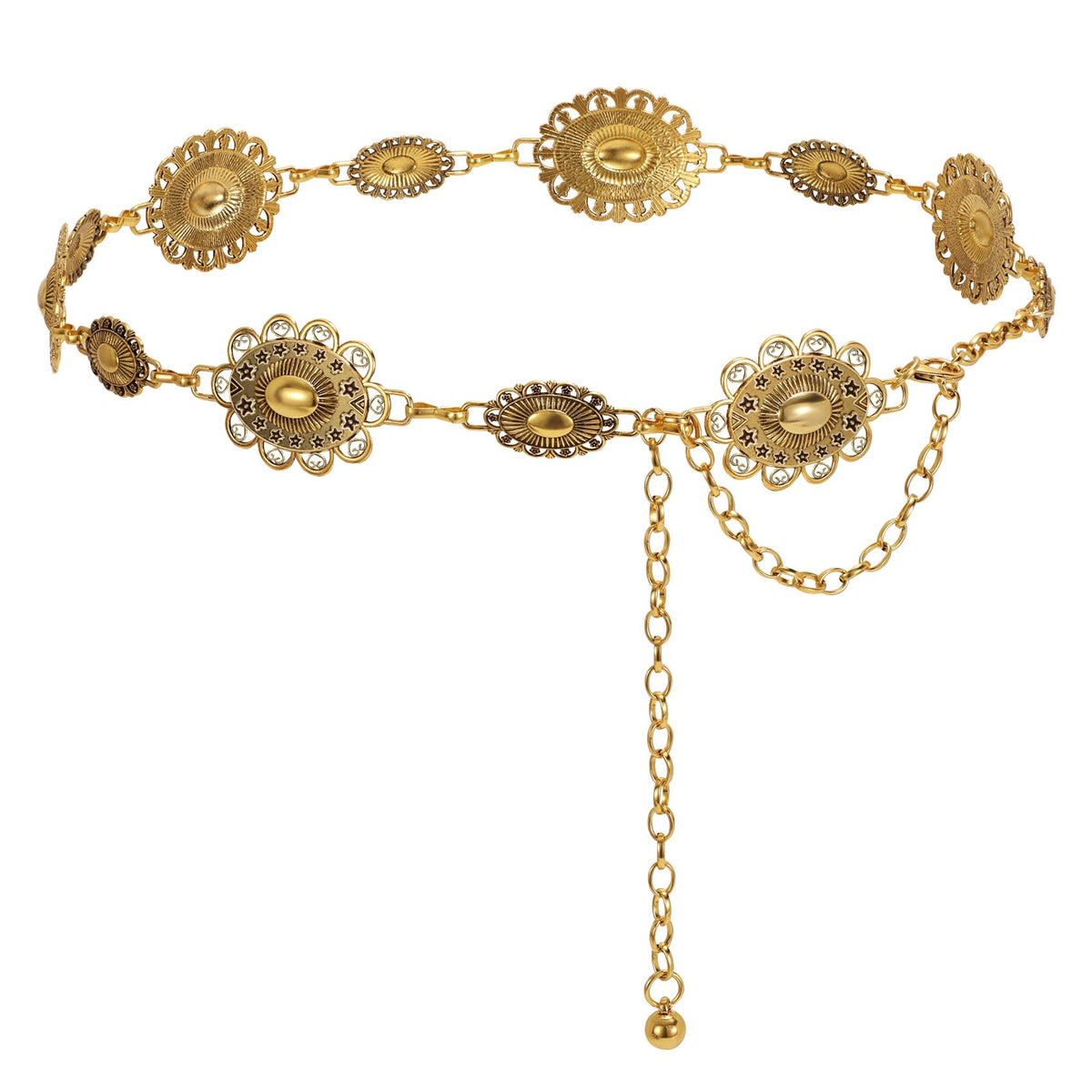
The current collection includes concho designs and a layered body-chain style alongside other waist chains. Those references invite different readings, rather than one universal idea of a gold or silver belt.
Explore the JASGOOD chain belt collection by looking at repetition, spacing and the front detail. Start with the effect you want, then check the selected design’s closure and dimensions.
A decorative label does not establish how much support a belt provides. If your trousers need holding in position, do not assume that an accessory chosen for its appearance will do the same job as a fitted strap.
Give the eye somewhere to follow
A sequence of similar elements can lead the eye around an outfit. A larger central detail can interrupt that sequence and create a more obvious front.
Try reading that pattern against something simple first: a plain dress, a fine knit or a long shirt. This makes it easier to see what the accessory contributes before adding other decorative pieces.
A patterned garment is another possibility, but compare the scale of its print with the scale of the chain. You may prefer one to remain the clearer focal point.
Think beyond a matching metal rule
Repeating a jewellery tone can connect a look, but exact matching is not compulsory. The amount of metal, its apparent brightness and the clothing’s colour also affect the overall impression.
For a quieter reading, reduce the number of competing details around the same area. For a more expressive one, let a repeated shape or colour link the accessories rather than making everything identical.
Use the styling section to explore combinations, not to look for a single rule that decides every outfit.
Build a comparison around one plain garment
Begin with a plain dress or shirt that already fits comfortably. Decide where you would like the decorative line to sit before comparing chain designs. A waist-level accent and an upper-hip accent need not create the same effect.
Look first at the spacing between elements. Closely repeated shapes can read as a more continuous band; a looser sequence allows more of the fabric behind it to remain visible. Neither effect requires an ornate outfit.
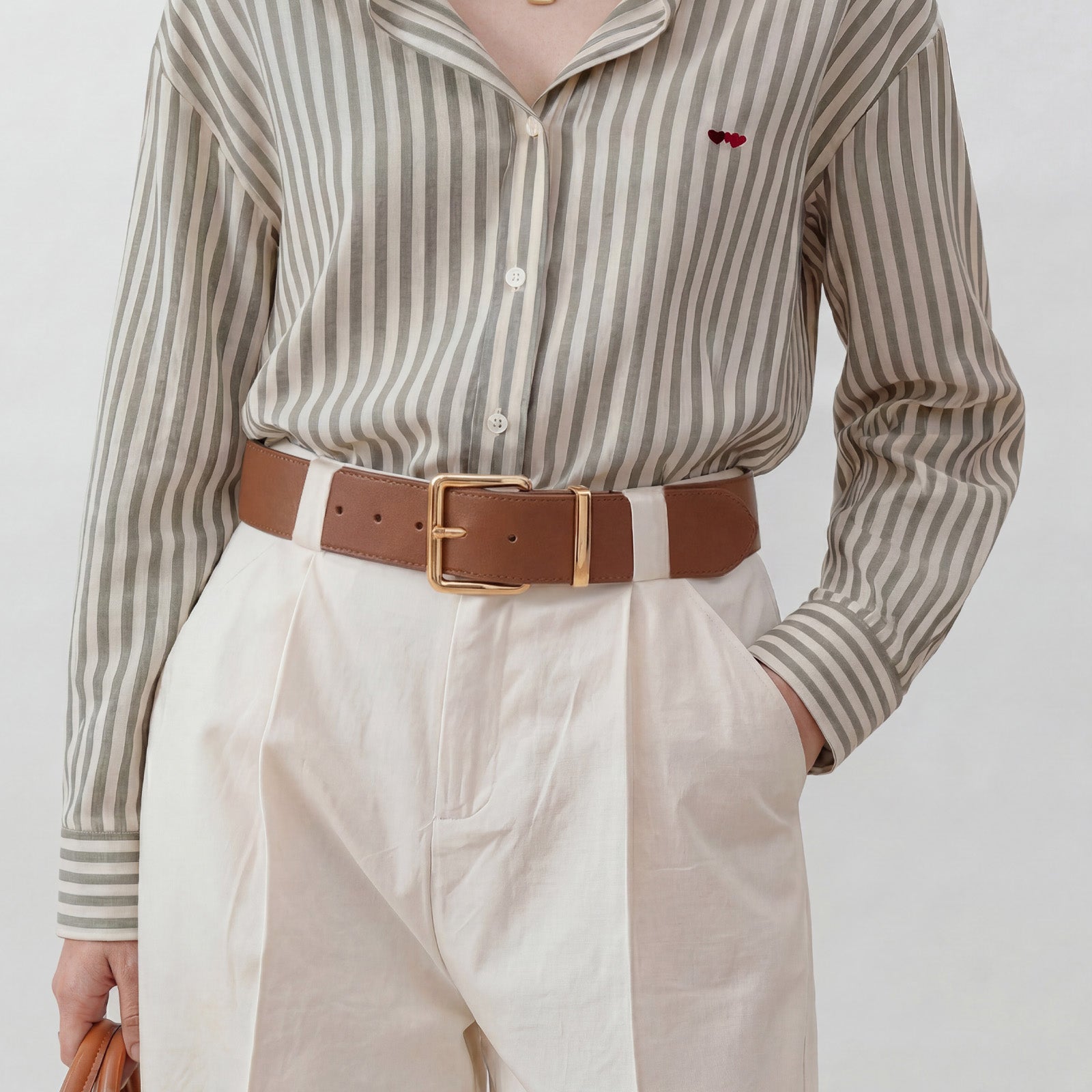
Now compare a chain with a plain strap. A solid brown band can make a stronger uninterrupted boundary, whereas connected concho shapes introduce small breaks. This helps identify the effect you want before considering a purchase.
Keep the garment constant while changing the accessory. If the neckline, shoes and jewellery all change at the same time, it becomes harder to tell whether the chain itself improved the balance.
For an existing chain, check the trailing section while sitting and turning. Keep it away from fabrics that catch and areas of the outfit that feel crowded. Do not improvise a closure the product was not designed to use.
A successful comparison can also suggest restraint: perhaps the chain needs less jewellery nearby, or perhaps the original plain strap better serves the outfit. The edit is an invitation to notice that difference.
A decorative idea still needs a practical check
Confirm the usable length at the position you intend to wear the chain. Look at how the closure works, where any hanging section will fall and whether it might catch delicate fabric.
The buying guides are a useful next stop for comparing details beyond the photograph. A collection edit introduces possibilities; it cannot determine an individual fit.
Let the chain add a rhythm you enjoy. The aim is not to make the outfit busier, but to choose the line you actually want someone to notice.