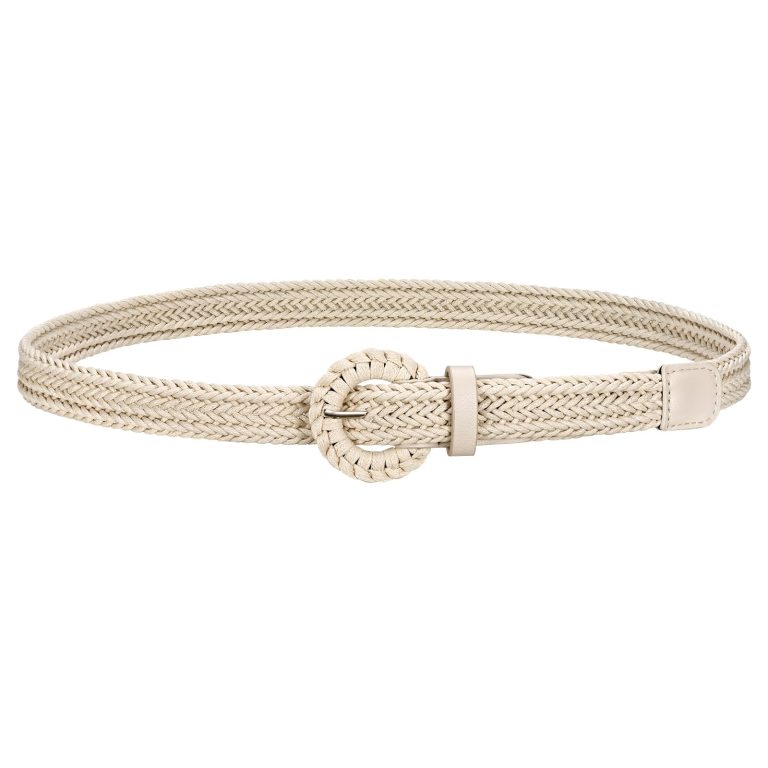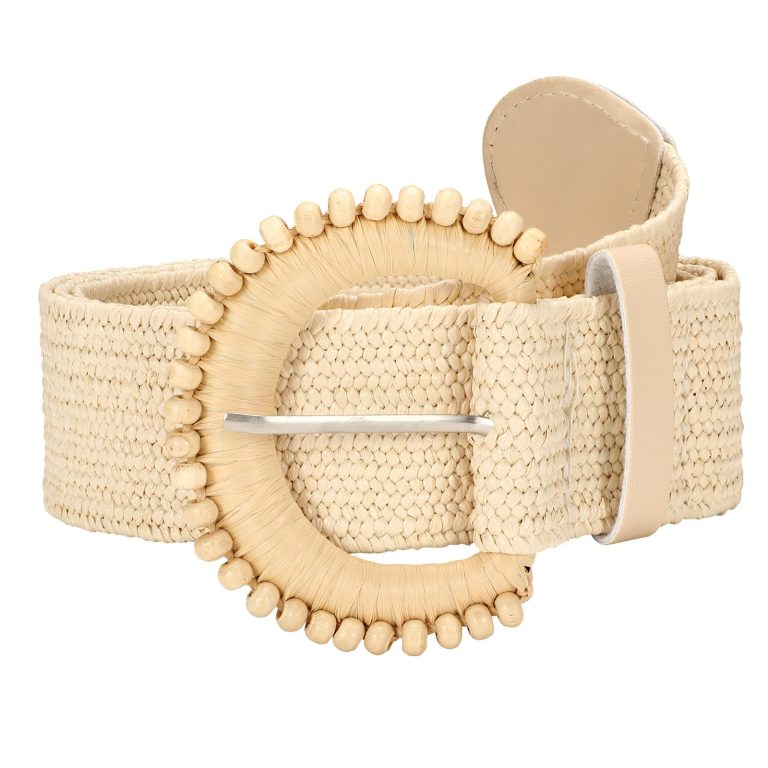
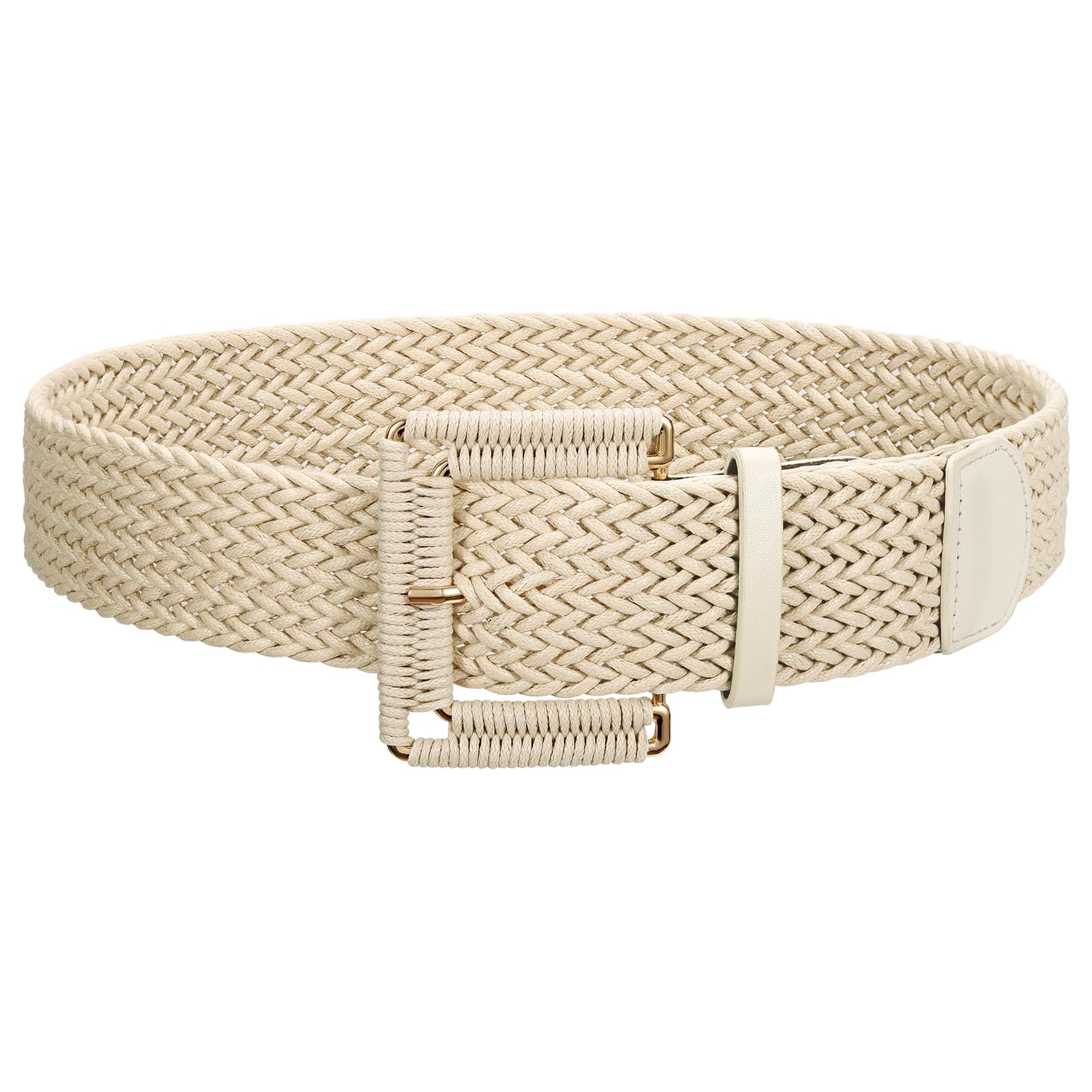
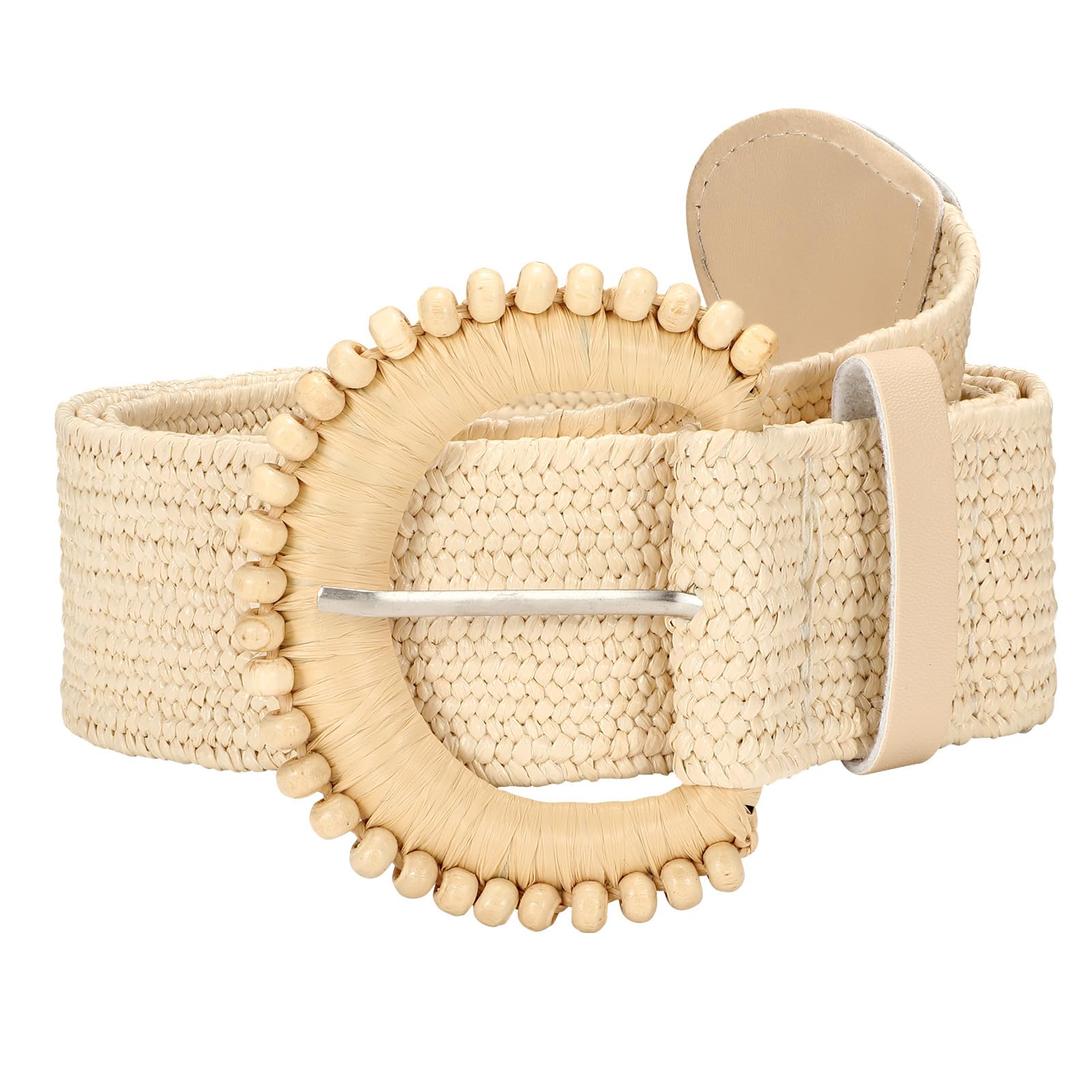
JASGOOD open woven buckles are not necessarily empty windows. In the reviewed rectangular and circular portraits, the band occupies much of the area inside the frame, while the pin adds a separate line across it.
The useful comparison is the space actually left visible. A shape name can describe the outer boundary, but it cannot tell you how much texture, hardware or background will appear within that boundary.
In this story
Read the center of JASGOOD open woven buckles
The rectangular reference has a wrapped-looking frame around a pale textured band. Much of what appears inside that frame is the band itself rather than an unobstructed white opening.
The circular reference also carries pale texture through its center. Its larger outer outline does not automatically produce a larger empty area in the complete product arrangement.
Explore the JASGOOD woven-belt collection if you want to compare those actual occupied centers, not just choose between round and rectangular names.
Look for the pin next. Its metal-looking line crosses a textured field, adding a second kind of mark within the larger boundary.
Then look for any small exposed slivers around the band or hardware. Those are the visible gaps; do not mentally remove the strap to create a much larger opening.
This close reading concerns the pictured fronts as assembled objects, not a diagram of bare buckle frames.
The outer boundary and the inner field do different jobs
In the rectangular portrait, the straighter wrapped edges supply a clear perimeter. The repeated band texture continues across the space enclosed by that perimeter.
The round reference adds a conspicuous bead-like outer rhythm. It makes the circular edge more prominent even where the center remains visually busy with the band.
That distinction explains why an open frame can still read as a substantial focal detail. The perimeter, its decorative marks and the occupied center all contribute to the impression.
Do not assume that the background behind a worn belt will appear wherever white surrounds a coiled product image. The strap and garment can occupy different visible areas.
Equally, a bright point near the pin might be reflection rather than a hole. Follow the actual boundary before describing something as open space.
The photograph is most useful when you keep the outer shape, the material-looking field and the small gaps as separate observations.
Choose an outlined field rather than an imagined void
If your intention is to keep the band’s texture visible at the front, both references offer a more relevant comparison than an empty-frame illustration would.
The wrapped rectangular boundary gives that textured center a straighter enclosure. The round reference emphasizes a larger circular perimeter with repeated marks around its outside.
Neither observation means one shape suits a particular body or garment universally. The decision is about the front detail you want to see within your own outfit.
Imagine a plain garment behind the belt, then ask which part of the accessory would remain the subject: the perimeter, the pale texture, or the line of the pin.
If you specifically want background fabric to show through, verify that result in an actual worn view. Do not select solely from an open-looking shape name.
That turns a vague preference for negative space into a concrete question about what is actually visible.
Keep the chosen view attached to its product
The two photographs depict different models. Their related pale palette should not be presented as proof that one is a shape or color option of the other.
Check the selected gallery for the exact frame, keeper and band. A neighboring woven listing can change all three while retaining a similar collection description.
Read actual buckle and band dimensions separately if proportions matter. Equal-sized image boxes do not establish equal real-world openings.
The same applies to composition: a woven-looking field does not verify straw, rattan or another fiber, and a wrapped appearance does not prove a particular assembly method.
For broader outfit choices after identifying the front you prefer, continue to the styling section rather than treating this as a frame-shape buying rule.
Read JASGOOD open woven buckles as complete fronts, not empty outlines: compare the boundary, the textured band inside it and only the gaps the assembled object actually leaves visible.