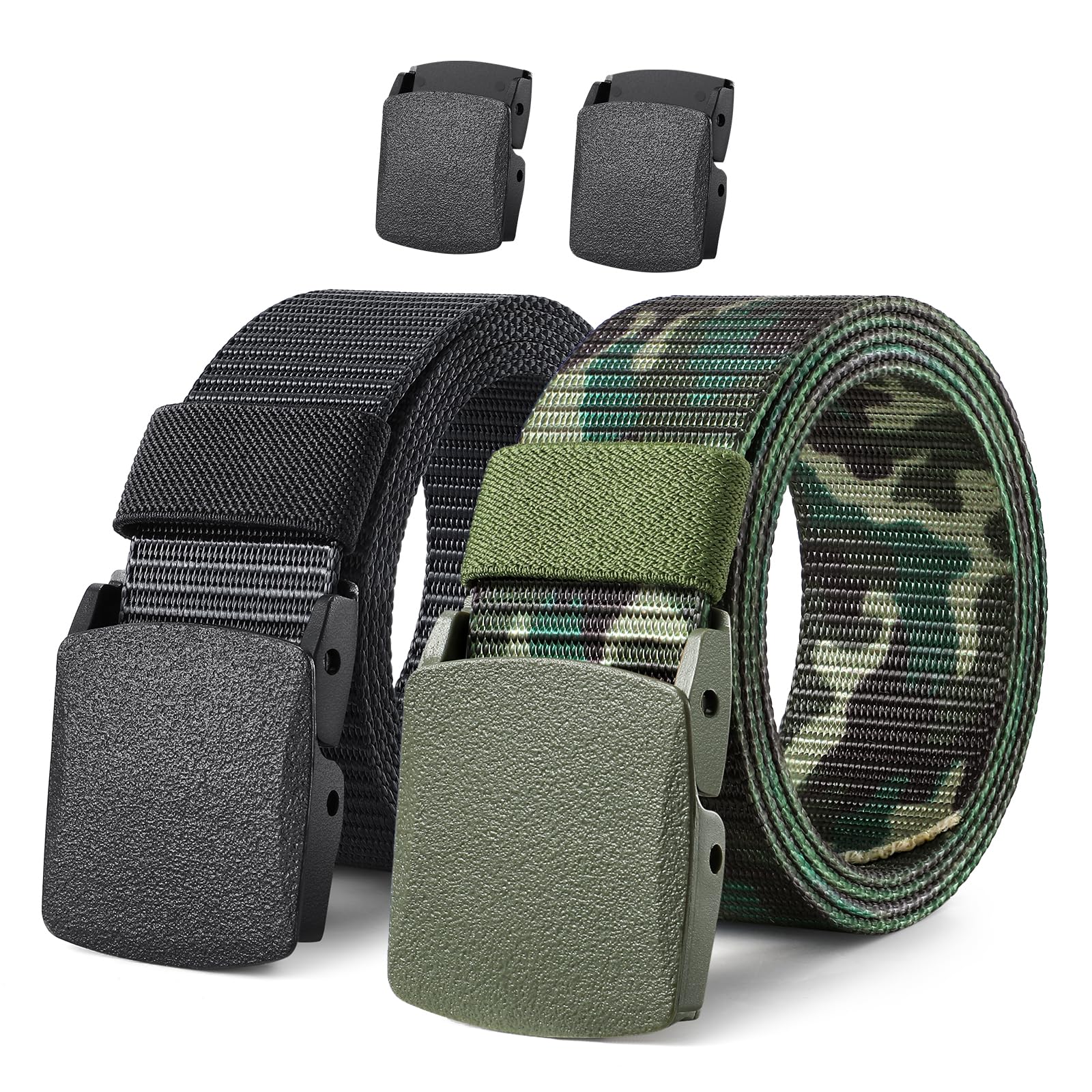
JASGOOD camo belts introduce a second pattern on top of the webbing’s own surface. In the reviewed pair, green and dark printed patches sit across repeated strap ribs, while the adjacent black belt gives the eye a plain reference.
The change is more specific than adding green to an outfit. The print breaks the band into irregular visual areas, and the plain front interrupts those areas with a comparatively solid block.
In this story
Follow the patches on JASGOOD camo belts
In the camouflage image, the print follows the length of the strap without hiding the ribbed surface underneath. Two different kinds of repetition occupy the same narrow field.
The ribs are regular and closely spaced. The printed patches are less even, with dark and green areas changing size as the band turns through the coil.
That difference is a useful reason to browse the JASGOOD nylon-belt selection: compare the printed field, not merely the color name on the card.
The black belt beside the camouflage example keeps the comparison anchored. It shows a plain-looking field within the same group photograph, rather than requiring an imagined before-and-after.
Do not describe the print as a camouflage-performance result. The visible patches establish a pattern, not how effectively the belt blends into any environment.
The front supplies a pause in the pattern
The green front appears much more uniform than the strap behind it. It creates a short pause before the irregular patches resume along the band.
A matching-looking green does not make that front disappear. Its broad uninterrupted surface contrasts with the smaller marks around it.
The strap keeper creates another small plain zone. Together, front and keeper divide the printed field into separate visible passages instead of letting the pattern run continuously.
The plain black belt works differently. Its face and webbing remain close in color, so the difference between smooth-looking front and ribbed band becomes the more important distinction.
Compare those interruptions directly. You are choosing how a pattern stops and starts around the hardware, not simply deciding whether you like a green accessory.
Use the plain pair as a second reference
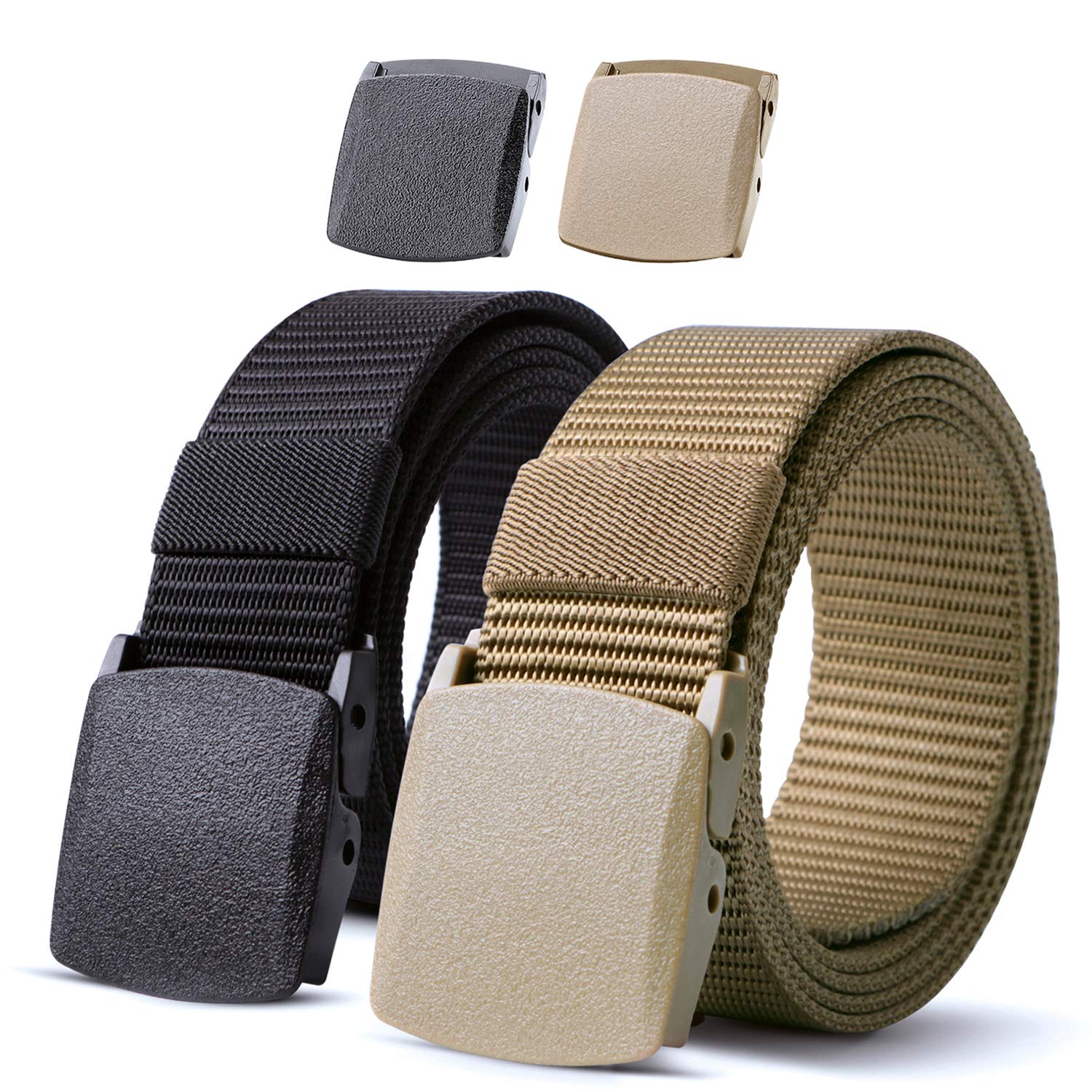
The separate black-and-khaki pair shows what happens when a lighter strap has no camouflage print. Its pale ribbing remains the main surface information across the band.
That khaki belt should not be described as a different color of the printed camouflage design. The two images belong to different listed sets.
The comparison is still useful: lightness alone does not produce the irregular, broken-up effect visible in the printed strap.
A plain khaki field reads as a sustained color area. The camouflage field divides a related earthy palette into smaller shapes that catch the eye at different points.
Keeping those observations separate prevents a simple light-versus-dark explanation from overlooking what the actual print contributes.
Decide whether the waist needs another pattern
With an otherwise plain outfit, the camouflage strap could supply the main small pattern at the waist. That is a possible use of the design, not an outfit demonstrated by the product image.
With a patterned shirt, you would be choosing two pattern systems rather than one. The question becomes whether you want the belt’s broken-up field to remain noticeable beneath the garment.
There is no requirement to match every green patch to another item. You could instead let the black portions relate to a plain dark trouser fabric.
Try comparing a short visible section of the strap with the amount of belt your clothing actually exposes. A print can read differently when only a small span remains in view.
For broader garment combinations, the styling articles are the next step; this close reading is about the printed field itself.
Keep the selected pattern attached to its variant
The current official entry is a two-pack tactical-camo nylon listing. Verify the selected combination rather than assuming the illustrated black-and-green pair describes every option.
The product photograph also includes separate rectangular pieces above the coiled belts. Do not count them as additional complete belts or infer an extra pack size from the layout.
Check the page’s size wording and fastening details independently. A recognizable webbing pattern does not establish the strap’s dimensions or its adjustment system.
The print is enough of a subject on its own. It needs no claim about military use, outdoor testing or the personality of someone who wears it.
Choose JASGOOD camo belts when the actual patchwork is the detail you want at the waist, and use the plain pair to judge how much extra pattern it introduces.