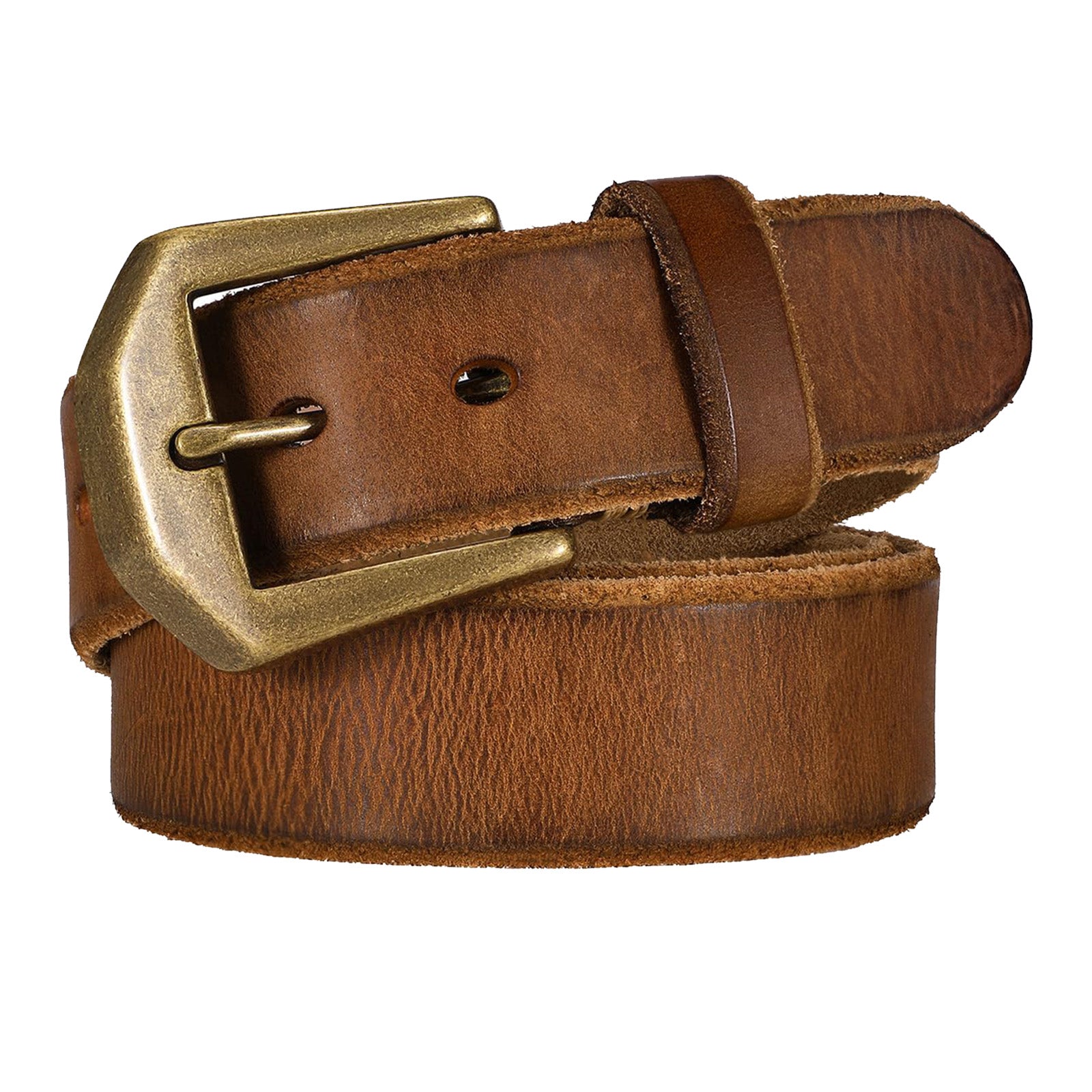
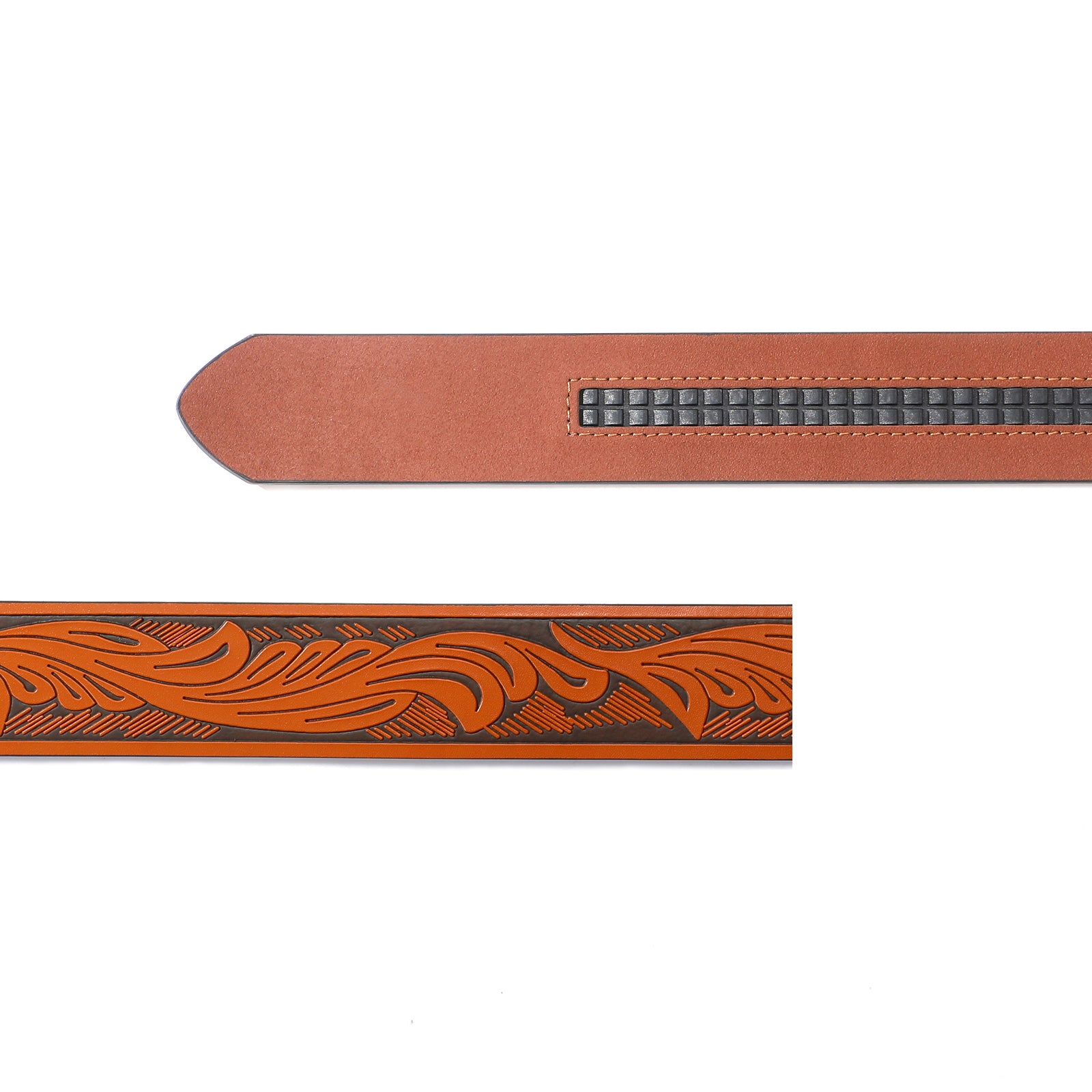
JASGOOD belt strap ends can create a second focal detail after the buckle. In the brown pin-belt portrait, the rounded tail carries a broad curve beyond the keeper; the replacement-strap image gives its end a more pointed outline.
Those are different product forms, not two interchangeable parts. Reading their visible endings helps explain the final line of each image without turning a design observation into trimming or replacement advice.
In this story
Read JASGOOD belt strap ends beyond the buckle
The pin-belt photograph makes the tail especially legible. A brown keeper holds it near the front, while the rounded end remains visible to the right of the rectangular frame.
That curve is a different shape from the buckle’s straighter edges. It gives the eye a softer-looking final boundary after the more angular fastening area.
For complete belts with that kind of visible front-and-tail arrangement, browse the JASGOOD pin-buckle selection and inspect full product views.
A buckle-only crop would miss much of this arrangement. The tail is not merely empty strap beyond the main event; it changes where the object appears to finish.
Notice how much of it is actually shown before drawing conclusions about the whole belt’s proportions.
A keeper creates an interval before the ending
The brown keeper divides the front into distinct areas: the metal-looking frame, a short plain block, and the free tail beyond it.
The visible gap between those areas matters. If a photograph hides the keeper under a trouser loop, the tail may seem to emerge directly from the fastening.
Here the product portrait leaves the relationship available to view. The rounded tip can be considered as part of the front arrangement rather than imagined from a close crop.
That does not establish how much tail would remain on your body. The photographed coil, the chosen size and the wearing position are different questions.
A useful design note is therefore rounded ending beyond a matching keeper, not a promise about the length of strap any wearer will have left.
A replacement illustration shows another kind of end
The separate replacement-strap image shows a more pointed outline and a view of a tooth track. It provides useful visual information, but it is not a complete belted outfit.
Its brown decorated surface also carries marks toward the ending. That makes the tip part of a longer visible pattern rather than only a plain terminal curve.
Keep the two sides of the illustration distinct. A track shown on the reverse should not be described as decoration on the outward-facing surface.
The item is listed as a strap without a buckle. Its image does not establish that it belongs to the complete pin-buckle model shown in the other photograph.
Comparing the ending shapes is legitimate; claiming compatible attachment, width or adjustment would require entirely different evidence.
Choose how much of the ending should be seen
If you like the tail as a visible part of a look, inspect the whole front area rather than choosing only from the buckle’s outline.
A rounded ending may offer a broad final curve beside a rectangular front. A pointed ending can create a more directional line. Those are visual possibilities, not universal style rules.
The garment changes what survives in view. A nearby trouser loop or an untucked hem could cover the tail that looked prominent in the product portrait.
Imagine the actual visible span you expect, but do not adjust or shorten a belt simply to reproduce a catalog arrangement. Fit and the product’s own instructions come first.
The decision is about whether the ending contributes to your intended detail, not whether every belt should display the same amount of excess strap.
Do not confuse the tail with a measurement reference
A visually long tail is not a sizing unit. Its length beyond the front changes with the selected size, fastening position and the product’s particular construction.
When you need to measure rather than interpret the image, use the belt sizing guides instead of measuring the apparent coil or the space in a photograph.
For a replacement strap, verify the exact attachment and compatible buckle information independently. Sharing a brown color or a pointed end does not make two parts compatible.
The two images answer a smaller question very well: how does an accessory end after the main fastening has been noticed?
Read JASGOOD belt strap ends with the keeper and front still in view: a rounded tail and a pointed replacement end finish the line differently, without settling any fit or compatibility question.