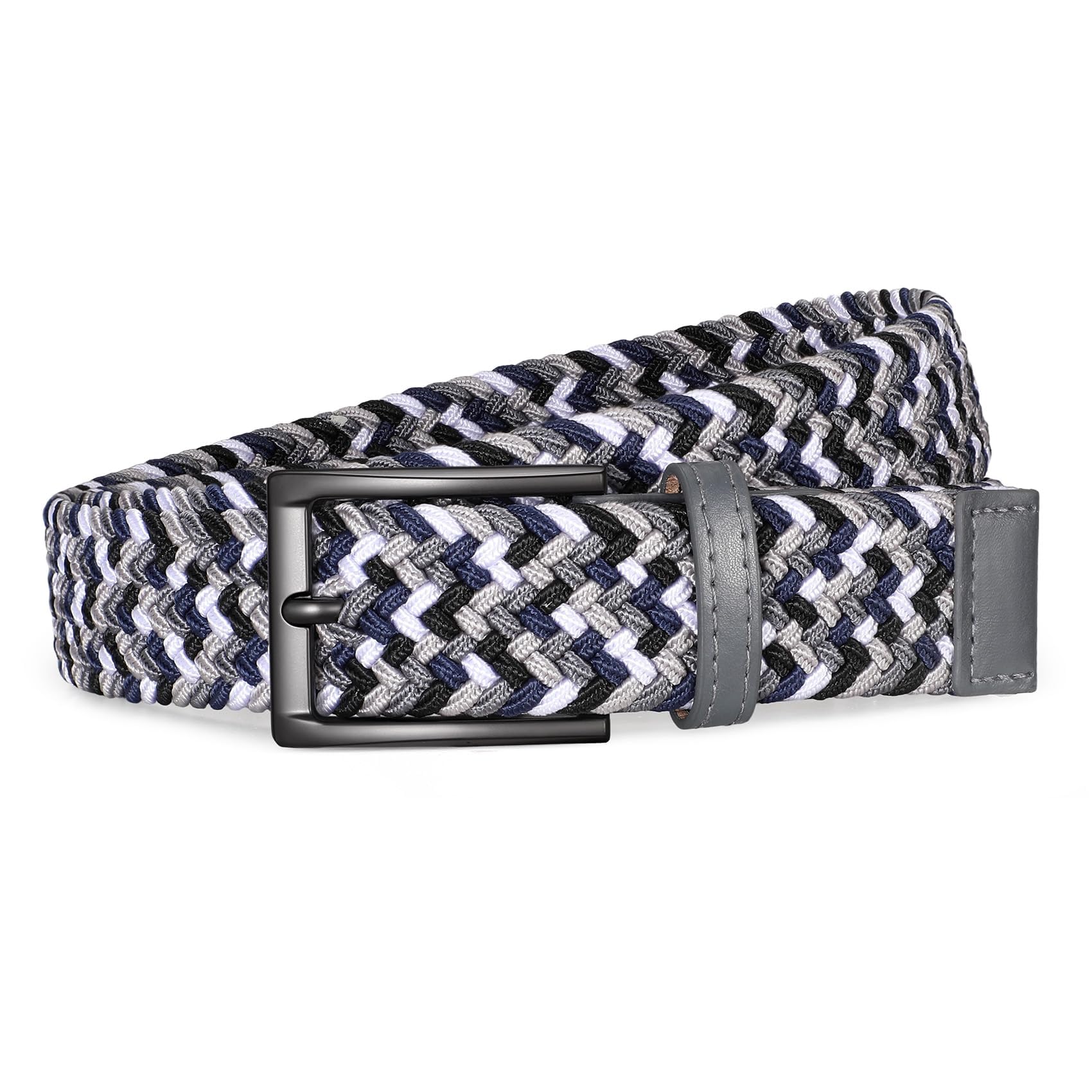
JASGOOD braided belts do not all reveal their repetition equally clearly. A black braid can read almost as one dark surface at a distance, while alternating light and dark strands make a diagonal repeat easy to follow.
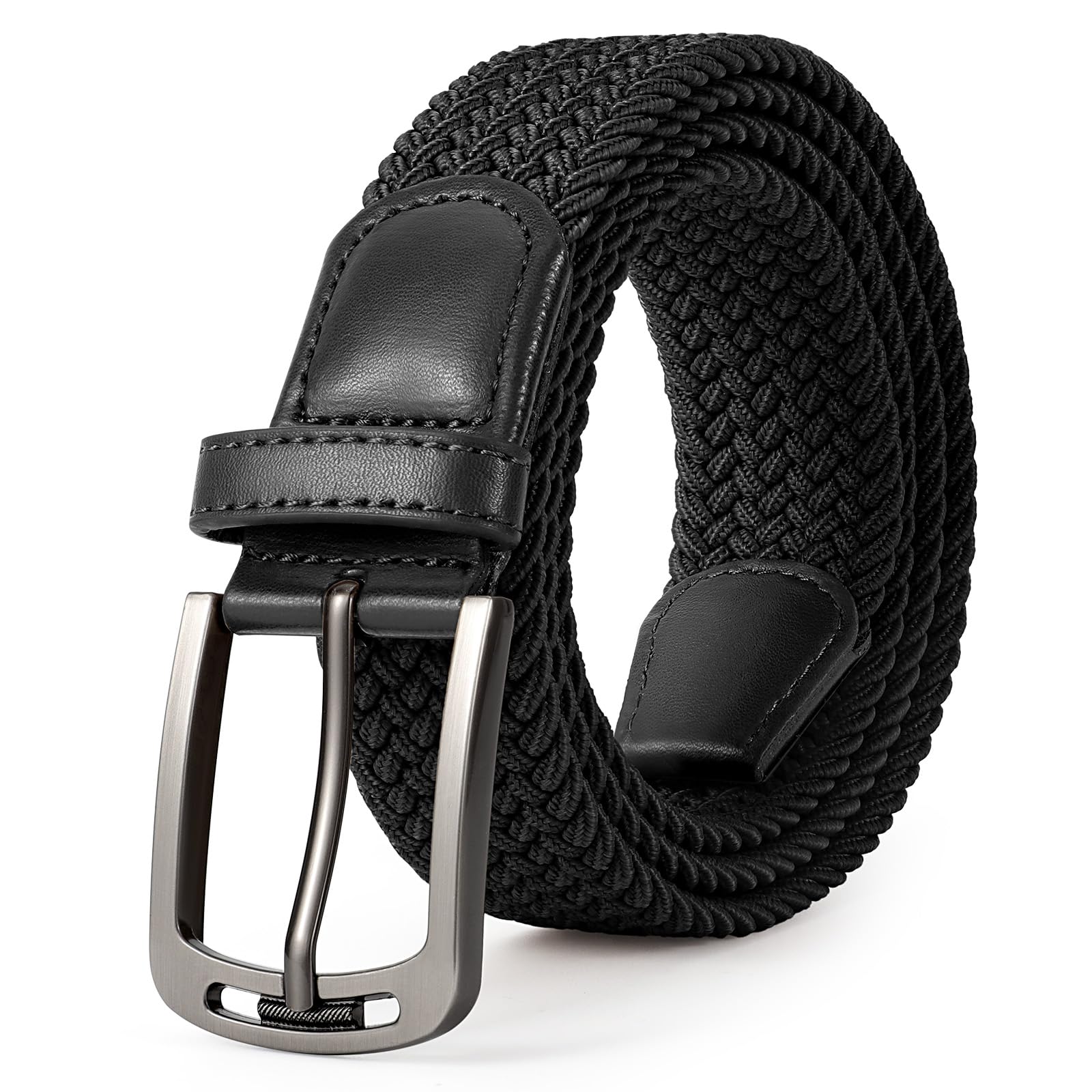
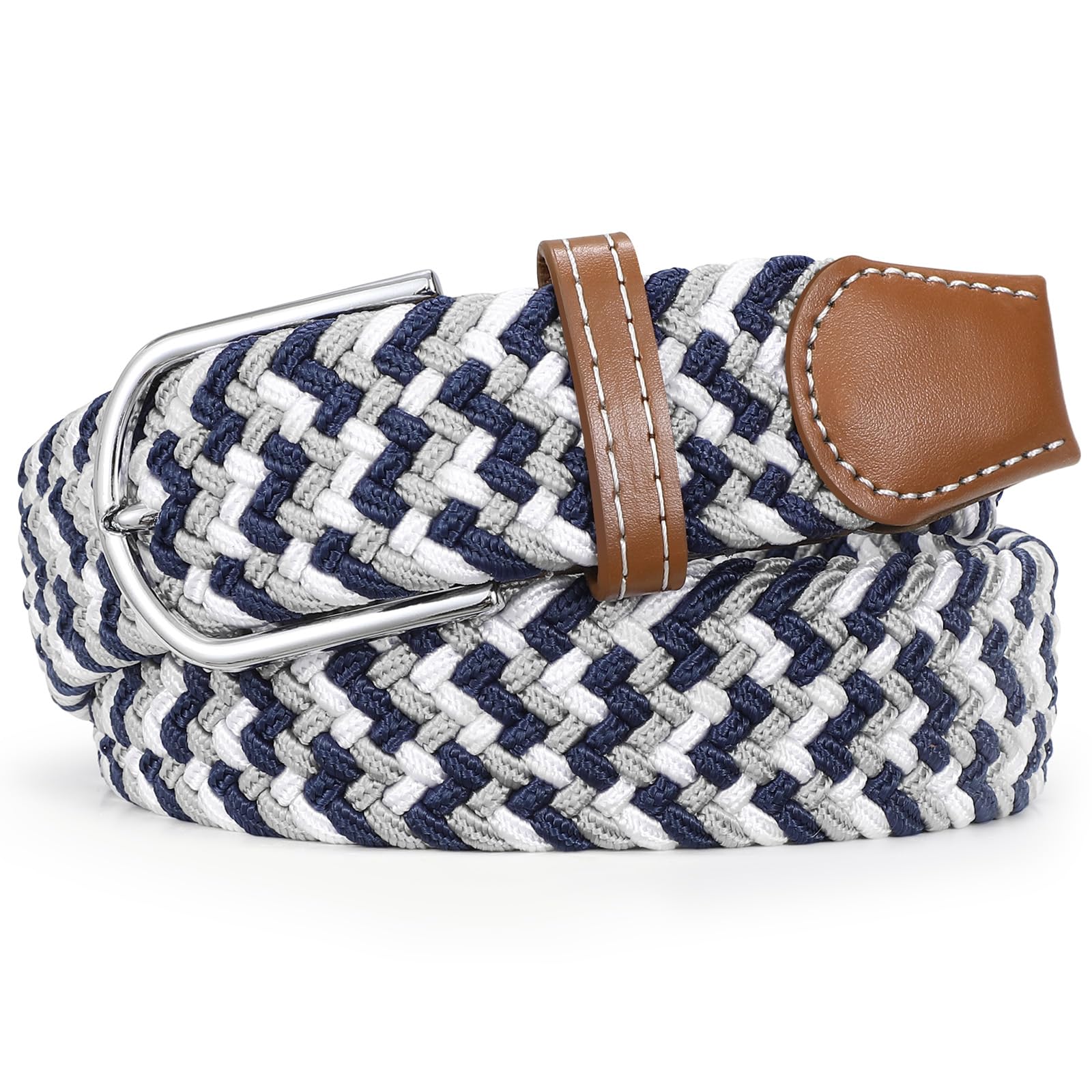
The three reviewed portraits show that difference without needing a performance claim. One is uniformly dark; two use multicolored chevrons with different-looking trim arrangements around the front.
In this story
Find one repeat in JASGOOD braided belts
Choose a short visible span away from the buckle. Follow one light strand across the multicolored field until a similar arrangement appears again.
You are identifying a pictured repeat, not measuring a physical weave unit. Camera scale and the curved product display prevent a reliable size comparison from these images alone.
The JASGOOD fabric-belt collection is a useful place to compare these actual surface patterns when the braid itself, rather than a large buckle, is the attraction.
The gray-trim multicolored example makes the chevron pattern visible across much of the displayed band. Its front uses a comparatively restrained dark frame.
The first visual decision is whether you want the band to show a recognizable recurring pattern or to read more continuously at a glance.
The dark braid keeps the crossing subtle
In the black portrait, the strands remain close in tone. Their crossing pattern is still visible, but it does not make the same light-dark zigzag as the multicolored examples.
The silver-tone pin frame therefore becomes a clearer interruption. Plain dark tabs and a keeper add changes of surface immediately beside it.
That does not make the black braid untextured. It changes which information is easiest to notice from the whole-object image before moving closer.
If a photograph makes a dark braid look smooth, zoom into an unobstructed section rather than assuming the crossing pattern has disappeared.
The distinction is between subtle and conspicuous pictured repetition, not between an object with construction and one without it.
Two chevrons need not be one model
The brown-trim portrait also uses navy, white and gray-looking strands, but its plain tabs and keeper create a warmer contrast around the front.
Do not call it another color of the gray-trim example merely because both show chevrons. The images belong to separate product references in the reviewed assortment.
The plain brown pieces create a short pause before the bright metal frame. In the gray-trim portrait, the surrounding trim stays closer to the cooler field.
The visible repeat and the front arrangement should therefore be noted separately. A shared chevron vocabulary does not erase the differences around the fastening.
Equally, a different trim color does not establish a different elasticity or braid technique. Those claims cannot be supplied by the photographs.
Decide whether the band or the front should speak
For a hypothetical plain polo and trousers, a multicolored braid could provide a small recurring pattern along the waistband instead of concentrating all detail at the buckle.
The black reference offers another possibility: retain visible texture up close, while letting the pale metal front be the clearest mark from farther away.
If a garment already has a conspicuous pattern, ask whether you want the braid’s zigzag to be equally noticeable. There is no requirement to add another strong repeat.
Try covering the buckle area on your screen briefly and comparing only the bands. Then uncover it and notice how the trim changes the first impression.
That small reading exercise answers a design preference. It is not a wear test, a stretch comparison or evidence that a particular pattern suits every wearer.
Keep the repeat attached to its exact product
Check the current product gallery and selected color before choosing. A dark braid, a multicolored braid and a set image are not interchangeable illustrations of one generic fabric belt.
Read the listing’s material and size information separately. Neither a close braid nor a wide-looking chevron establishes how far the actual product stretches.
The buying guides can help with those practical questions without turning the visual comparison into a claim about athletic performance.
Record the repeat you liked and the trim surrounding it. That preserves the specific reason the product image appealed when you return to the collection.
Compare JASGOOD braided belts by the repeat you want to notice first: close-toned crossings or color-drawn chevrons, keeping each pattern attached to its own trim and selected product.