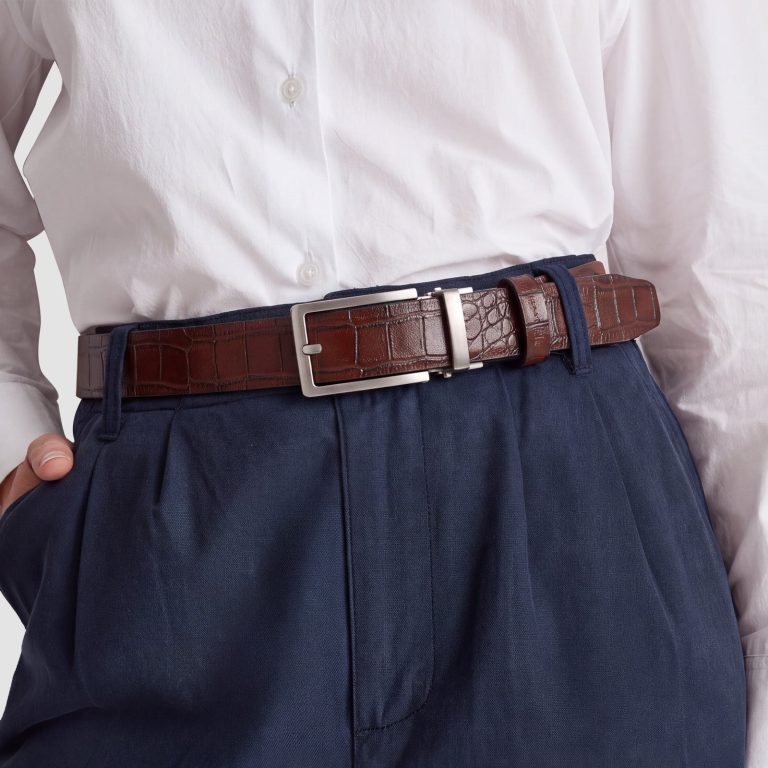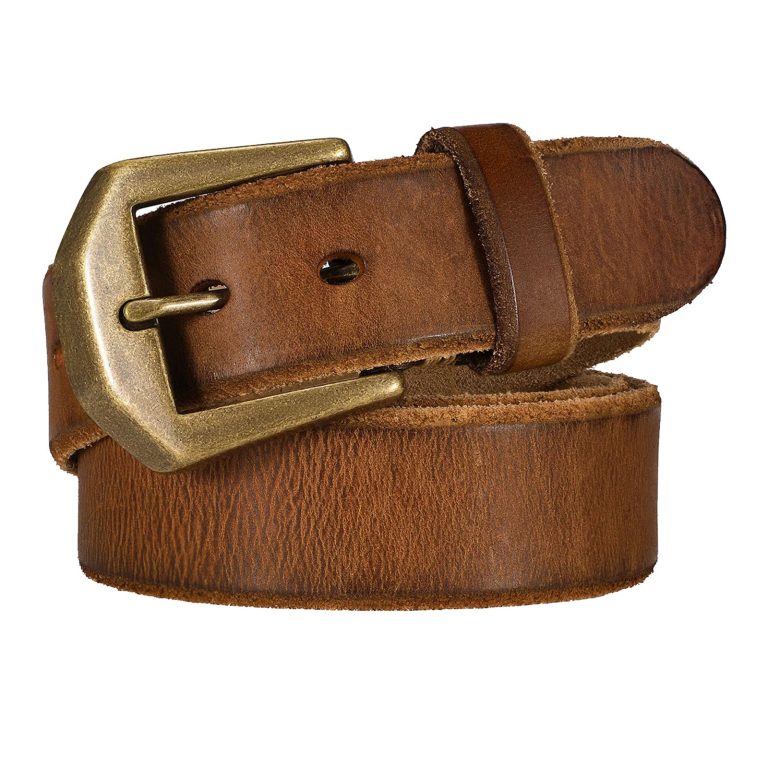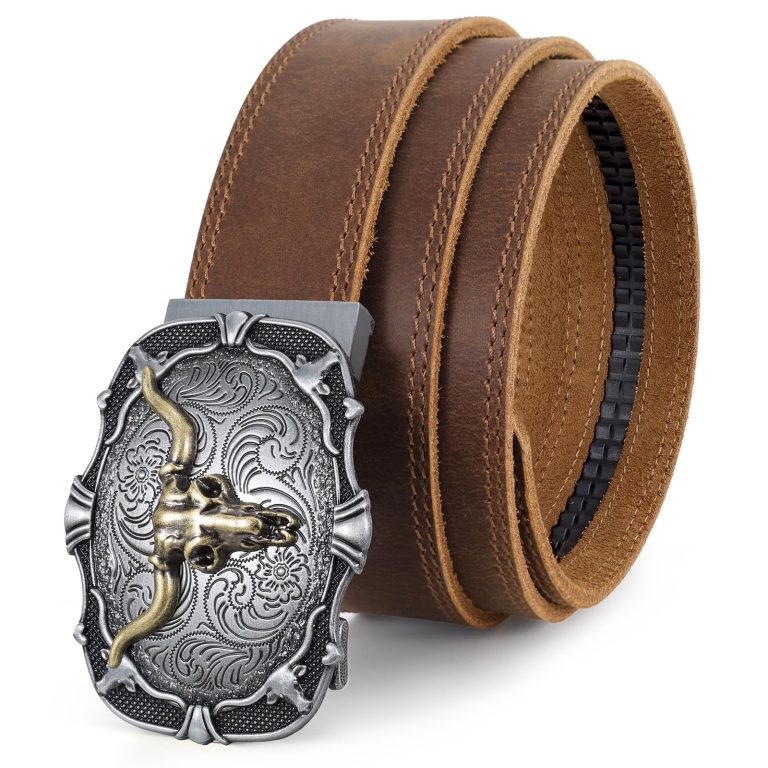
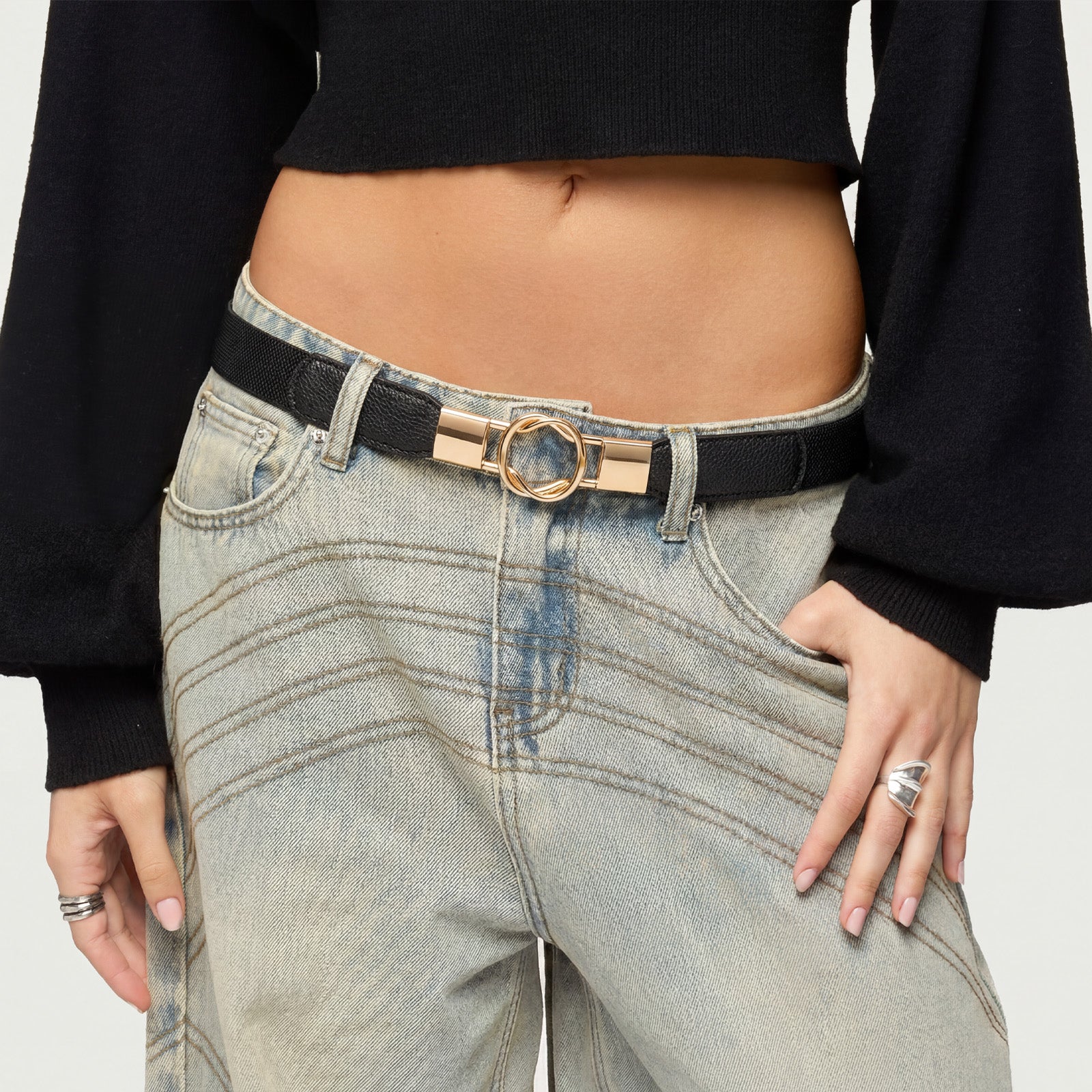
To find your belt size, measure where the belt will sit over your clothes, then compare it with the product’s size guide. Your trouser label and a belt’s total length are useful clues, but neither is a universal belt size.
In this guide
First, decide where you will wear it
A belt through high-rise jeans sits in a different place from one on low-rise trousers. A waist belt over a dress may need another measurement. Take a separate reading for each position you actually plan to use.
Gather a flexible tape measure, the intended outfit and, if you have one, a belt that already fits that outfit. Write down both inches and centimeters so you can compare listings without guessing.
Keep the size chart for your chosen JASGOOD women’s belt or men’s belt beside these measurements.
Compare the usable fit range, rather than treating total strap length as your waist size.
Method 1: measure over the clothes
- Put on the outfit. Fasten the trousers normally. Include any shirt or light layer you expect to tuck in.
- Follow the belt path. Thread the tape through the loops, or wrap it around the position where a dress belt will sit.
- Keep the tape flat. It should touch the clothing without pulling the waistband inward. Stand naturally and breathe normally.
- Read and repeat. Take a second reading to catch a twisted tape or a change in position. Record the measurement rather than rounding straight to a product size.
- Use the product chart. Find the stated fit range that includes your reading. Check whether the chart expects a body measurement, trouser size or a measurement from an existing belt.
Do not automatically add two inches. Some sizing systems use that shortcut, while others already state the waist range they fit. Applying it to every product can make a suitable size unnecessarily large.
Method 2: measure a belt that already fits
This method works best when the old belt and new product use comparable fastenings and the chart explains its measuring points. Lay the old belt flat and gently straighten it without stretching.
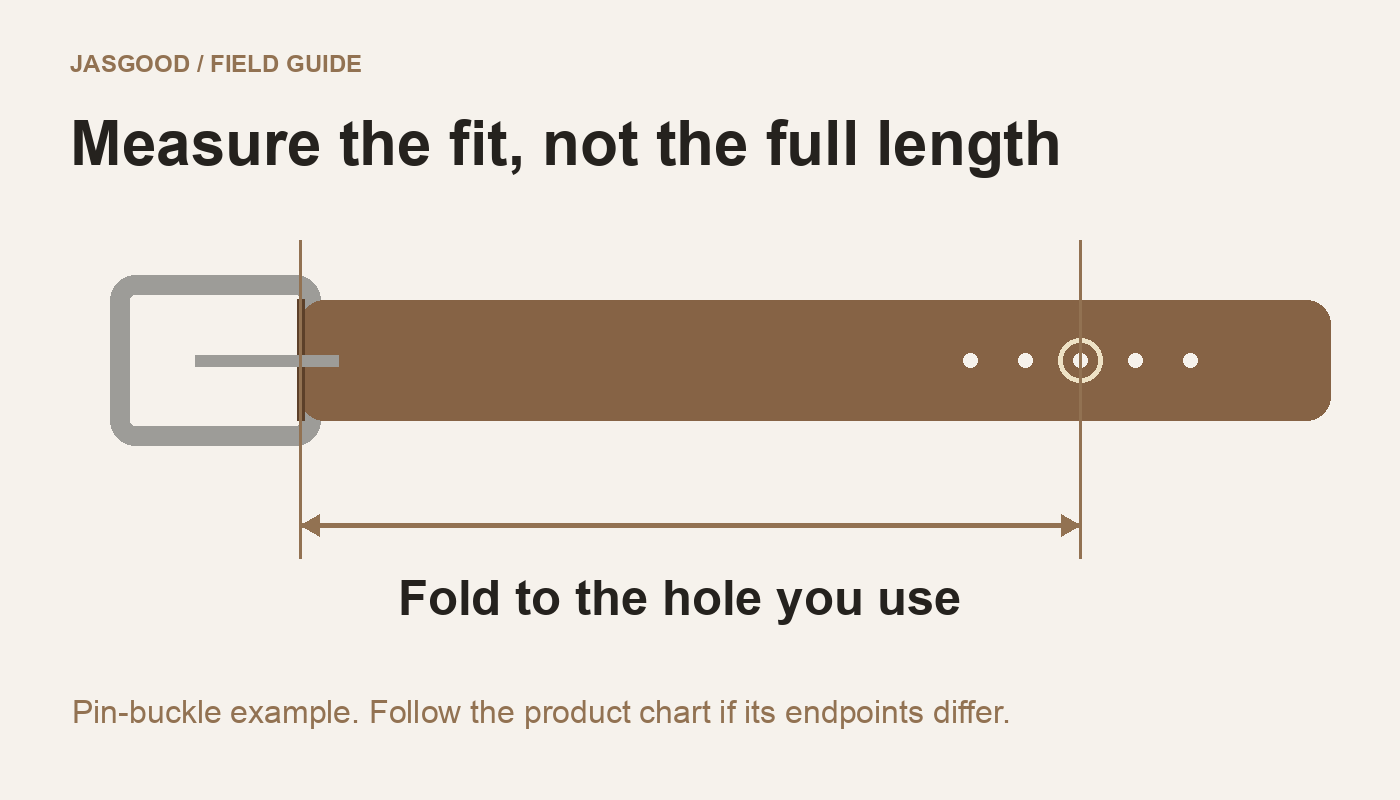
For a common pin-buckle system, measure from the fold where the strap meets the buckle to the hole you use. Some brands include part of the buckle in their method, so match the new brand’s diagram before comparing.
Do not measure all the way to the tip and call that the waist size. The end beyond the fastening hole is the tail; it adds to total length without adding the same amount to the fit.
A worked example
Suppose your measurement over a pair of jeans is 34 inches, or 86.4 cm. If a listing gives a fitted waist range of 32–36 inches, your reading falls inside that range. This is an example, not a universal JASGOOD size chart.
If a different listing says only “38-inch length,” that is not enough information. It might mean total strap length, distance to a middle hole or another measurement. Look for the diagram or ask the seller.
| Your note | What it means | What to do with it |
|---|---|---|
| 34 in / 86.4 cm over jeans | The circumference at this wearing position. | Compare with a stated fitted waist range. |
| 34 in to the used hole on an old belt | A useful reference for that belt and measuring method. | Check that the new chart starts at the same place. |
| 38 in end to end | Total length, including parts that may not wrap around the waist. | Do not treat it as a fitted waist measurement. |
Different fastenings need different checks
Pin buckle
Look for a fit that leaves some adjustment in both directions. You should not need the very last hole just to fasten it. Check that the tail reaches its keeper without leaving an awkward amount to manage.
Ratchet belt
Use the stated adjustment range and read the release instructions. Only trim a strap if that exact product is designed to be cut to fit. Confirm the cutting end and method before making an irreversible cut.
Stretch or woven belt
Check whether the listing gives an unstretched length, a stretched length or a fitted waist range. Do not assume stretching a belt to its maximum will feel comfortable throughout the day.
Chain or waist belt
Measure over the dress or top at the intended height. Distinguish usable fit from total chain length, including an extension or decorative tail. Our chain belt guide explains placement.
Check width as well as length
A correctly sized strap can still be too wide for the trousers. Measure the usable opening inside a belt loop, and check that both the strap and finished tip can slide through without force.
Our 1.25-inch vs 1.5-inch guide shows the width difference. Length controls how the belt closes; width controls how it fits the loops and looks with the outfit.
Before removing the tags
Try the belt with the clothes you measured. Sit down, stand up and bend gently. Check that the buckle does not press into you and that you can loosen or tighten it comfortably.
If you fall between listed sizes, read that product’s advice. The JASGOOD sizing FAQ recommends comparing your measurement with the individual product guide and choosing the larger size when between sizes.
Can I buy from trouser size alone?
Use it only if the belt’s size guide specifically asks for it. A fresh measurement over the intended clothes is a more direct way to compare with a fitted waist range.
Should the tail stop at a particular trouser loop?
Loop spacing differs between garments. Focus on secure fastening, usable adjustment and a tail that stays neatly in its keeper, rather than a fixed “first loop, second loop” rule.