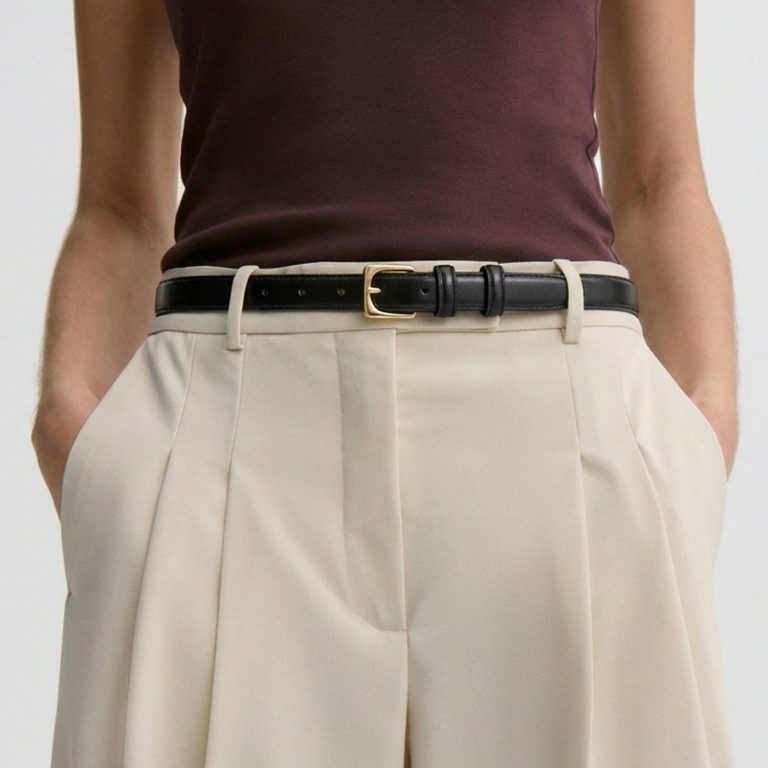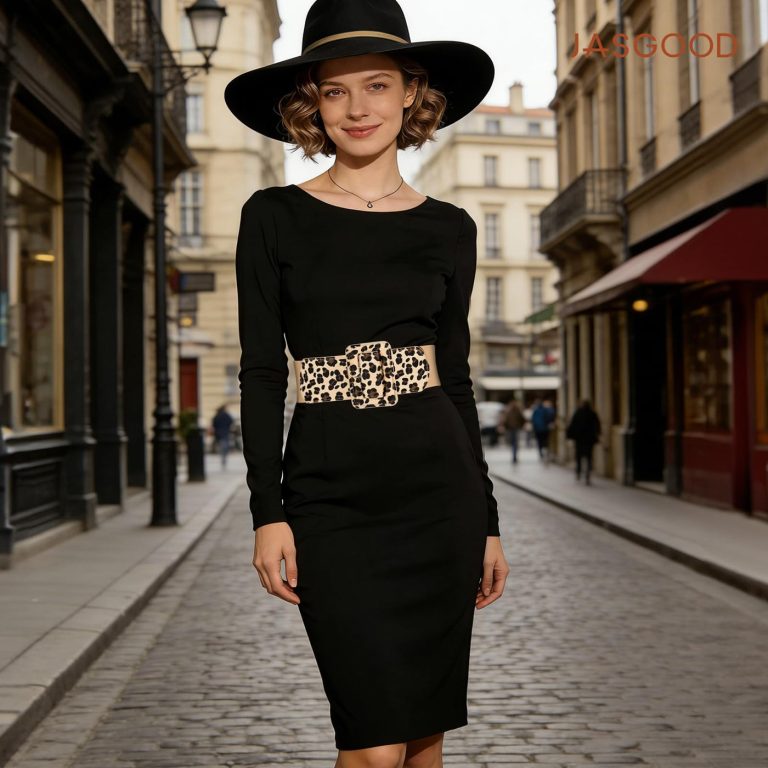
Autumn belt colors can connect the warmer and heavier pieces in your wardrobe, but there is no seasonal rule that excludes black, white or cool tones. Begin with the outfit’s existing palette and decide how visible the belt should be.
In this guide
Choose between connection and contrast
A belt close to the trouser or dress color keeps the waist detail subtle. A contrasting color draws attention to that point. Both approaches can look intentional when the rest of the outfit supports the choice.
Lay two belts beside the clothes in daylight before fastening either one. This makes the color relationship easier to see than choosing from a small product thumbnail.
Browse JASGOOD women’s belts to compare the available colors and buckle finishes. Check the selected variant’s photos carefully; use the whole outfit, rather than the season name, to decide which color earns a place.
Four palettes to try
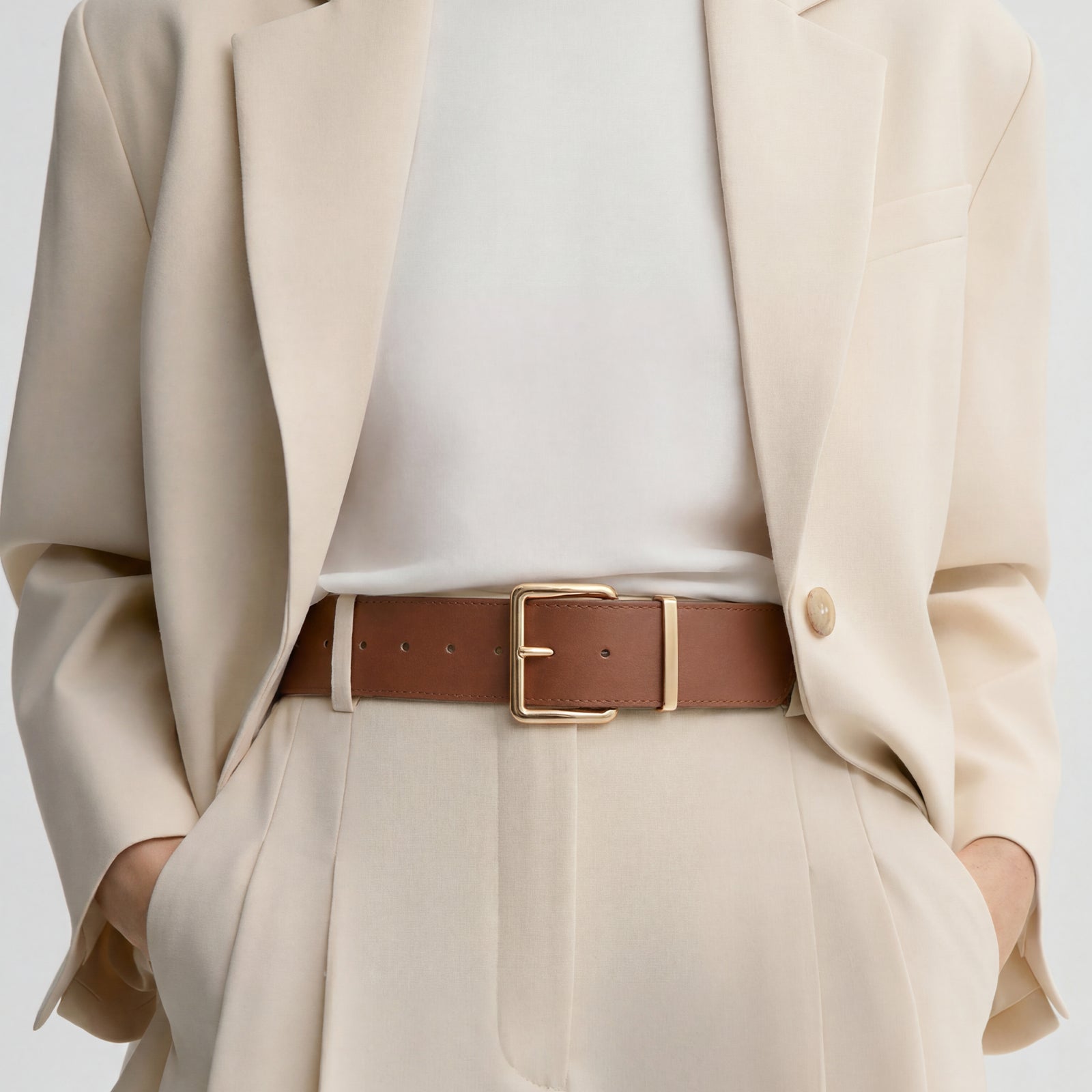
Cream, indigo and brown: combine a cream top with blue denim and a tan or medium-brown belt. The belt adds warmth without introducing several new colors.
Charcoal, black and silver-tone detail: use a black belt with gray trousers or a charcoal dress. A compact buckle adds definition while the clothing stays within a cool palette.
Navy, burgundy and dark footwear: a burgundy belt can provide a quieter accent than a bright red one. Repeat a related tone in a scarf or bag if you want more connection.
Olive, oatmeal and dark brown: pair olive trousers with a pale knit and a darker belt. Check that the strap remains distinguishable from the waistband if you want the waist detail visible.
These combinations are starting points. Your existing shoes, coat and bag may suggest another pairing that works just as well.
Let the buckle finish join the outfit
A warm gold-tone buckle can echo warm jewelry or bag hardware. Silver-tone hardware can connect with cooler accessories. Exact matching is optional, especially when the hardware is small and understated.
If the buckle is large or shiny, view it as a separate accent. A quiet strap color does not necessarily make a prominent buckle disappear.
Adjust the effect before buying
Try the belt with a full tuck, a small front tuck and the top untucked. How much belt you expose can change the outfit as much as the color itself.
Photograph the complete outfit in ordinary daylight. If the waist becomes the only thing you notice, try less contrast or a smaller buckle. If that emphasis is what you wanted, keep it.
Choose the belt you can pair with more than one outfit. Repeating a useful color is a stronger reason to buy than following a fixed list of seasonal shades.