Belts for long-haul flights should feel comfortable after sitting, not just while standing in front of a mirror. Start with trousers that fit well, then use a belt only for the support or finish the outfit needs.
In this guide
Test the complete travel outfit
Wear the trousers, underwear and tucked layers you intend to travel in. Sit for several minutes and lean forward as you would to reach a bag beneath a seat.
Notice where the buckle meets your abdomen and whether the strap folds at the sides. A belt can fit the loops perfectly and still be uncomfortable in this position.
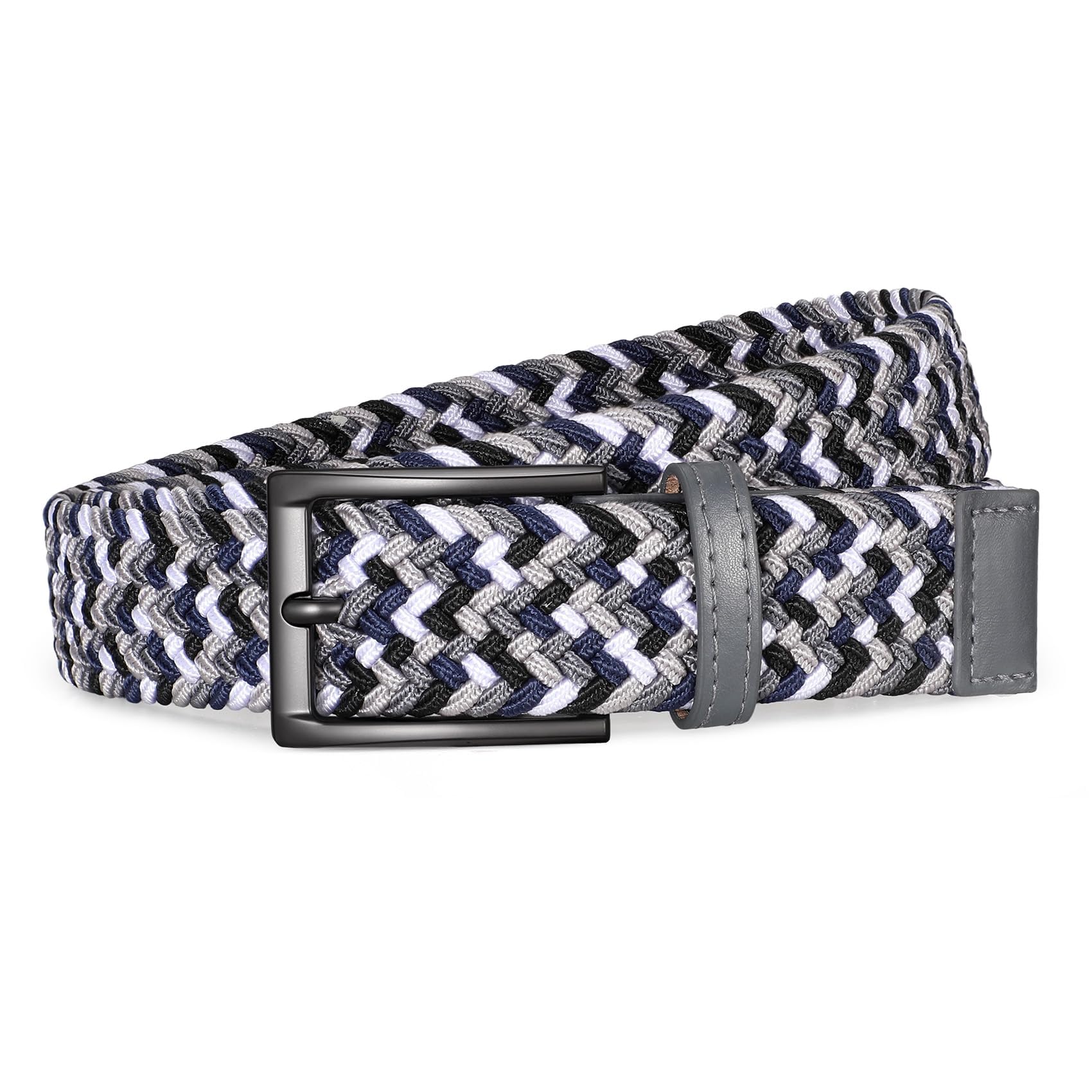
Explore JASGOOD fabric belts if you prefer a softer-looking or flexible option. Check the particular model’s stretch, fastening and adjustment range; fabric construction alone does not guarantee comfort.
Choose the features you will use
An accessible adjustment
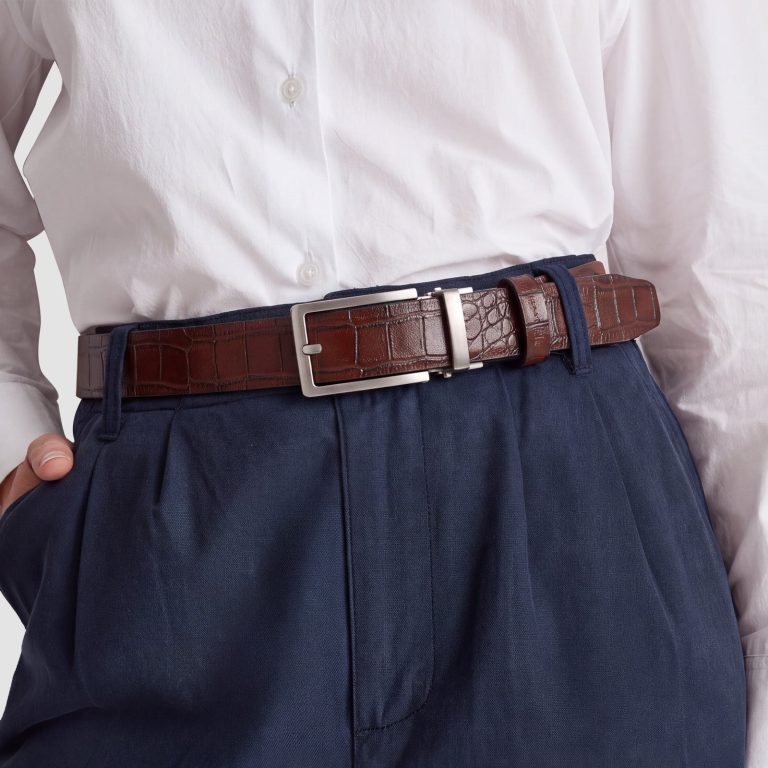
Look for a fastening you can loosen and secure while seated without awkward pulling. Practice with the actual belt, since different ratchets, rings and clasps release in different ways.
Do not choose an unfamiliar mechanism immediately before a trip without trying it first.
A manageable buckle
Compare the buckle’s thickness as well as its width. A slim-looking strap can still carry a deep buckle that presses beneath a close-fitting top.
Move through ordinary seated positions and check that the hardware does not catch on the seat belt or clothing.
A controlled tail
Secure excess strap in its intended keeper. A very long tail can become inconvenient when you are managing luggage or using a small restroom.
Two travel combinations
With stretch trousers and an untucked knit, try a low-profile design that provides gentle support. Check that it does not pull the waistband into gathers.
With jeans and a tucked T-shirt, choose a compatible width and leave comfortable room at the fastening. If the jeans themselves restrict movement, changing the belt will not fully solve the problem.
Keep airport screening separate
A belt sold as lightweight or nonmetallic is not a promise about screening procedures. Follow the instructions at the airport, and choose a fastening you can remove and replace without difficulty if asked.
Pack for the return journey too
If you bring a second belt, protect its buckle from rubbing against shoes or delicate clothes. A loose roll usually uses less awkward space than a sharp fold.
Choose the travel belt after the seated test, then keep an easy-to-reach adjustment rather than fastening tightly before a long stretch in your seat.