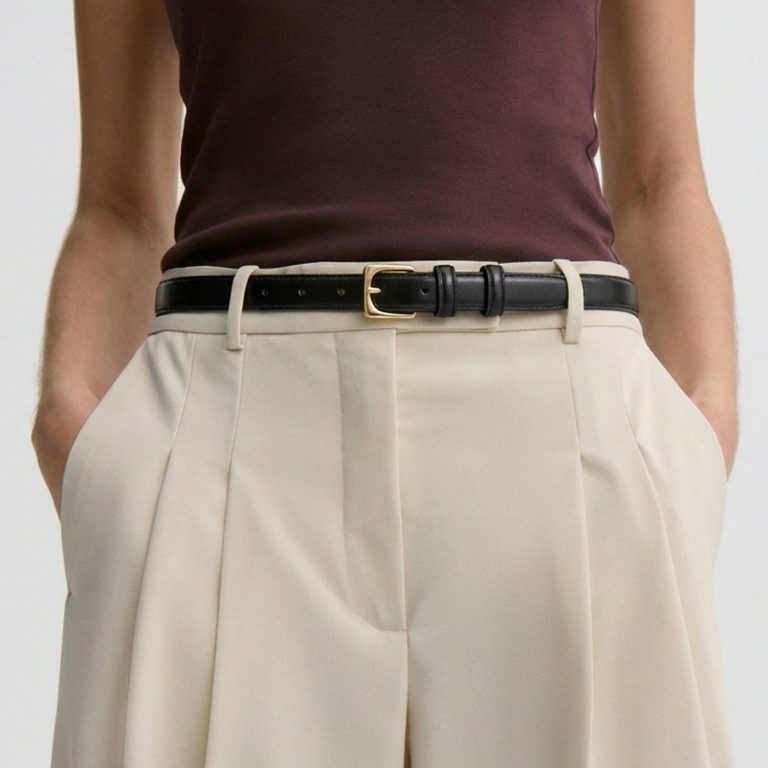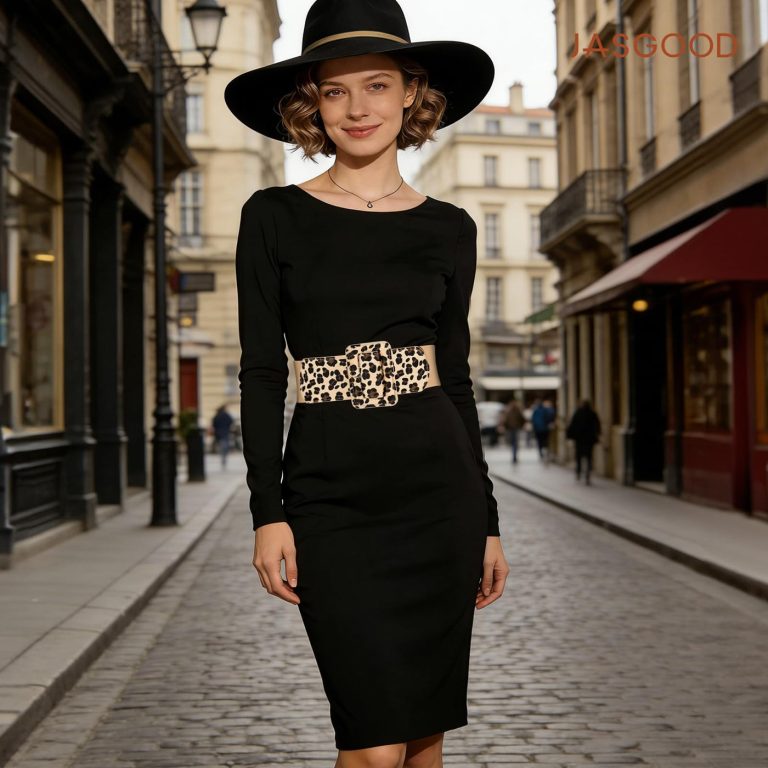
Belts for business casual should work with the clothes and expectations of your workplace. Start with the trousers and shoes, then choose a buckle and finish that feel considered without being uncomfortable during a desk day.
In this guide
Fit the actual trousers
Measure the usable opening of the belt loops. A 1.25-inch or 1.5-inch strap may be worth comparing, but neither measurement is automatically correct for every chino or wool trouser.
Check the thickness and finished tip too. A belt that barely squeezes through the loops is not a good fit simply because its stated width sounds familiar.
Compare JASGOOD office belts using the width and fit range required by your trousers. Look at the buckle profile as well as the strap: a compact fastening can sit more neatly beneath a shirt or jacket.
Three business-casual combinations
Chinos and a knit polo
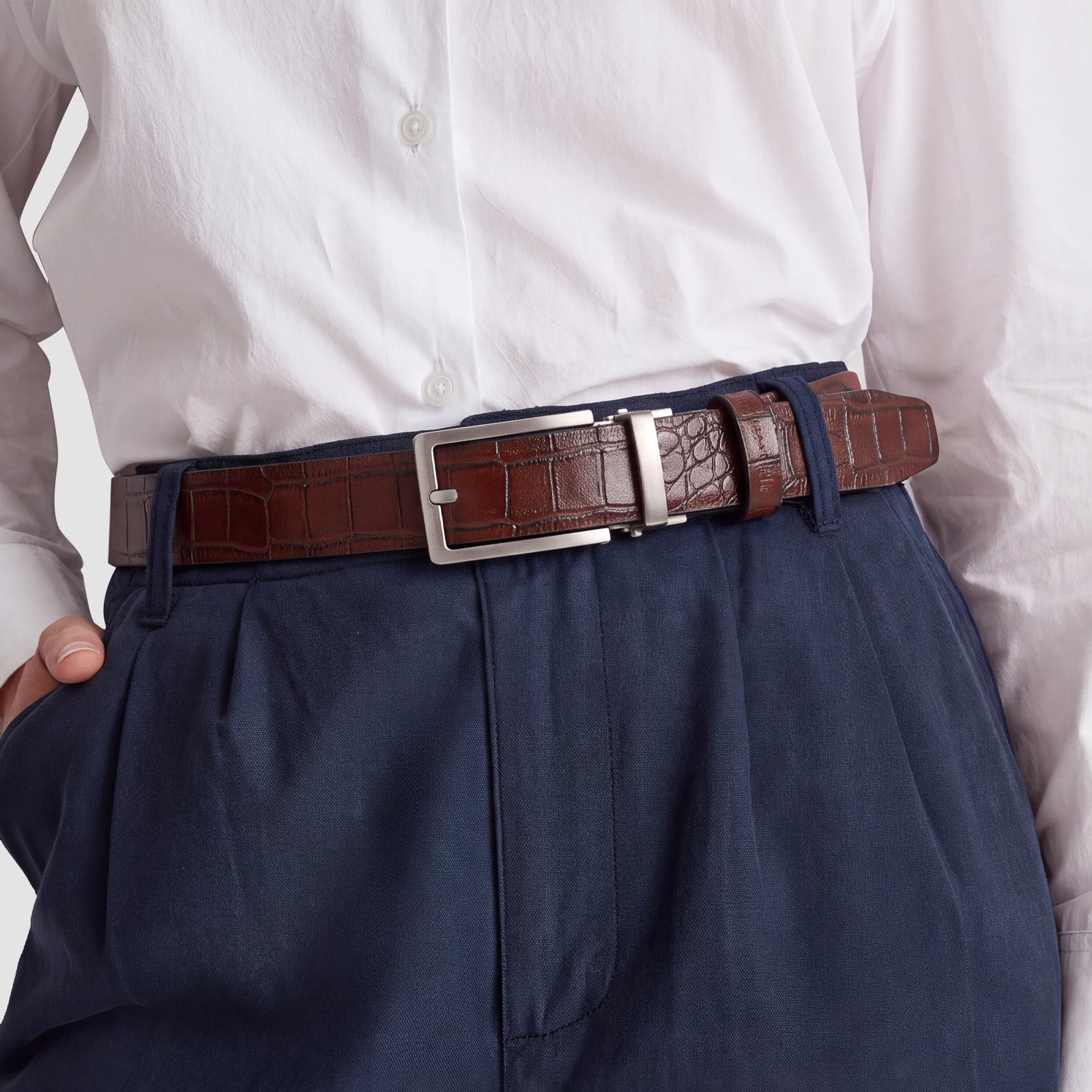
Try stone or olive chinos with a navy polo and a brown belt. Use the shoes to guide the color if you want an easy connection, then keep the buckle understated.
A textured strap can suit this relaxed combination. Check that the polo’s tuck stays comfortable around the waistband rather than forming a thick roll beneath the belt.
Navy trousers and an open-collar shirt
Pair navy trousers with a pale shirt and black or brown shoes. A simple belt in a related color gives the outfit a clear finish without demanding an exact shade match.
Add a jacket if the setting calls for one. Check the belt again while the jacket is closed and you are seated.
Dark denim in a relaxed office
If denim is appropriate at your workplace, try dark jeans, a plain fine knit and loafers or clean sneakers. A restrained belt can keep the outfit coherent while the denim supplies the casual element.
Avoid assuming every item sold as an office belt is suitable for every dress code. The workplace guidance and the complete outfit remain the reference.
Color and hardware
Black with black shoes and brown within a similar color family are useful starting points. You can also choose a belt close to the trousers for a quieter waistline.
A buckle may echo a watch or bag clasp, but exact metal matching is optional. Scale, shine and surrounding details often matter more than the metal color alone.
The seated comfort check
Fasten the belt over your normal tucked layers, then sit and lean forward. Check for pressure from the buckle and strap edges, and practise any unfamiliar release mechanism.
If the belt has to gather the waistband into deep folds, reassess the trouser fit. If the buckle presses even with comfortable tension, compare a different profile rather than merely tightening or loosening again.
Choose the belt that fits the outfit you wear most often. Another color or mechanism is useful when it solves a specific wardrobe need, not because business casual requires a fixed number of belts.