Why belts curl depends on their construction, use and storage. A gentle curve from wearing a belt is different from a twisted strap, separating layers or a sharp fold that makes the fastening difficult to use.
In this guide
Inspect before trying a fix
Lay the belt loosely on a clean surface and look along its edges. Check whether the curve is gradual or concentrated at a buckle, hole or repeated bend.
Look for lifted layers, broken stitching and cracks near the fastening. These signs need attention beyond simply changing how the belt is stored.
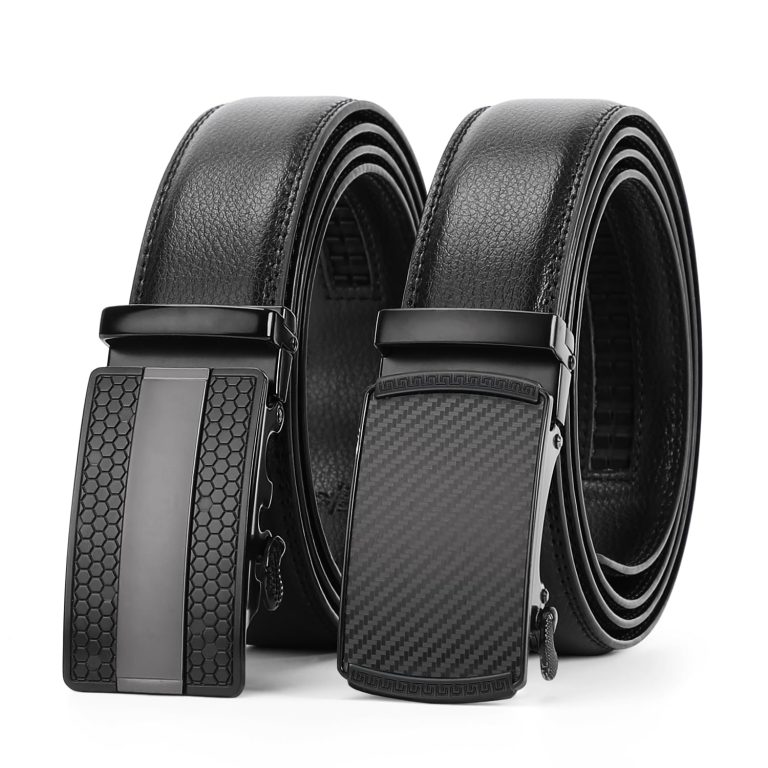
If replacement makes more sense, compare the construction details in JASGOOD men’s belts. Match the new strap’s width and adjustment range to your trousers so the same fit problem does not follow the next belt.
Four causes worth checking
A strap squeezed through narrow loops
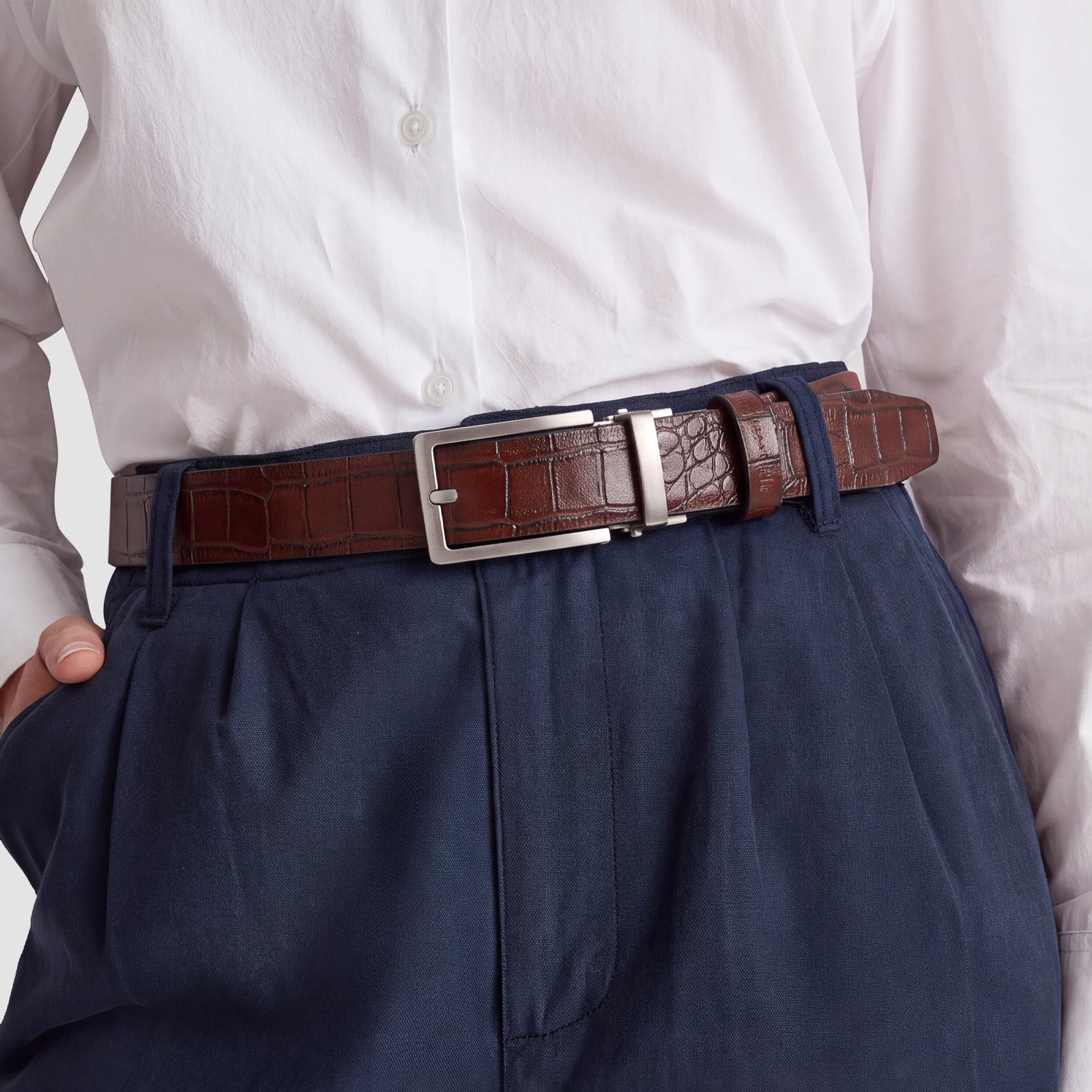
A belt that must fold to pass through the trousers is under repeated stress at its edges. Measure the smallest loop and choose a compatible width.
Check the back loops too. One tight point can create a local bend even when the front looks fine.
Too much tension at the fastening
If the belt is pulling a substantially oversized waistband into gathers, the strap and holes may take uneven strain. Correcting the trouser fit can reduce that load.
Repeated sharp storage bends
A tightly folded belt may keep a crease at the same point. Store it with a gentle curve or hang it from a suitable support when the construction allows.
Keep a heavy buckle from pressing into the strap or another belt beneath it.
Moisture or unsuitable treatment
Water exposure and the wrong care product can affect some constructions or finishes. Follow the maker’s instructions rather than assuming every leather-looking belt can be conditioned in the same way.
Avoid aggressive straightening
Do not default to an iron, hair dryer, soaking bath or heavy force. These methods can damage finishes, adhesives or elastic components.
If the maker offers no reshaping method, seek advice for the specific construction or accept a harmless curve that does not affect wear.
When is replacement the better choice?
Replace or professionally assess a belt whose fastening no longer holds, whose layers are separating significantly or whose strap is splitting at a stressed point.
A slight worn-in curve alone does not prove a belt has failed. Judge its condition, reliable fastening and comfort together, then address fit and storage before wearing the next one.