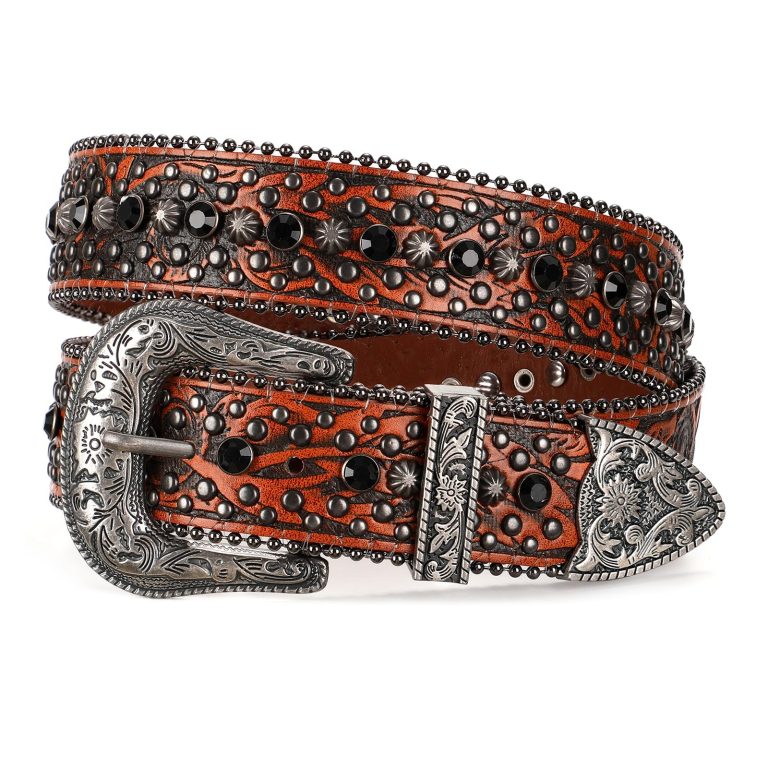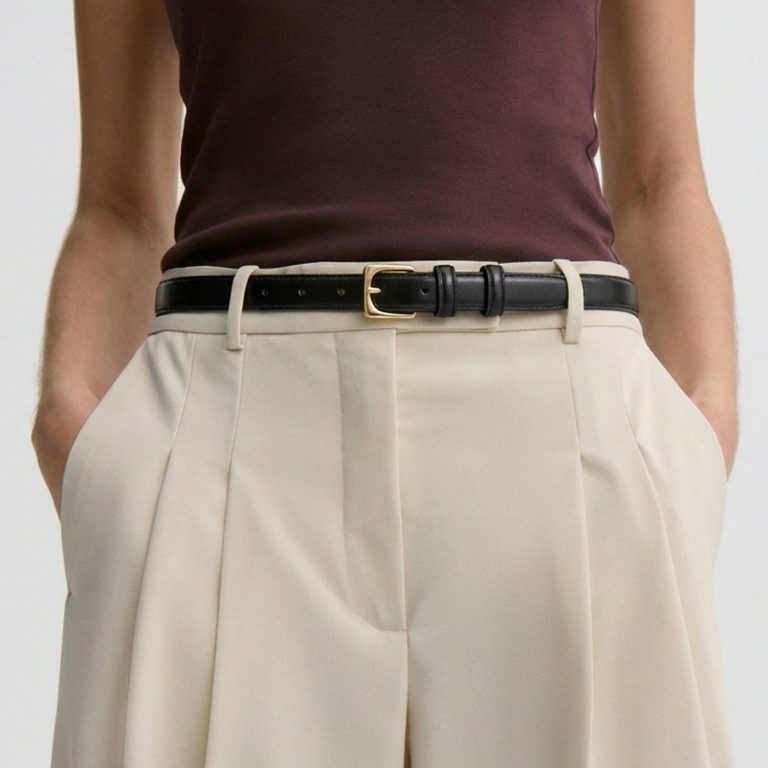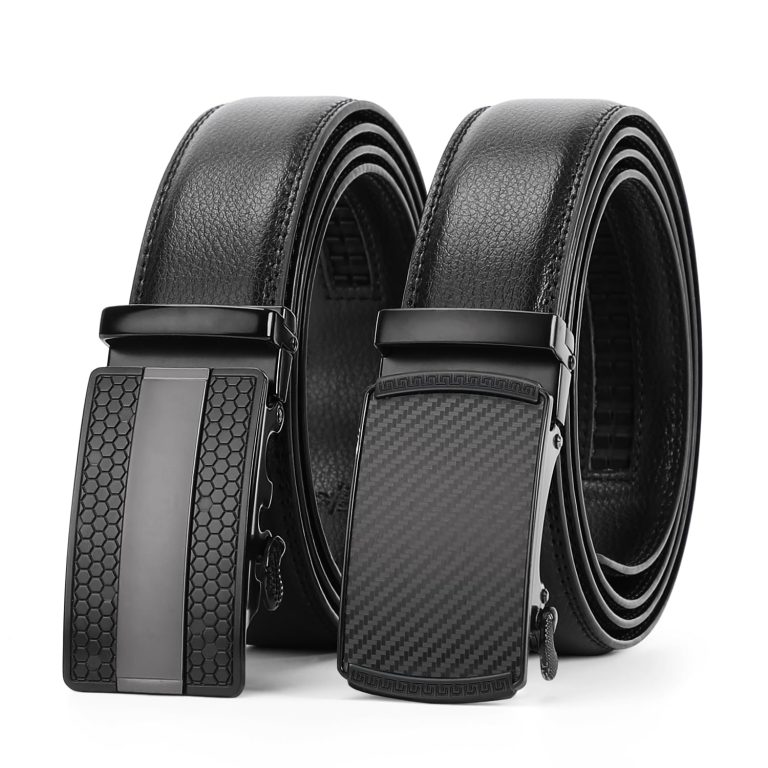
If a belt buckle digs in when you sit down, check the waistband position, belt tension and shape of the buckle separately. Tightening the belt usually makes a pressure point harder to ignore. A useful fit should work at a desk or dining table as well as in front of a mirror.
Find out what is pressing
Try the trousers without the belt first. Sit in your usual chair with your feet supported, then stand again. If the waistband already folds, pulls or feels restrictive, start with the trouser fit. A new buckle cannot give a waistband more room or change the rise of the trousers.
Next, fasten the belt at a comfortable standing position and repeat the movement. Notice whether the pressure comes from the bottom edge of the buckle, the entire strap or a folded section of fabric behind it. These observations point to different adjustments.
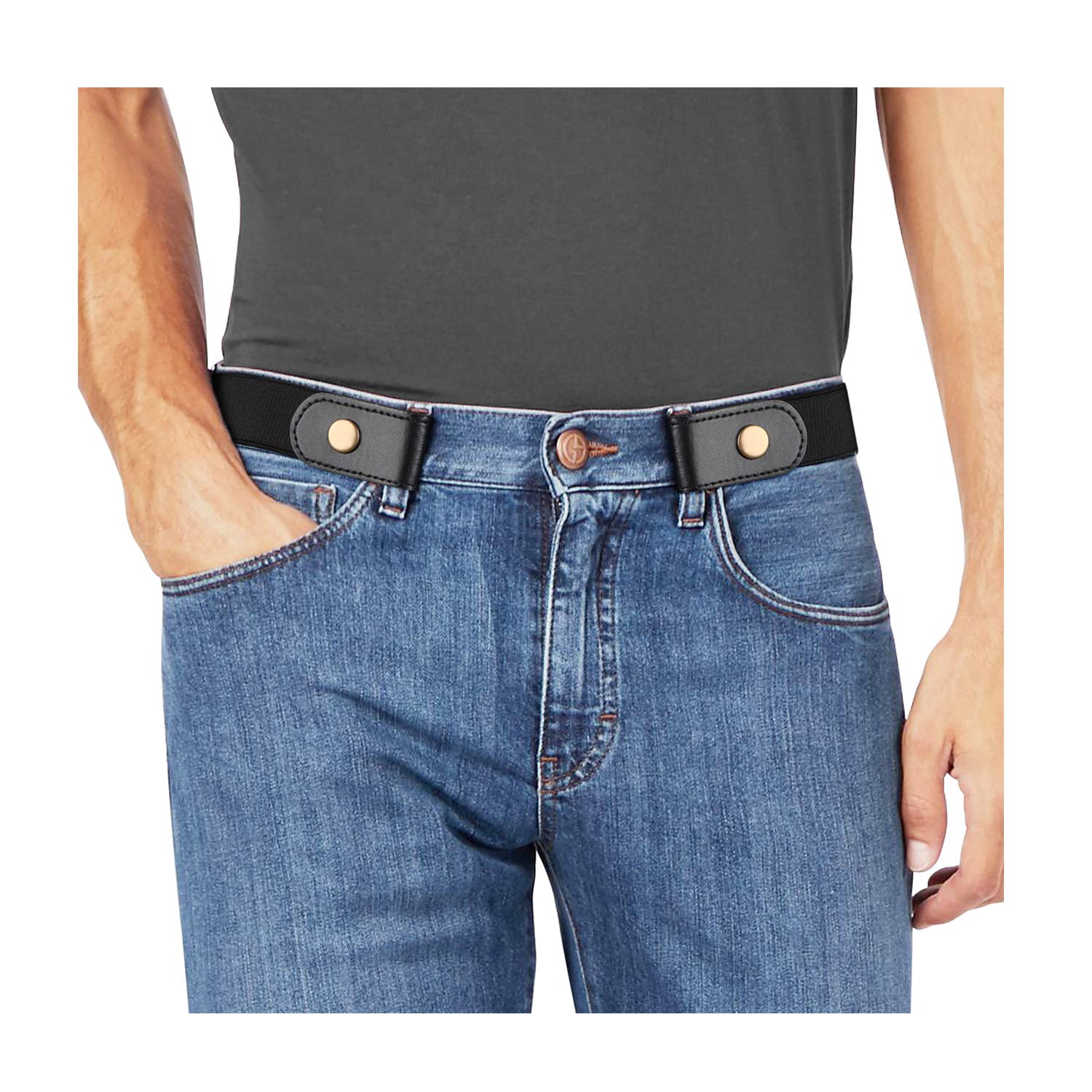
If a prominent front buckle is the part getting in the way, a different fastening arrangement may be worth considering. JASGOOD’s Buckless Invisible Elastic Belt for Jeans Pants is a buckle-free option to compare. Check its attachment method against your trouser loops and its adjustment range against your wearing measurement; it will not correct trousers that are already too tight.
Change one thing at a time
When the whole waistband feels tight
Loosen the belt by one available adjustment and sit again. The trousers should remain supported without deep gathers under the strap. If the waistband still feels restrictive without the belt, try a different size or cut of trousers rather than buying a stronger belt.
When only the lower buckle edge presses
Check whether the buckle sits flat while you stand and whether the waistband tips it inward as you sit. An oversized buckle, a low waistband and a close-fitting top can all change how the hardware sits. Compare a smaller or flatter buckle with the same trousers if you have one, keeping the tension similar so the comparison is useful.
When fabric creates the lump
Empty bulky front pockets, smooth a tucked shirt around the sides and check that the belt is not sitting over a twisted waistband. Do not pull the entire shirt tightly through the front to flatten it: that can leave the back under tension when you sit.
A desk-day fitting check
Suppose a belt feels fine with jeans while standing but its buckle presses during a long meeting. First try those jeans seated without the belt. If that feels comfortable, return the belt on a looser setting and compare. If the strap now feels fine but the buckle edge still presses, the hardware profile is a more useful variable to change than the overall belt length.
Try the finished outfit through the movements you actually need: sitting, standing, reaching across a table and walking a few steps. A short fitting check cannot prove all-day comfort, but it can expose an obvious pressure point before you leave.
Keep the solution simple
Do not bend a buckle, remove structural parts or cut a strap to address a pressure point. Follow the maker’s instructions for any permitted adjustment. If a belt causes discomfort, remove or loosen it rather than treating discomfort as something to break in.
For the next purchase, note the successful waistband position, usable adjustment range and buckle profile. Those details are more helpful than asking for a belt that is merely longer. Our belt placement guide explains why moving between the natural waist and hip changes the fit you need.