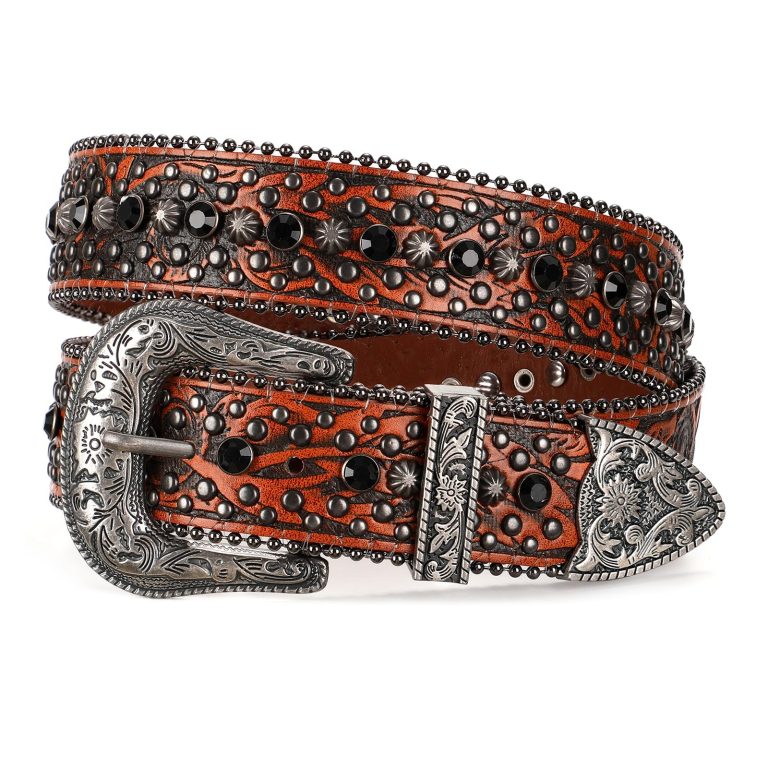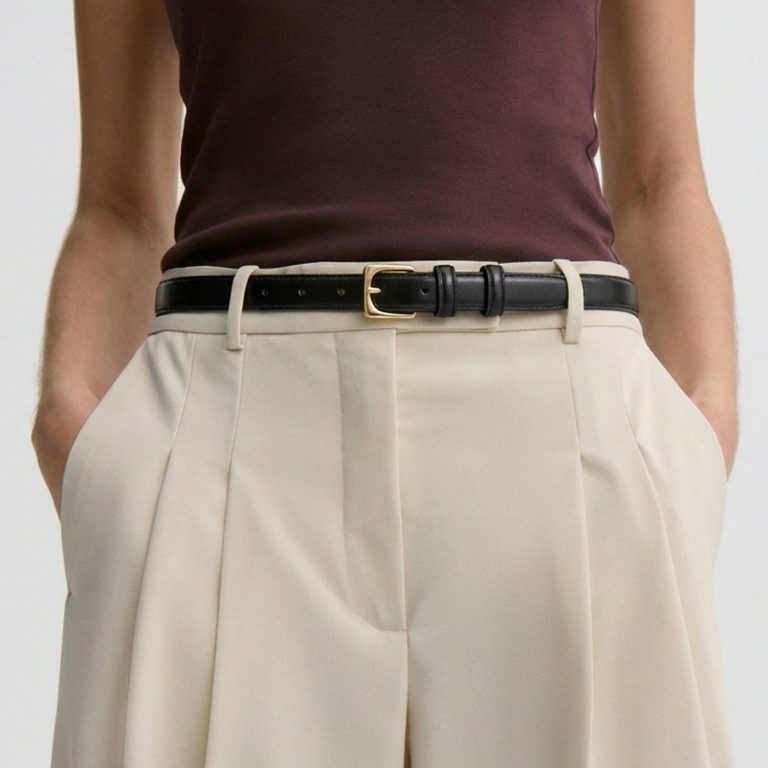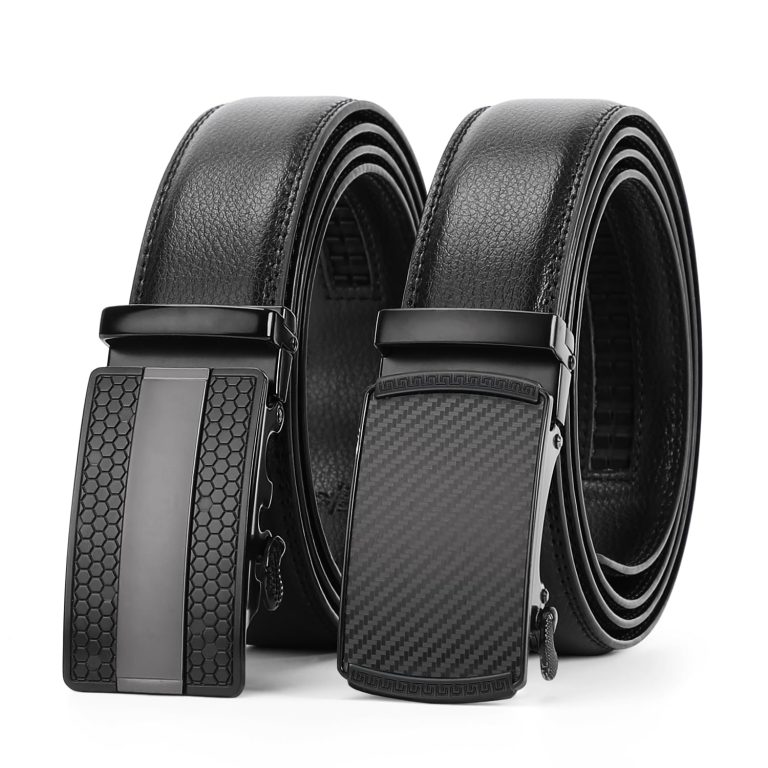
If your belt twists inside the loops, take it out and check the threading route before trying to flatten the strap. A half-turn introduced while getting dressed can look like a damaged belt once it is pulled tight. A belt squeezed through unsuitable loops is a different problem.
In this guide
Re-thread from a flat starting point
Unfasten the belt and remove it completely. Lay it down in a relaxed line, with the buckle facing the way it normally sits. Look for a simple turn in the strap, a sharp crease, fraying or layers coming apart. Do not pull hard on a damaged section to straighten it.
Feed the tip through one trouser loop at a time. After each loop, check that the same side of the strap still faces outward. The center-back loop is easy to miss when you are working by feel, so use a mirror or thread the belt before putting the trousers on.
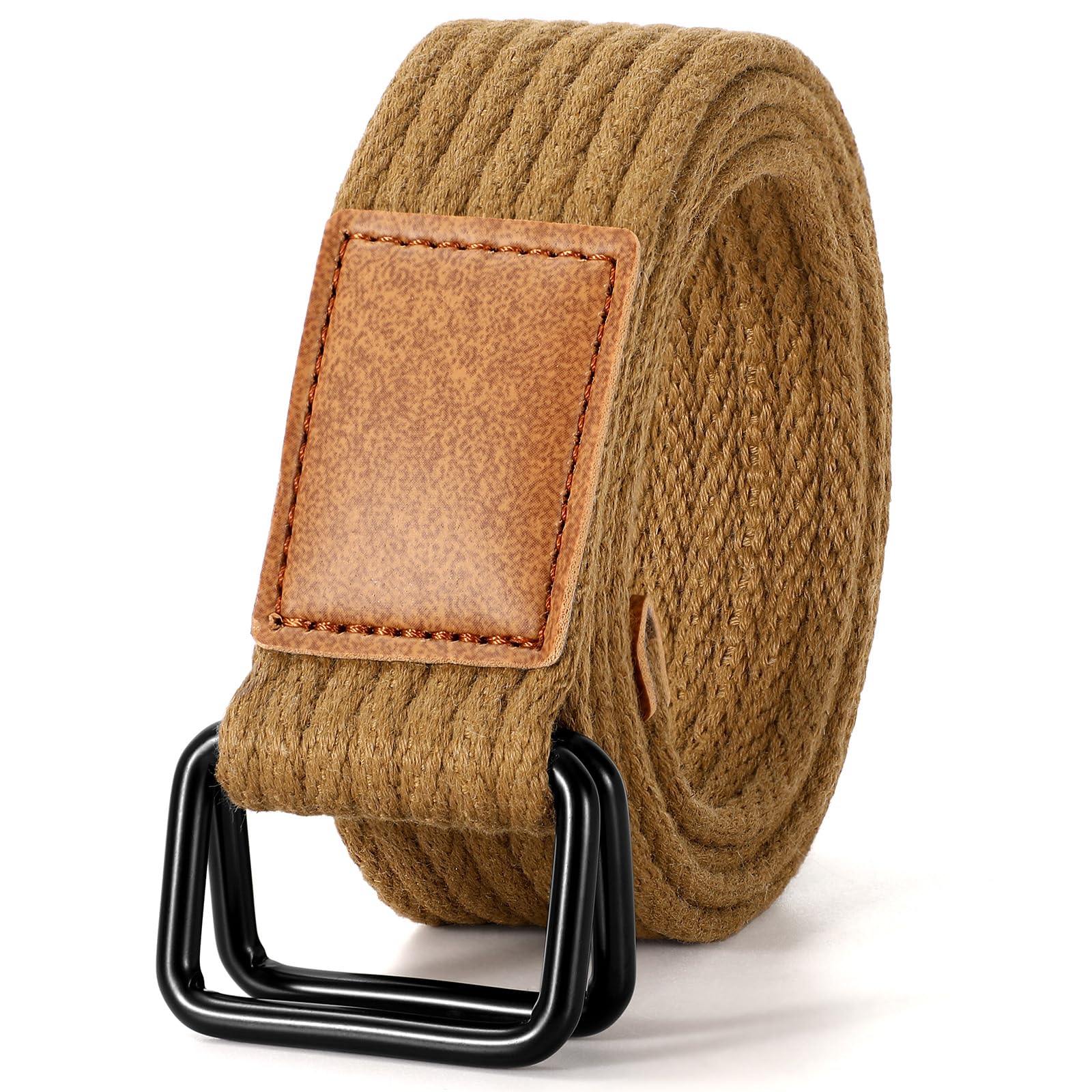
If the strap only passes by folding along its edges, compare the listed widths and tip shapes in JASGOOD canvas belts. A narrower option may be useful, but check the actual model and the smallest loop on your trousers; the material name alone does not establish a fit.
Inspect the smallest opening
Look at the front, side and back loops individually. One may be stitched more tightly than the others, or a section of lining may sit behind it. If the belt lies flat everywhere except that point, the local opening is a useful place to investigate.
Do not force the tip through by folding it sharply or pulling on the loop. The tip can be wider or thicker than the main strap. If it will not pass naturally, choose another belt for those trousers or ask a tailor to assess the garment.
Check what changes after fastening
Fasten the belt at a comfortable setting and look around the waistband. If the strap starts flat but rolls onto one edge as you tighten, loosen it and check for gathered fabric underneath. A belt should not need to compress a large amount of excess waistband material to support the trousers.
Then sit and stand. If a loop tips the belt outward only when you move, inspect how that loop is attached and whether the belt is too tall or thick for the opening. Keep the fit check gentle; the aim is to locate the interaction, not to stretch the garment until the belt fits.
Separate a threading problem from a damaged strap
For example, a canvas belt may appear twisted behind the hip because it entered the back loop with its inner surface facing out. Removing and re-threading it addresses the cause. By contrast, a persistent sharp fold that remains with the belt off the trousers needs a separate condition check.
A gradual curve from use is also different from a twist forced by a small loop. See our guide to belt curling for that distinction. Avoid heat, soaking or heavy weights unless the manufacturer specifically recommends a treatment for the construction.
If the belt lies flat in one pair of trousers but repeatedly folds in another, keep a note of that combination. Matching a different strap to the troublesome loops can be simpler than replacing a belt that works well elsewhere.