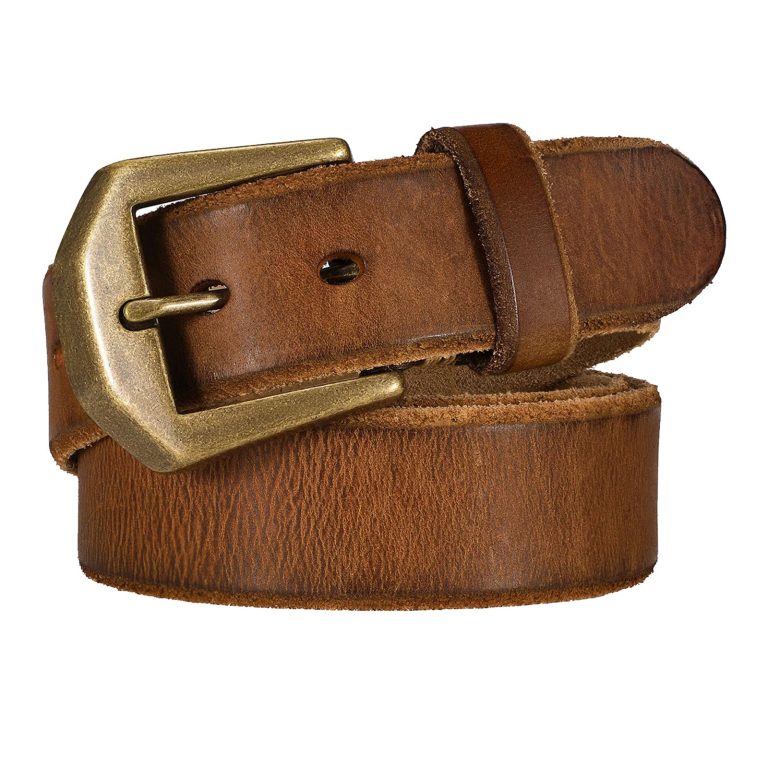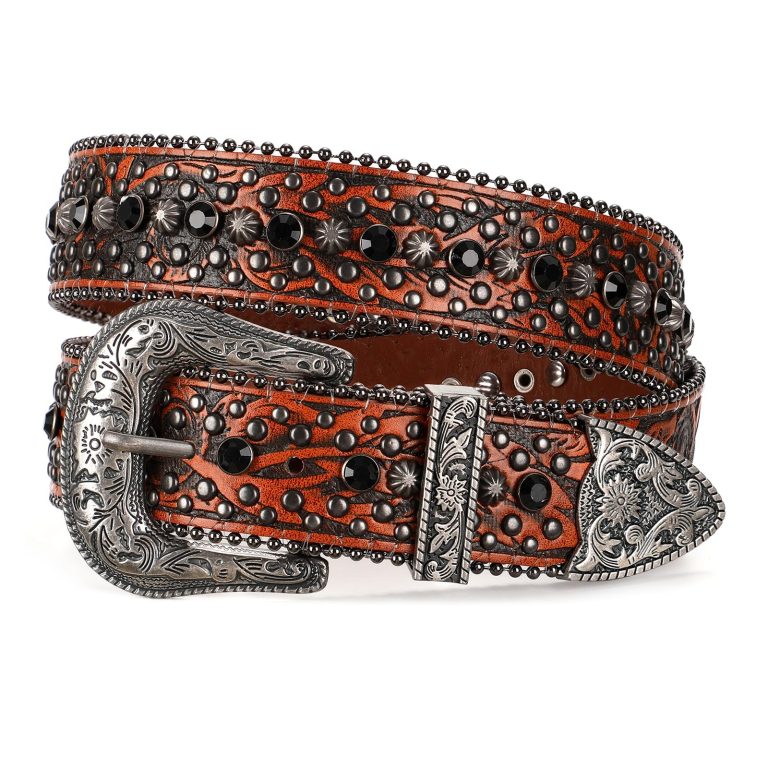
To choose a belt for small trouser loops, check the narrowest opening and the thickest part that must pass through it. The strap width matters, but a broad tip, bulky stitching or thick edge can stop an otherwise slim-looking belt from fitting.
In this guide
Measure the limiting loop
Lay the trousers flat and look at all the loops. Do not assume that the front pair represents the side or center-back opening. Check the usable space under each loop without stretching it, and note any seam or lining that reduces the opening.
If you already have a belt that passes easily and sits flat, measure its strap width and compare the shape of its tip. It provides a useful reference for those trousers, though a different belt with the same width may have a thicker construction.
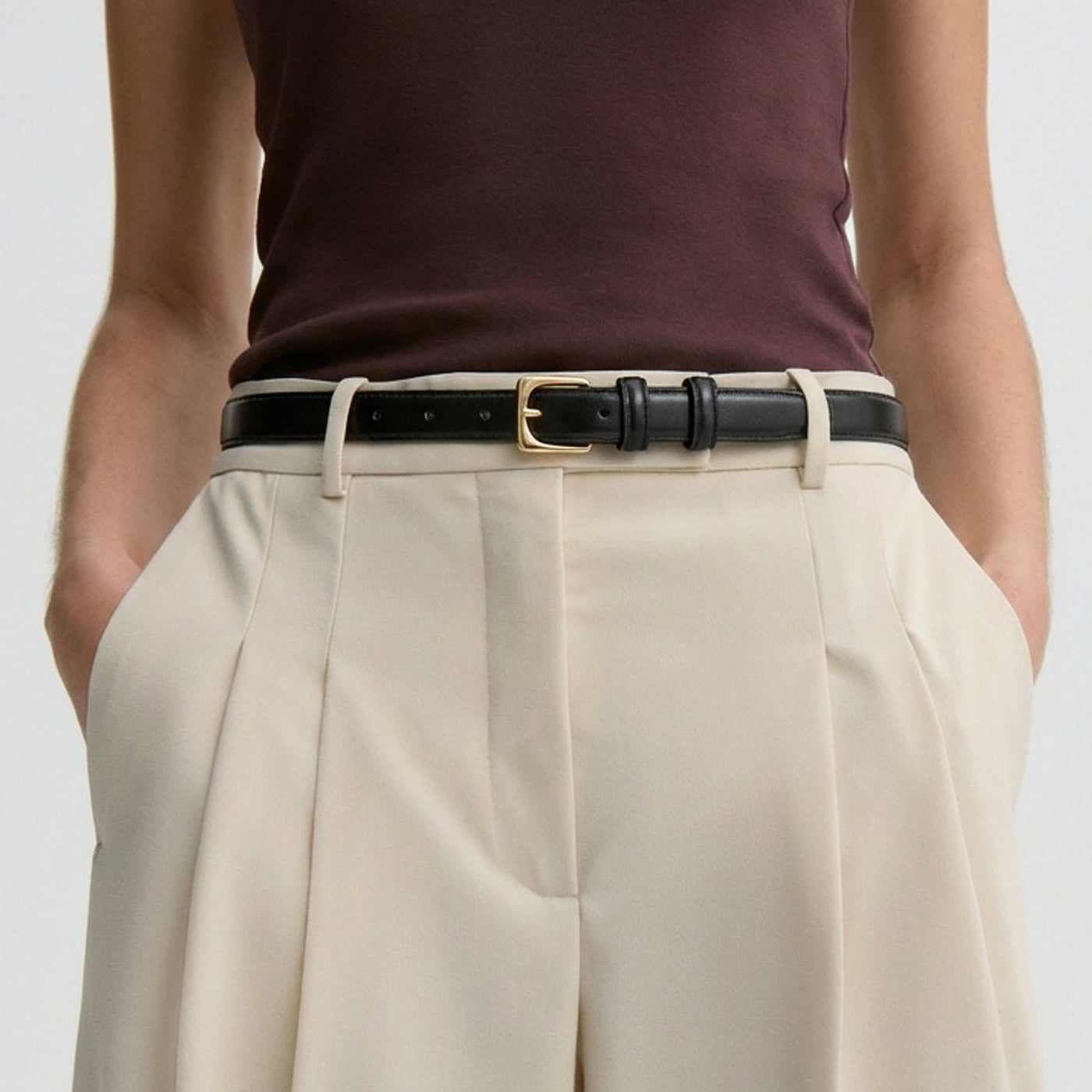
Use those observations to compare options in JASGOOD skinny belts. Read the selected model’s actual measurements and inspect the tip in its photographs. “Skinny” is a style description; the belt still needs to pass through the smallest opening on your particular trousers.
Compare four details before buying
The width of the working strap
Check the stated measurement and its unit. If the listing offers multiple variants, confirm which measurement belongs to the one you are selecting. A familiar size label should not replace a physical width comparison.
The thickness and finished edges
A thick strap can use up space even when its width looks suitable. Raised stitching or a folded edge may also change how it passes through a tight opening. If the seller does not provide enough information, ask rather than guessing from a distant photograph.
The tip and decorations
The tip must go through the loops before the strap can sit in place. Check for flared shapes, metal caps and fixed decorations wider than the main strap. A decorative belt intended to sit over a dress may not be designed to thread through trouser loops at all.
The fit after threading
Finally, check the wearing range. A belt can fit through the loops perfectly and still be too short or leave an impractical tail. Measure around the waistband over the clothing you intend to wear, then follow the selected product’s sizing instructions.
Try the belt without forcing it
When it arrives, thread it with the trousers off if that makes the back loop easier to see. The strap should pass without sharp folding or pulling on the stitching. Stop if the tip jams; forcing it through once is not proof that the combination is suitable for repeated wear.
Put the trousers on and sit down as well as standing. Check whether the belt stays flat or rolls onto one edge at a tight loop. Keep packaging and follow the seller’s return conditions while you assess the fit.
When another solution makes more sense
If only one tightly stitched loop causes trouble, a tailor can assess the garment. Do not cut a loop or trim the belt tip as an improvised first step. If all the loops are small, choose a belt designed around that opening rather than trying to reshape a larger strap.
Our belt width guide compares common widths in outfit context. For small loops, the final decision should still come from the actual garment and the full construction of the belt you want to wear.