When choosing a rhinestone belt, look beyond the sparkle to how its decorative pieces are attached and what sits against your clothes. The setting, backing, buckle and fit determine how the complete accessory works with an outfit.
In this guide
Ask for front, back and close detail
A front view shows the pattern. A rear view helps you see the contact surface, attachment points and buckle connection. A close detail can reveal how the stones and neighboring studs are arranged.
If the listing does not explain the setting, ask. Do not assume that every stone is glued, prong-set or individually replaceable because another belt used that method.
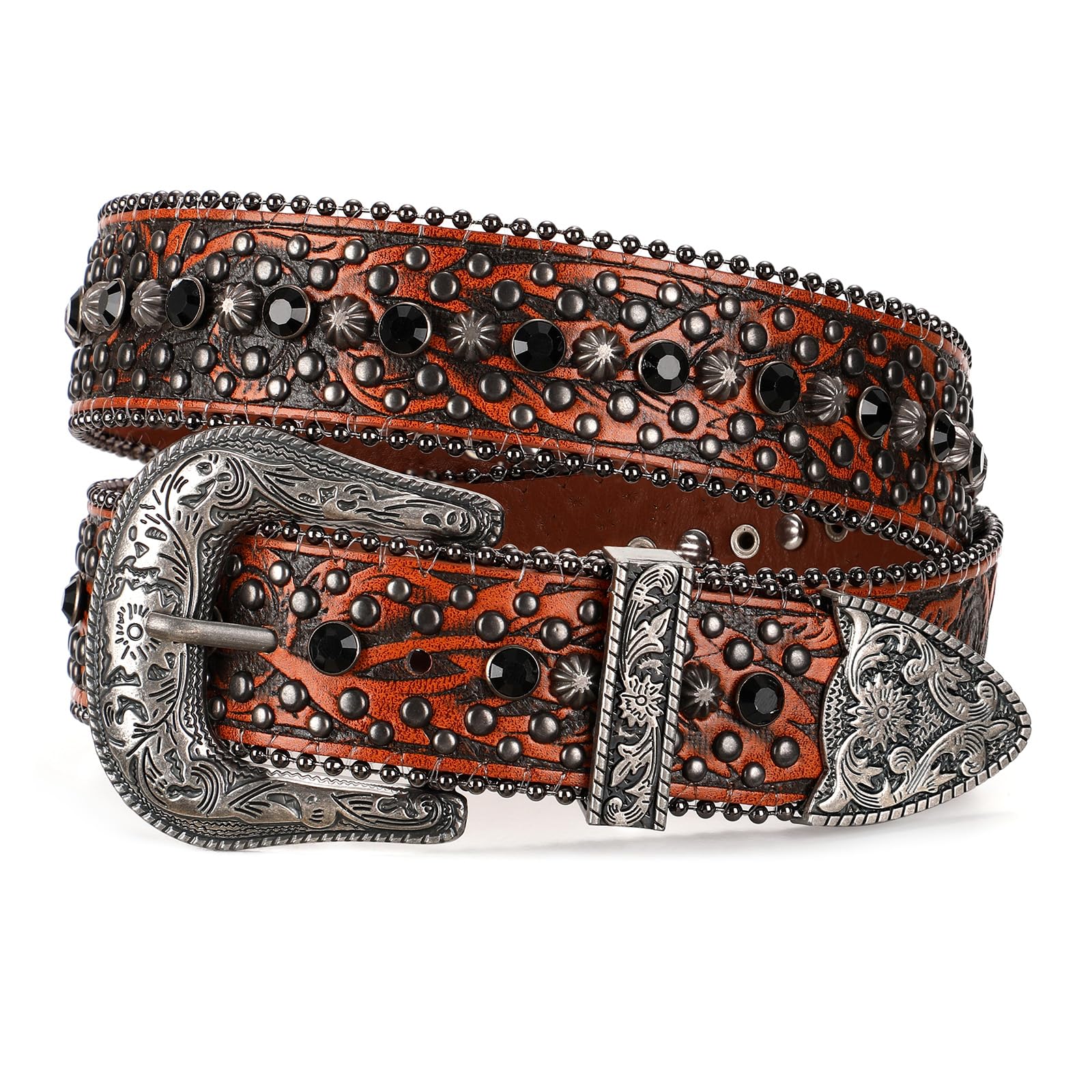
The JASGOOD Rhinestone Belt for Women Men is described with faux leather, jewels, studs and a detachable buckle. Compare those specified parts, and ask about any attachment detail needed for your intended use.
Check the surface that meets the outfit
Inspect the underside and edges for projecting or loose parts during a permitted trial. A smooth front does not establish that every surface is suitable for a delicate garment.
For loosely woven or easily snagged clothing, use a cautious initial comparison and stop if the accessory catches. Structured jeans and a delicate dress should not be treated as identical contact surfaces.
Keep fastening separate from decoration
Confirm the usable fit range and how the buckle closes. Decorative density can make holes or moving parts harder to see in photographs, so use the product’s instructions and close-ups.
A detachable buckle also needs its intended attachment and matching parts. It does not mean that every replacement buckle will fit, or that you should alter it before checking the original belt’s fit.
Choose the amount of detail for the outfit
Try the belt against a plain top and simple trousers first. This makes it easier to see the actual pattern and decide whether the buckle or the decorated strap is the main feature.
Then add your other accessories. If a necklace, bag hardware and belt all compete for attention, simplify one area rather than assuming the belt needs an entirely new wardrobe.
Ask about care and repair before committing
Find out how the maker recommends cleaning around the settings and storing the belt. Ask whether loose details can be assessed or repaired for that model instead of assuming a household adhesive will work.
For example, a design you plan to wear over knitwear needs a different contact check from one intended only for sturdy denim. Choose on confirmed construction, fit and that real use, with sparkle as one part of the decision.