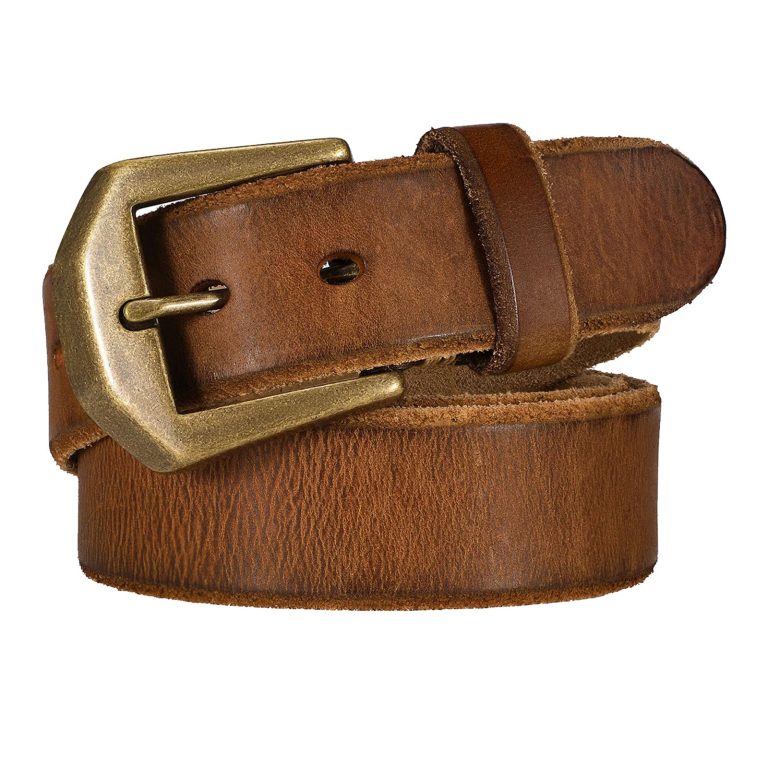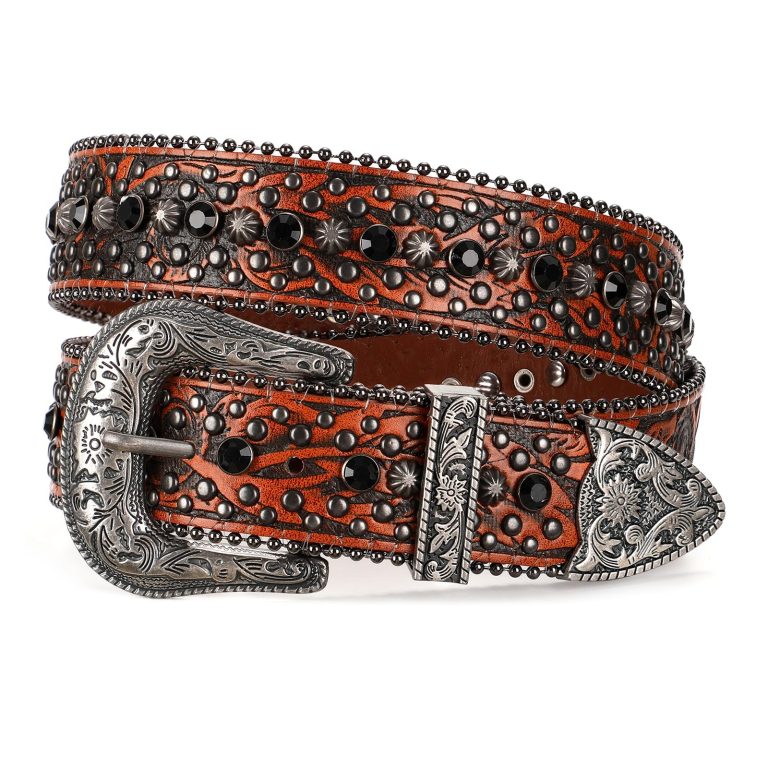
A removable belt buckle can make some adjustments or replacements possible, but it is not a universal connector. Check how the buckle attaches, which strap dimensions it accepts and whether the maker permits the change you have in mind.
In this guide
Decide what you want to change
Shortening a supplied strap, replacing damaged hardware and swapping between decorative buckles are three different jobs. A belt advertised as adjustable may support only the first of them.
Look for instructions showing the attachment from the back. A front product photograph may show a familiar frame while hiding a sewn fold, rivets, screws or a clamp. Do not infer removability from the buckle’s outline.
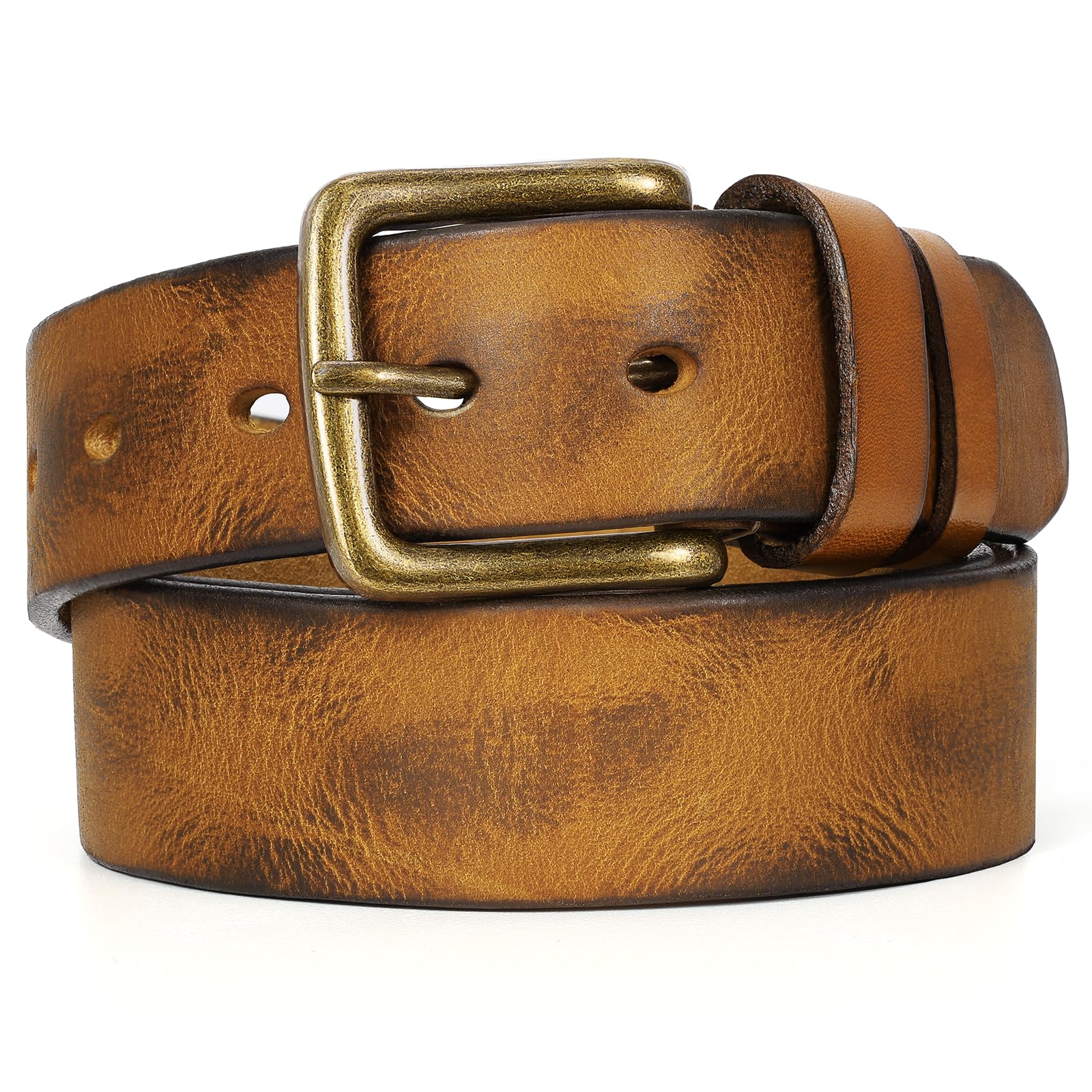
For a concrete starting point, JASGOOD’s Handmade Full Grain Leather Belts for Men listing describes a removable buckle for trimming. That description does not confirm compatibility with another buckle.
Compare the attachment as well as the width
Ask for the strap width accepted by the replacement hardware. Then check the thickness and the shape of the attachment end. Two straps of the same width can connect differently.
A pin buckle also needs the correct route for the pin and a suitable hole arrangement. A ratchet fastening depends on its matching strap mechanism. Neither should be assembled from unrelated parts merely because they fit through an opening.
If the supplier cannot confirm the pairing, treat it as unverified. A complete belt with the fastening you want may be a more straightforward purchase than separate components that need modification.
Check what happens to the working length
Buckle geometry contributes to the length of a fastened belt. Changing hardware can alter where the working hole or adjustment point sits, even if the loose strap itself has not changed.
Use the seller’s measurement diagram for the assembled belt. Keep a note of your comfortable wearing measurement over the intended trousers, and ask whether the replacement changes the usable range.
Do not cut first and calculate afterward. Removing material is irreversible, and the product may require a particular amount of strap inside its attachment.
A useful message to send the seller
Provide the belt model, a photograph of the back of its buckle and the replacement buckle’s model or link. Include the strap’s measured width and the adjustment you want to make.
Ask: “Are these two parts designed to work together, and will the assembled belt still fit my wearing measurement?” This gives the seller more useful information than asking whether both items are a standard size.
For example, wanting a smaller-looking buckle on office trousers is a styling decision. Confirming the attachment and fit comes first; matching the metal finish comes after that.
When the original assembly is the better option
If the buckle works, fits comfortably and only looks different from a new accessory, keeping the original assembly avoids an unnecessary compatibility problem. You can coordinate the outfit without changing hardware.
For a loose or damaged attachment, seek the maker’s repair advice. Do not remove rivets, force a sealed fitting or substitute household fasteners to make an unverified pairing work.