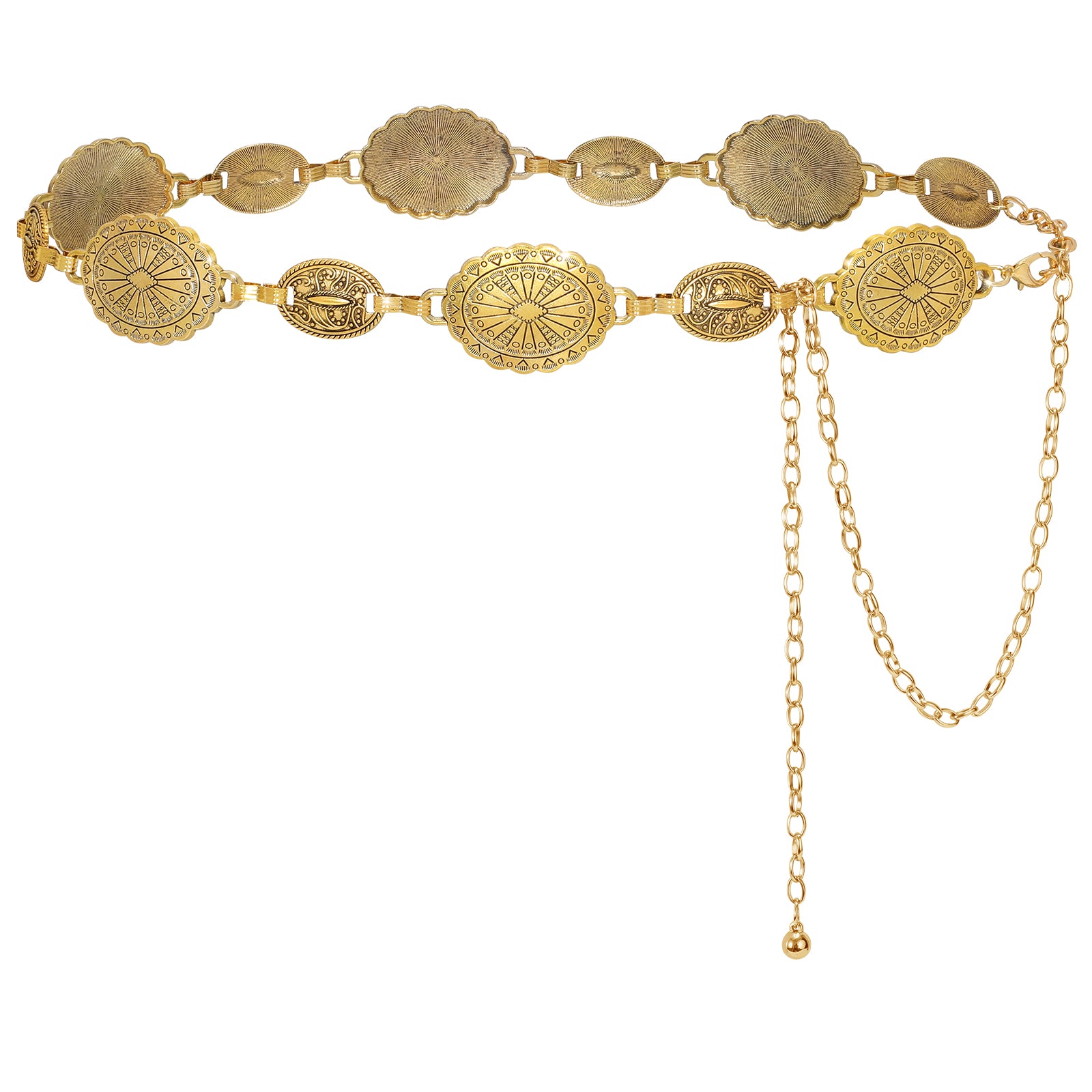
If chain belt weight is not listed, ask for the actual weight of the size and variant you plan to buy. A close-up photograph cannot reliably tell you how heavy a chain is, and a large-looking link may have a different construction from a smaller one.
In this guide
Ask a question the seller can answer
Specify the product, color and size. Ask for the weight of the complete belt, including the clasp, extension and decorative tail, rather than the weight of one link or the shipping package.
Request the usable fit range and the main link dimensions at the same time. These help you understand where the chain will sit and how much of it remains hanging beyond the closure.
While browsing JASGOOD chain belts, compare those details for the exact design you like. An ornate concho chain and a fine linked chain should be assessed individually, not assigned a weight from the collection name.
Separate weight from how it is carried
A chain placed at the waist may rest differently from one draped over the upper hip. The contact area, clasp position and hanging tail all affect the wearing experience alongside the total weight.
Check the outfit too. A structured waistband and a loosely draped dress offer different surfaces. Do not assume that a belt comfortable over denim will behave identically on a light skirt.
Use a familiar accessory as a reference
If you own a chain belt you enjoy wearing, record its complete weight, fit and link size. Use it as a personal comparison when reading another product’s specifications.
This does not create a universal comfort limit. It simply turns “light” or “heavy” into a more useful conversation about your own wearing preference and the way the accessory is constructed.
Inspect movement during a permitted trial
Try the selected position over the intended clothes. Walk, turn and sit, checking whether the clasp stays accessible, the chain drags the fabric or the tail needs constant repositioning.
Keep any product labels and packaging as required by the seller’s current return conditions while evaluating it. Read those conditions before purchase if a physical trial is important to your decision.
Decide what information is essential
For a delicate dress or a long event, missing weight and construction details may be a reason to keep comparing options. There is no need to invent an estimate from the metal color.
If the seller cannot provide the measurement, choose a design you can inspect or one with clearer specifications. A well-matched accessory begins with enough information to judge your outfit, not with a promise that every chain will feel the same.