With a belt size label worn off, use the old belt as a fit reference rather than guessing the missing number. Record how it fastens when comfortable, then measure your current wearing position and compare the replacement maker’s chart.
In this guide
Decide whether the old belt is a reliable reference
Try it with the trousers you intend to wear. Note the working hole or fastening position, how much tail remains and whether there is useful adjustment on either side.
If the strap is stretched, shortened, damaged or no longer comfortable, do not treat its dimensions as a perfect target. In that case, your present wearing measurement and the new chart deserve more weight.
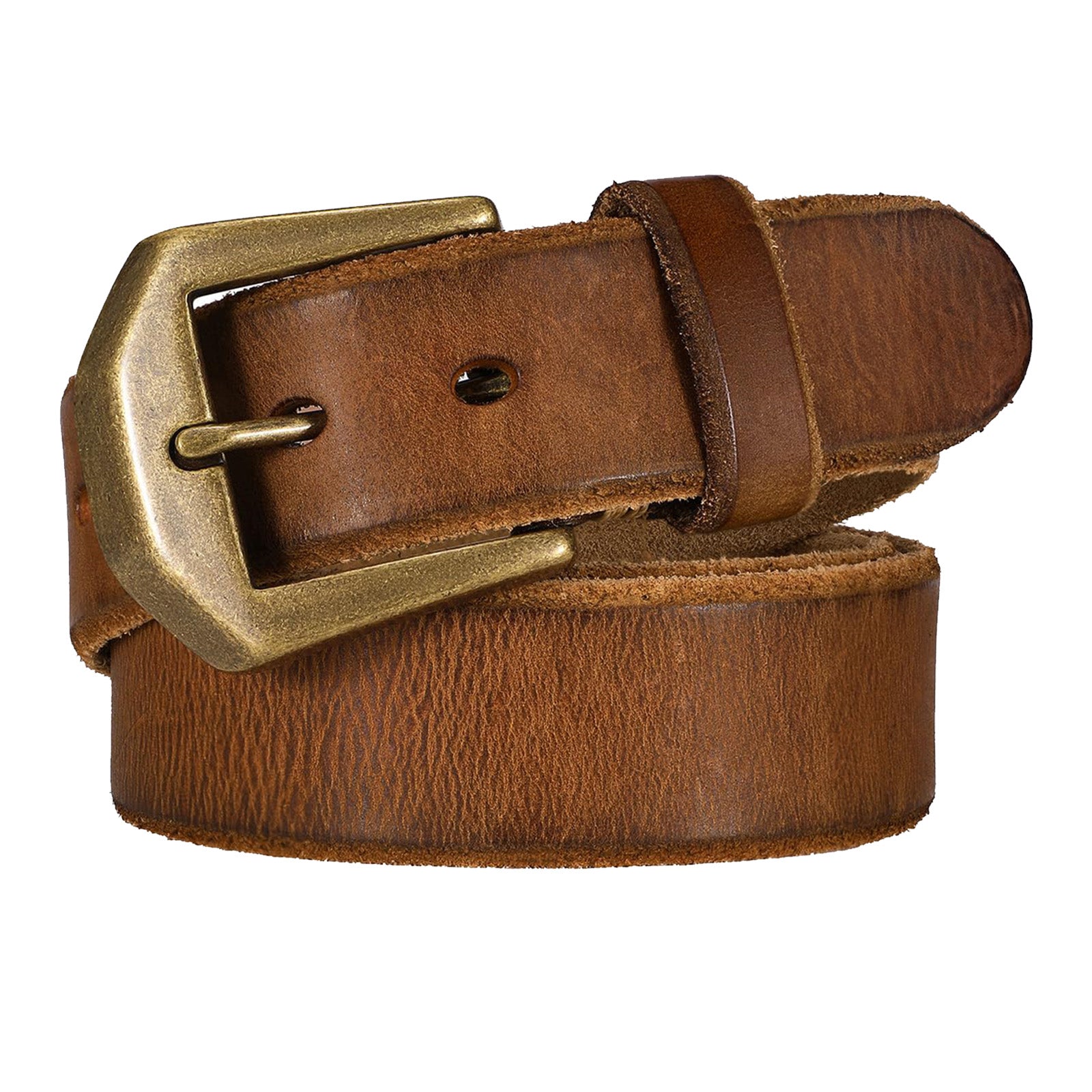
When comparing replacements in JASGOOD pin-buckle belts, read the selected model’s measuring instructions. Matching an unexplained printed number is less useful than matching a documented working range.
Record the working measurement carefully
Lay a sound pin belt flat without pulling it longer. Photograph the buckle and the hole you use, then measure using the reference points requested by the replacement seller.
If the seller’s method is unclear, send that photograph and ask where to start and finish. Buckle-end, fold and total-tip measurements are not interchangeable, so label your own measurement explicitly.
Measure the outfit independently
Use a flexible tape over the intended trousers at their normal rise. Keep it level and comfortably snug without compressing the waistband. Include the usual tucked layer if it materially affects the fit.
Record the unit alongside the number. If you convert inches and centimeters, retain the original measurement too so a rounding difference does not become the only basis for choosing a borderline size.
Copy the useful details beyond length
- The strap width that passes through all your loops.
- The buckle shape and projection you find comfortable.
- The amount of tail that reaches the keeper neatly.
- The adjustment method you can operate easily.
For example, a new belt can cover the same waist range yet have a much longer tail or thicker tip. Check those details instead of assuming it will behave like the old one.
Test before making permanent changes
Try the replacement with the same outfit, following the seller’s trial and return conditions. Check it standing and seated, and compare the tail arrangement with your notes.
Only consider trimming if the selected model explicitly allows it and you have its instructions. A missing label on the old belt is a reason to measure carefully, not a reason to guess and cut the new one immediately.