A wide belt over a knit dress can define the waist or add a focal point to a simple outfit. Choose a belt that rests comfortably on the fabric, then adjust its position and the folds around it before tightening further.
In this guide
Read the dress before choosing the belt
A fitted ribbed dress, a loose sweater dress and a chunky cable knit behave differently. Look at how your dress hangs without a belt first. It may already have all the shape you want.
| Dress type | A useful starting point | What to watch |
|---|---|---|
| Fine knit or close-fitting rib | A flexible belt that rests on the fabric with light tension. | Ribs pulling sideways, visible pressure or the hem riding up. |
| Loose, smooth sweater dress | A wide belt with enough adjustment to gather the fabric gently. | Large folds trapped behind the buckle or pushed to one side. |
| Chunky or heavily textured knit | Try the belt loosely, then compare with the unbelted outfit. | Texture bunching around the edges; more width may not solve it. |
| Dress with a waist seam | Start with the belt near the existing seam. | A second horizontal line competing with the seam. |
A stretch panel can allow movement, but “elastic” does not mean any size will fit. Measure over the dress at the position where you intend to wear the belt, then compare that measurement with the product’s size range.
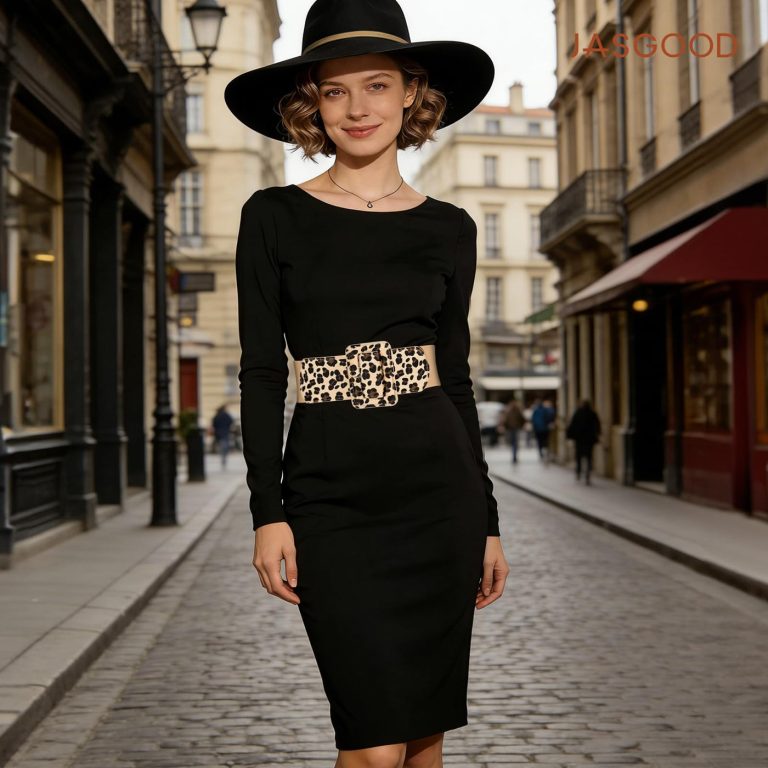
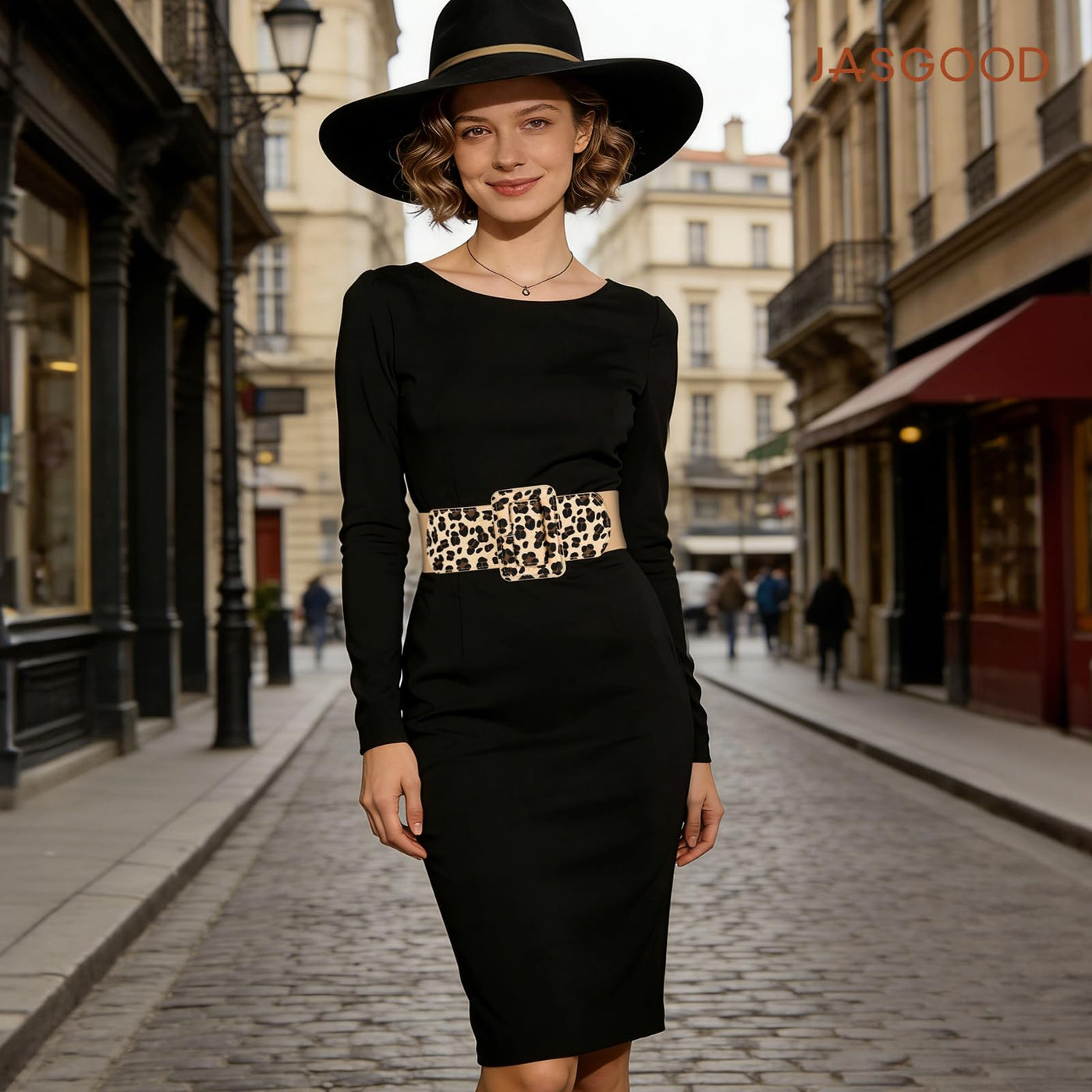
To try a patterned waist accent, look at JASGOOD’s wide belt with a chunky square buckle.
Compare the selected variant’s fit range with your measurement over the dress before working on the placement below.
Place it in four steps
- Let the dress settle. Stand naturally and smooth the fabric downward. Note the hem position so you can tell if belting pulls it up.
- Try the natural waist first. Fasten with light tension. Move the belt slightly higher or lower and compare the proportions; your dress’s cut matters more than a fixed rule.
- Distribute the fabric. Ease small folds around the sides and back. Avoid pushing every fold into one bulky cluster, especially if you will be sitting against it.
- Test movement. Sit, reach and walk. Check the buckle stays comfortable, the hem coverage suits you and the knit does not pull sharply at the belt edges.
If the dress rides up, loosen the belt and let the fabric fall again. If the problem returns, try a narrower or more flexible belt, another position, or enjoy the dress without a belt.
Three knit-dress outfits to try
1. Soft everyday layers: oatmeal, brown and boots
Pair an oatmeal or cream midi knit dress with a warm brown belt and ankle boots. The color contrast makes the belt easy to see without needing a large decorative buckle.
Add a coat worn open so the vertical edges frame the waist detail. A simple shoulder bag keeps the outfit relaxed. If the dress is thick, try the belt looser and let the fabric retain its texture.
2. A quiet office look: tonal knit with a compact buckle
Try a navy knit dress with a dark belt, loafers or boots, and a tailored jacket. A close color pairing defines the waist subtly. Contrast is an option, not a requirement for a successful belted look.
Keep the buckle comfortable under the jacket. At your desk, check that the belt’s upper edge does not press into your ribs and that the lower edge does not dig in when you lean forward.
3. Dinner: black knit and a deliberate metal accent
A plain black knit dress gives a gold-tone or silver-tone buckle a clear backdrop. Add one related piece of jewelry and a compact bag. Start with simple shoes so the waist detail remains easy to read.
For a softer version, choose a black buckle or a belt close to the dress color. For more movement, compare a decorative chain belt; make sure its links and clasp do not catch on the knit.
A patterned belt offers another way to make a simple dress feel different. Try leopard print with black, then keep the bag or shoes plain if you want the pattern to be the main accent.
Choose width and color with a full-length view
A very wide belt takes up more of the visible torso. If it crowds the neckline or seems too close to the bust, try a narrower option or a different position. You do not need to change your body to make a belt work.
Compare the whole outfit in a mirror, including the hem and shoes. A belt that looks balanced in a waist-level photo can feel different once the jacket, boots and bag are included.
For a gentle effect, choose a belt close to the dress color. For a clear accent, try brown against cream, black against gray, or burgundy against navy. These are starting palettes, not mandatory combinations.
Fix the most common fabric problems
A ridge above the belt: release some tension and smooth the folds evenly. Avoid cinching harder to flatten a thick knit; the fabric needs somewhere to go.
The belt slips or turns: check its size and position, then try a shape that sits more naturally against the dress. Avoid pins, sticky tape or rough fastenings that could damage the knit.
The buckle catches a stitch: take the belt off carefully and inspect the back and edges. Choose smoother hardware for delicate knits, and stop wearing a belt that repeatedly snags the fabric.
Common questions
Is a wide belt always better than a skinny one?
No. A wide belt makes a stronger visual band; a skinny belt gives a lighter accent. Try both against the dress’s texture, neckline and waist seam, then keep the one that feels comfortable and suits the look you want.
Can I belt a short sweater dress?
Yes, if you like the result. Check the hem after fastening and again while seated. Gathering fabric can shorten the visible length, so start with light tension and compare with a narrower belt.
Should the belt go over my cardigan too?
Either arrangement can work. Belt the dress under an open cardigan for easy layers. Belt over a light cardigan for a more defined shape, but check the extra fabric does not crowd the buckle or pull the cardigan out of place.
Finish the outfit
Compare JASGOOD wide belts for the shape and adjustment you need. For another mood, see our chain belt styling guide; for fit, use the wearing-position measurement steps.