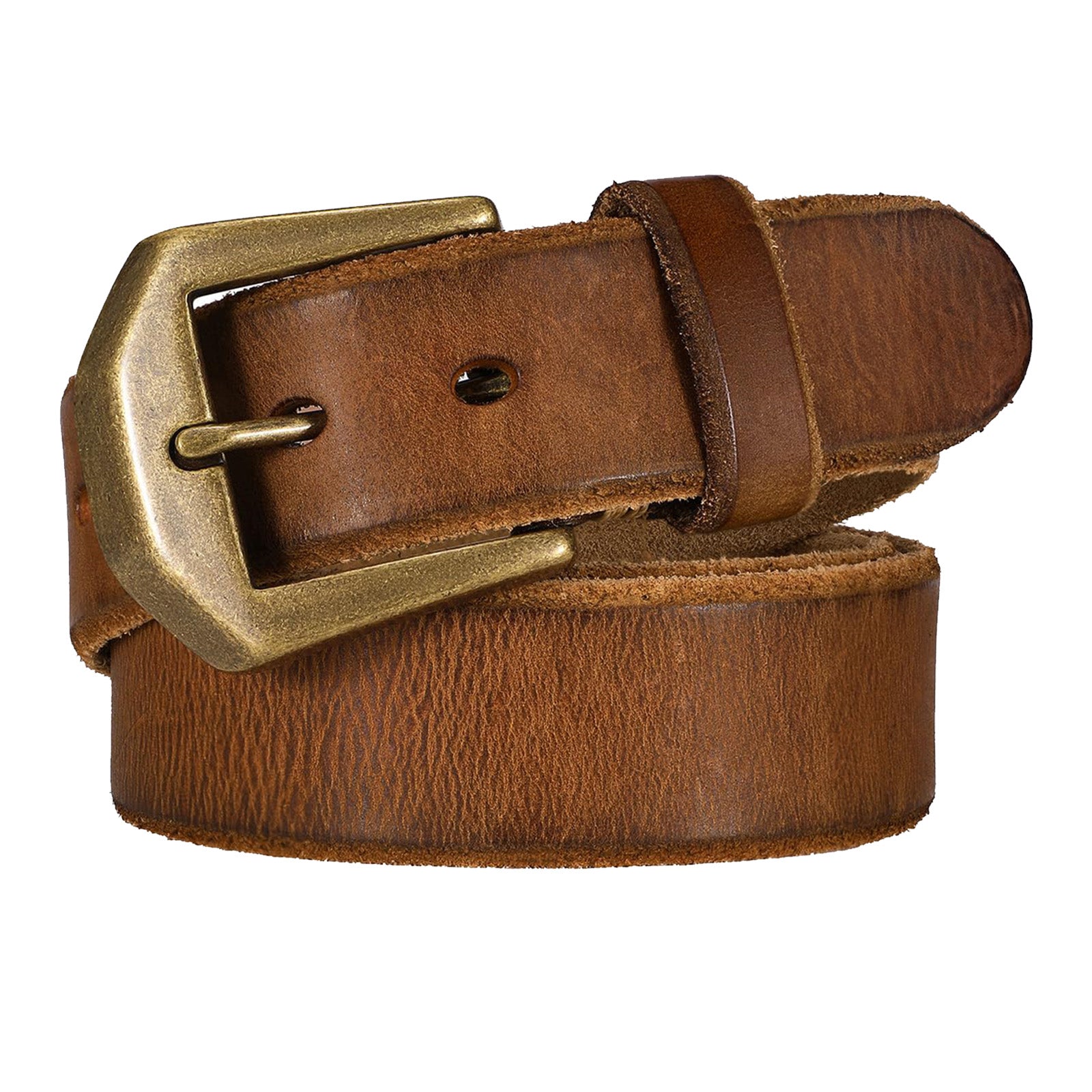
The identity of JASGOOD classic buckles extends into the small arrangement beside the metal. A brown keeper, a short exposed span of strap and a rounded tail can change how a familiar pin front reads.
The two brown portraits here share a recognizable format, but they do not make an identical picture. Compare the frame’s outline and the space around the keeper before reducing either object to a brown belt.
In this story
JASGOOD classic buckles with their neighbors included
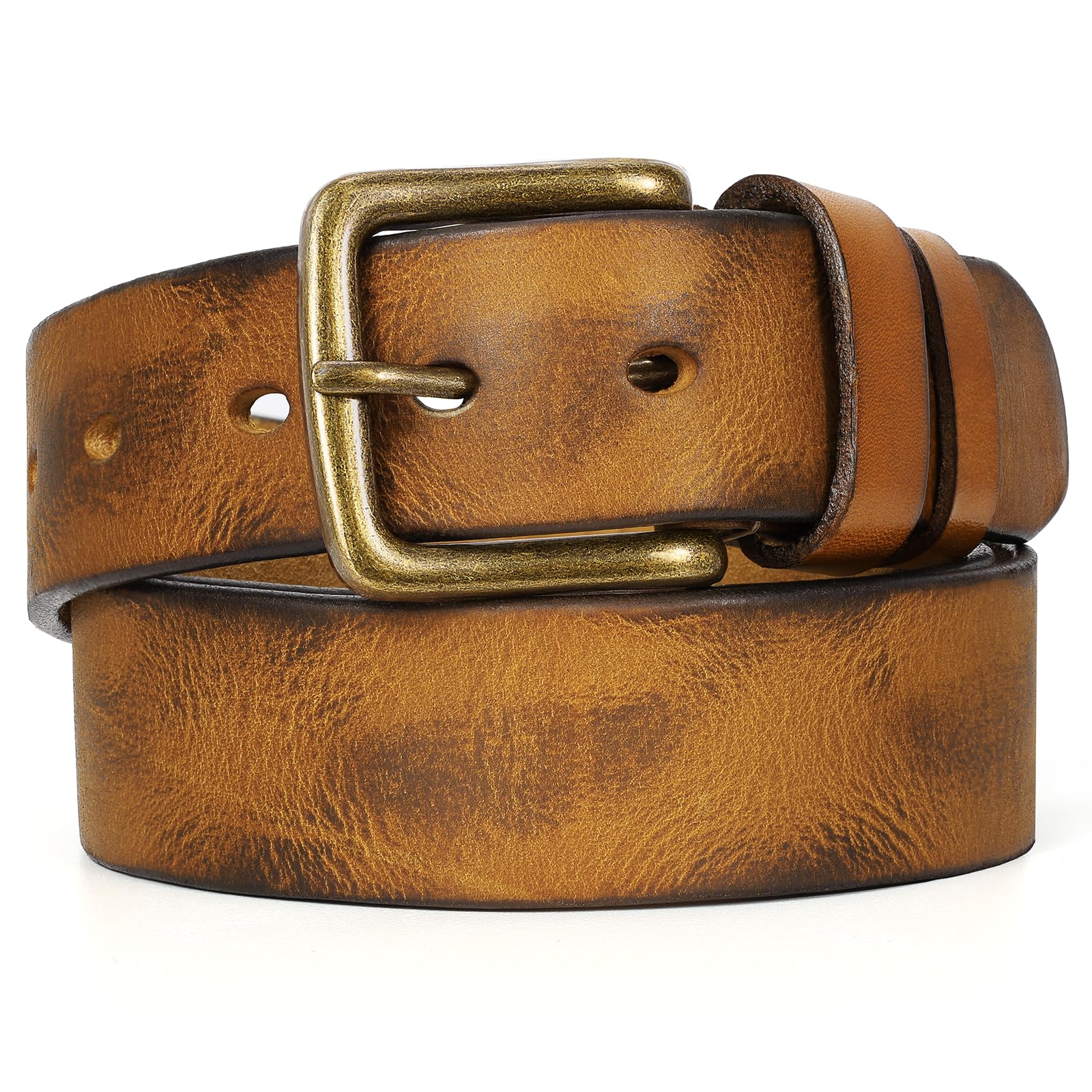
In the featured single-pin portrait, the brass-tone frame encloses a broad brown area. A substantial brown keeper sits beside it, creating a second block before the tail ends.
The other pin-belt image uses a more angular-looking outer frame. Its corners and taper make the metal boundary noticeable around the brown field inside.
That is a practical reason to inspect the JASGOOD classic pin-belt collection in full-front views rather than compare isolated buckle thumbnails.
Keep the keeper visible while doing so. It is part of the object immediately around the front, not an irrelevant strip that should be mentally cropped away.
The two metal-looking outlines may be the first difference you notice. The adjoining brown pieces explain why the whole arrangements still feel related.
This is a comparison of specific photographed details, not a claim that every classic belt follows one standard set of proportions.
Notice the interval between frame and keeper
The short distance from the metal frame to the brown keeper creates a visual pause. It lets those two shapes remain readable as separate parts of the front.
If the keeper were covered by a trouser loop, the arrangement would look different even with the same buckle. A product portrait and a worn view can therefore emphasize different neighbors.
In these portraits, the coiled bands leave the fastening area exposed. That makes them useful for reading the relationship without an outfit supplying extra lines over the top.
The keeper’s plain-looking surface also changes the rhythm. It interrupts the more varied brown field with a smaller, relatively solid block.
Do not turn a visible dark edge into a manufacturing statement. You can describe the outline without claiming a particular edge treatment, stitch method or material grade.
The useful observation is where the visible blocks sit and how much strap separates them, not an imagined account of how they were assembled.
Let the strap inside the frame remain a subject
A pin buckle does not erase the strap behind it. The brown area visible inside each frame contributes its own color, marks and small fastening hole.
Look first at that enclosed field, then at the metal around it. The relationship tells you whether you are mostly seeing a bright boundary or a larger filled-looking front.
The pin adds another line across the field. On these single-pin portraits, that one line leaves a different visual arrangement from a doubled fastening with paired holes.
Nothing in the comparison makes a single pin inherently more refined or suitable for a formal setting. The garment, actual product and intended use still matter.
If you are considering a plain shirt with trousers, decide whether you want the front to read mainly as an outline or as several separate shapes clustered together.
You can then look for that specific effect in the selected gallery instead of relying on a general label such as classic, vintage or handmade.
Choose the arrangement, then verify its proportions
A useful shortlist might say angular frame, matching keeper, visible rounded tail. Another might say broader brown field inside the frame, one pin, prominent keeper.
Those notes preserve the detail that attracted you. They are more dependable than remembering only a brown color that several catalog entries may share.
Before selecting, read the actual band width and size wording for the chosen model. A large product photograph does not establish that the buckle or keeper is larger in real life.
Check that the chosen option’s gallery shows the same front arrangement. A different finish or strap option may change the relationship you originally liked.
For practical selection questions after that visual decision, the buying guides provide a separate place to continue.
Compare JASGOOD classic buckles with their immediate neighbors included; the interval before the keeper and the strap’s final curve can distinguish two otherwise familiar brown fronts.