The difference in JASGOOD nylon ratchet belts is not only the rectangular front.
The black webbing beside it supplies a repeated ribbed surface, while the reviewed brown sliding-belt photograph continues a patterned brown surface into its outlined face.
Read the meeting point between strap and hardware. It shows how a similar broad front format can belong to two different visual arrangements without proving that the belts share an internal mechanism or a performance level.
In this story
JASGOOD nylon ratchet belts at the junction
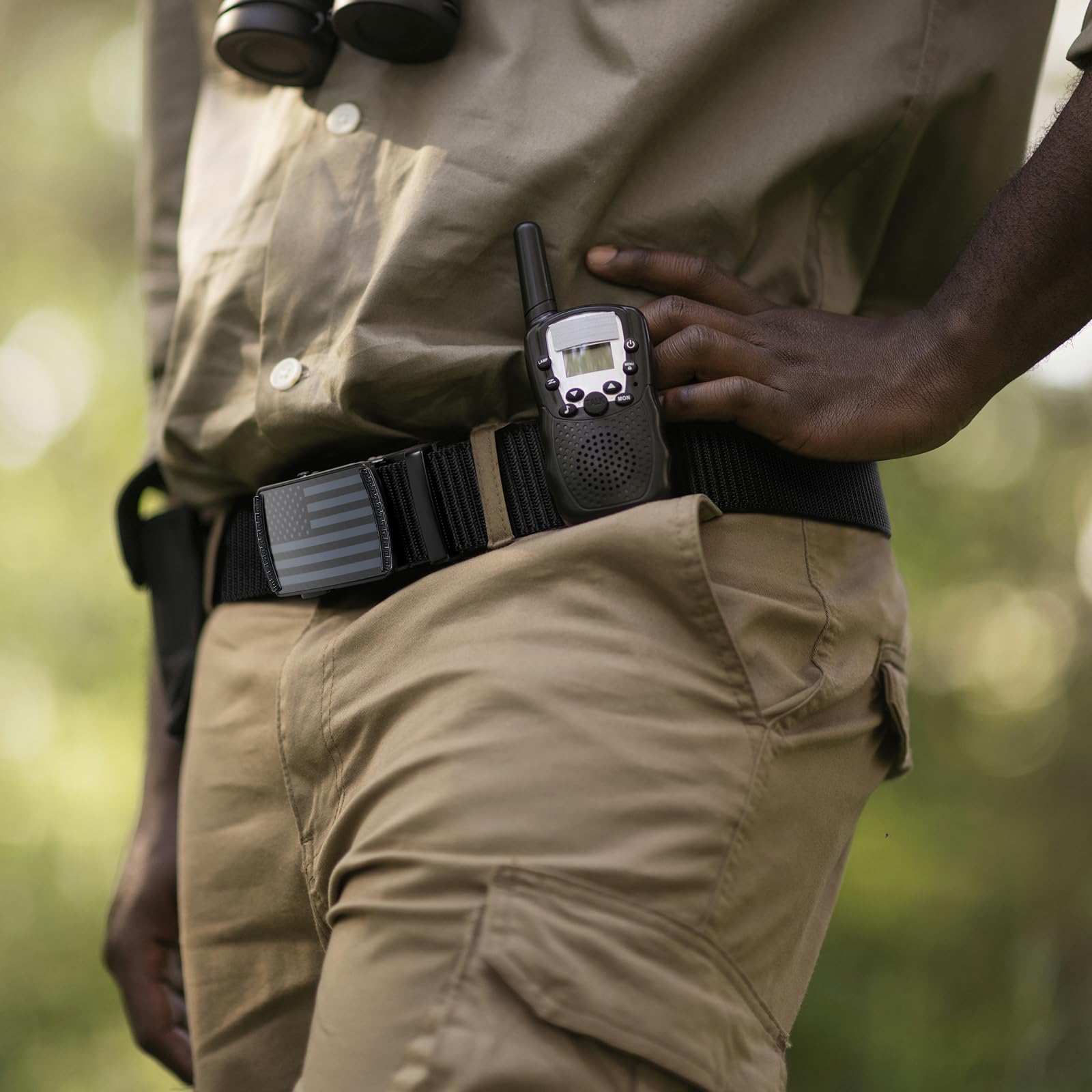
In the nylon outfit image, the black strap reaches a gray rectangular face with several horizontal-looking divisions. The adjacent webbing remains visibly separate from that front.
The plain black band and the divided face therefore create a small change of rhythm. Your eye moves from repeated surface ribs into a more bounded rectangular area.
Browse the JASGOOD nylon-belt collection when that webbing-to-front contrast is what you want to compare, rather than assuming nylon means one buckle style.
The collection lists both a ratchet nylon model and a tactical-named ratchet model. The photograph used here belongs to the latter’s existing gallery reference.
Those names help locate the products. They are not a reason to transfer the image, its fit or its hardware details to every neighboring listing.
A brown pattern can carry into the front
The brown outfit image has a different visual transition. Its patterned strap meets a rectangular face whose brown area relates to the band, while a pale metallic-looking outline marks the perimeter.
The face feels connected to the strap’s surface rather than set against it as a completely different block. That is a reading of the photographed arrangement, not a statement about its construction.
The blue denim below provides another contrast. It separates the brown band from the trousers while allowing the front’s lighter outline to remain easy to locate.
These two photographs also use different garments and lighting. They are not a controlled experiment comparing the same outfit, dimensions or finish.
The useful comparison stays close to the junction: a surface change at the front in one image, and a stronger visual continuation in the other.
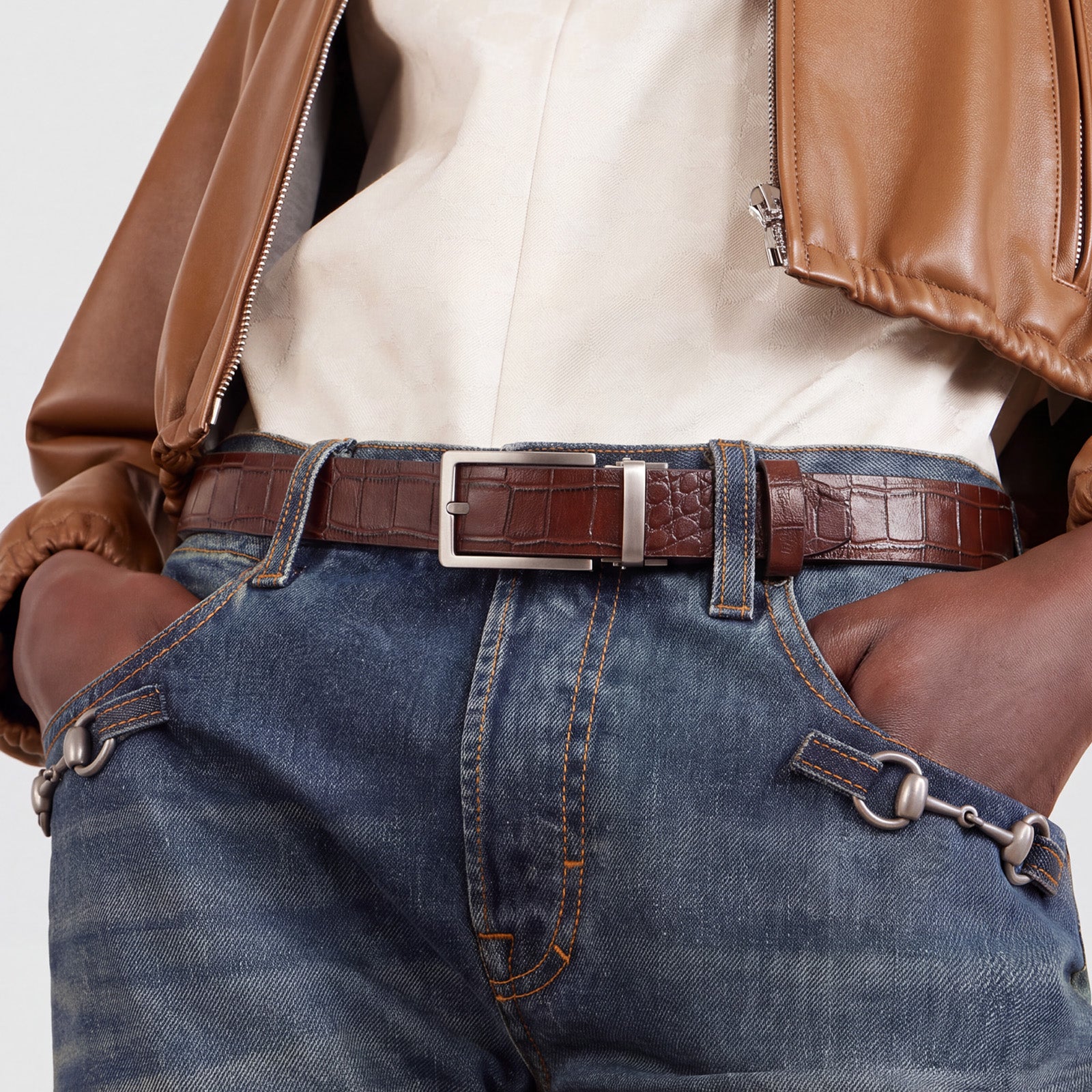
Separate a repeated surface from a printed claim
Webbing ribs, embossed-looking marks and a rectangular border can all be observed in an image. None tells you how the strap will stretch, absorb moisture or behave after repeated wear.
Likewise, a leather-named listing does not let a photograph verify hide grade or a specific manufacturing process. You can discuss a patterned brown surface without claiming how it was made.
If the ribbed appearance is the point of interest, ask whether it remains visible in the actual selected black option rather than borrowing a close-up from another product.
For the brown design, check whether the chosen face continues the same pattern shown in the strap. A similar color name alone would not establish that relationship.
Surface and specification are different kinds of information. Keeping them separate makes the visual comparison more precise instead of making it less useful.
Choose a transition, not a stereotype
Suppose a mostly plain outfit needs a compact break at the waist. The black webbing and divided gray face offer a change of surface inside a restrained dark palette.
If you prefer a band that reads as a more continuous decorated line, the brown patterned front offers a different idea. The outline can do the work of locating the fastening area.
Neither intention requires a claim that one belt is tougher, more formal or more comfortable. Those labels would answer questions the images have not tested.
The radio visible in the nylon outfit is part of that photograph’s scene. It does not establish a load rating or authorize carrying equipment on the product.
Choose the junction you want to see first, then evaluate the individual belt against the practical requirements of your own clothing.
Check the exact model after the visual choice
Read the selected listing’s size labels, stated strap width and fastening description. Similar fronts do not establish that release controls or replacement parts work the same way.
A close-up of one design should stay attached to that design. Do not use a different belt’s underside graphic as evidence for the model pictured here.
For the broader purchasing questions, continue to the belt buying guides; this collection reading does not replace a fit or materials check.
The two images are most useful when kept honest: different pictured objects, different surfaces, and a clearly visible meeting point at the front.
Compare JASGOOD nylon ratchet belts at the point where webbing meets the front: a sharply divided surface is a different visual choice from the brown design’s continuing pattern.