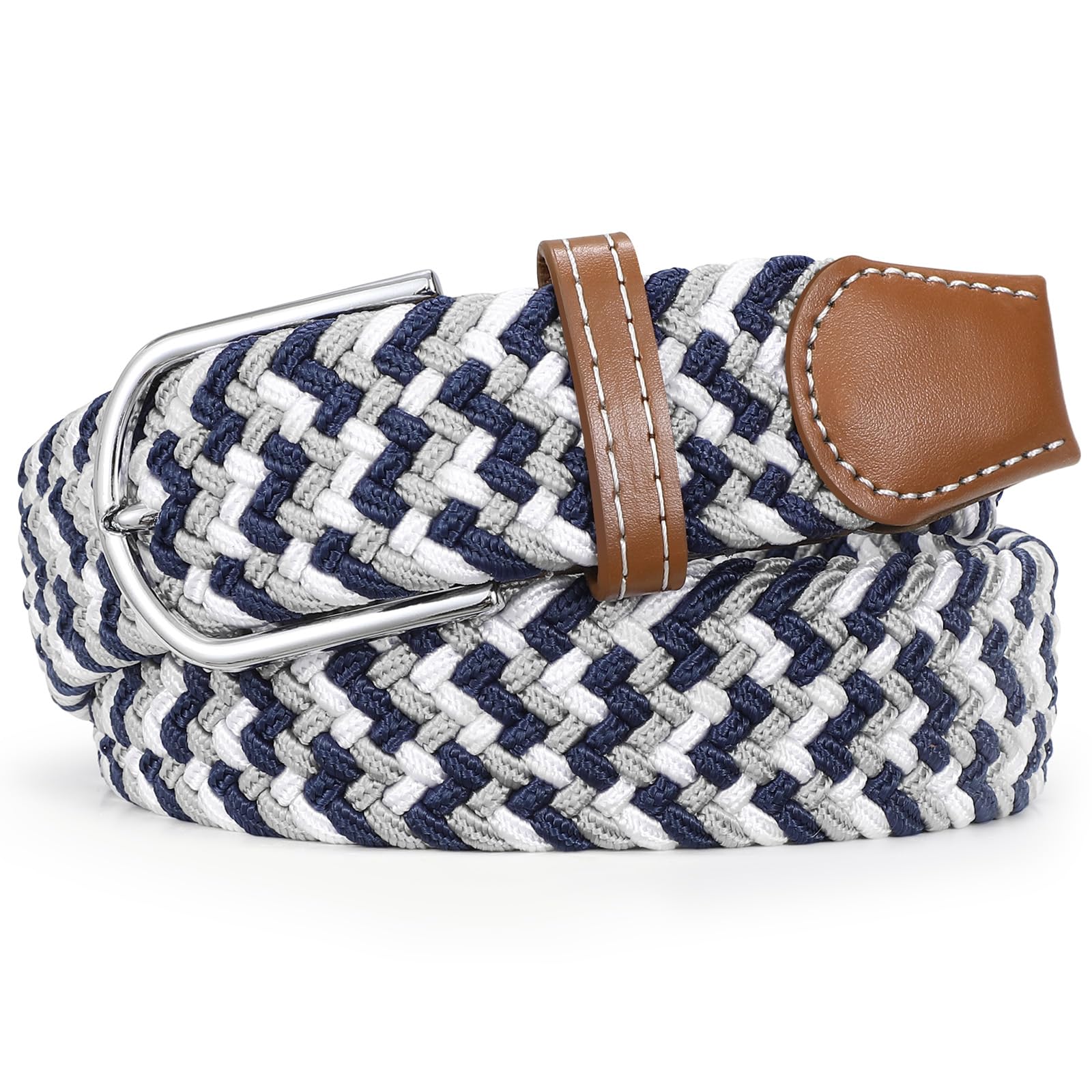
JASGOOD woven belt edges define the sides of a repeated field without a separate decorative border. On the colored chevron, light and dark crossings meet the long outline; the black braid keeps its edge much closer in tone to its center.
This comparison stays along the sides of the band. The transition into a tab, keeper or buckle is a different question: here the subject is where the pattern stops laterally and the photographed background begins.
In this story
Locate JASGOOD woven belt edges away from the front
Begin with a visible span of the chevron band that does not include the fastening. Follow one long side rather than jumping between the metal frame and the brightest pale strand.
The navy, white and gray-looking marks supply activity inside the field. At its boundary, that activity ends along the strap’s contour rather than becoming a separately colored continuous stripe.
Explore the JASGOOD fabric collection when you want to compare a patterned field whose own limit supplies the long outline.
Keep the center and edge in the same view. Cropping too tightly around one light crossing can make a small part of the repeat look like a border that continues all the way along the belt.
Follow what happens when color reaches the boundary
In the chevron portrait, the pale crossings make parts of the long side easier to locate against the surrounding darker strands. Other stretches bring a darker part of the repeat to that same boundary.
The changing color near the side belongs to the visible pattern. It should not be renamed piping, binding or a stitched edge unless the selected product information supports that description.
Trace a short side section with your eyes, then move inward by one crossing. The edge defines the limit of the field; the inner repeat defines the direction of movement within it.
Those two lines need not run together. A diagonal route can meet the long side while the outer contour continues along the length of the band.
This is a more useful description than calling the edge decorative simply because a pale strand happens to touch it in one crop.
Read the black contour against the photograph’s white field
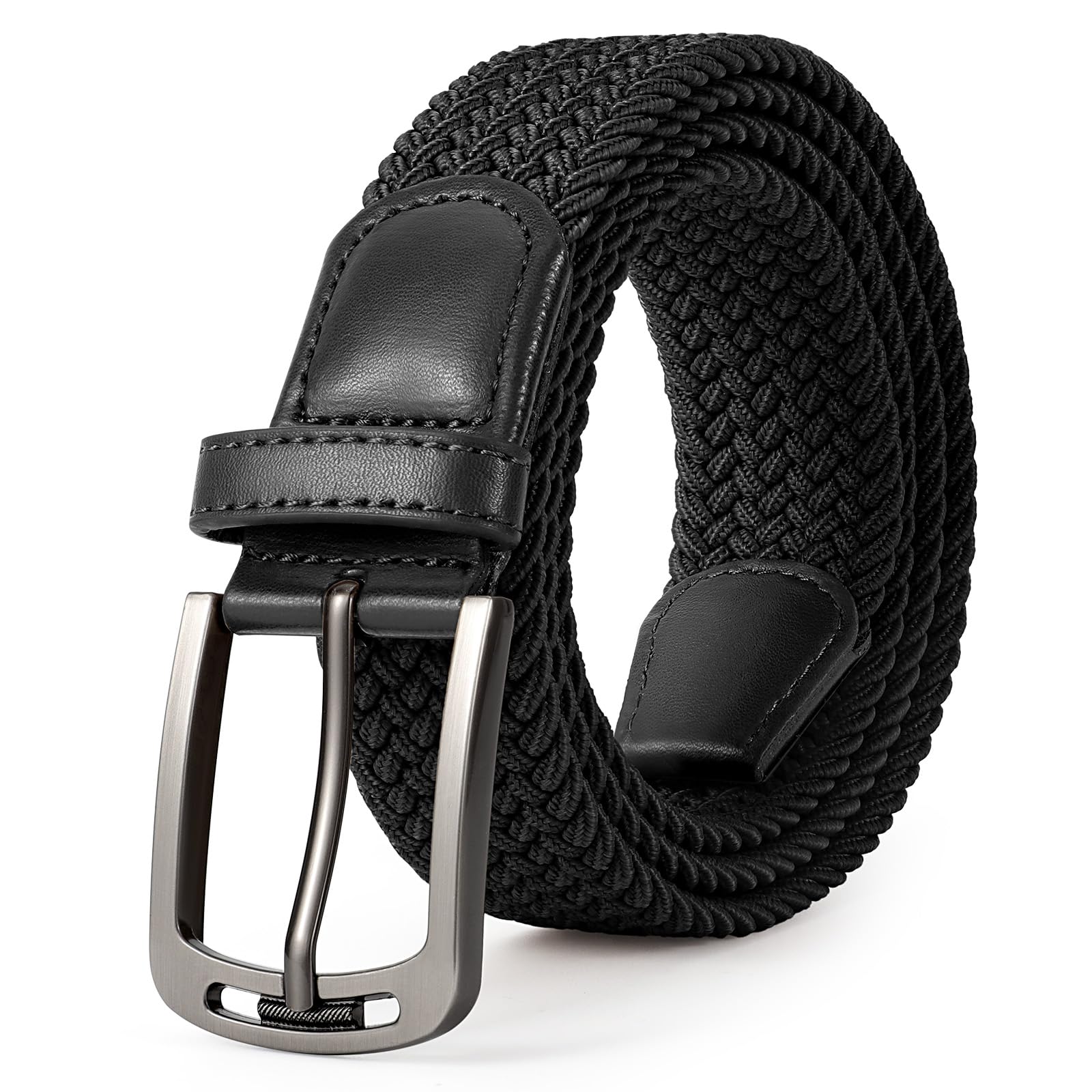
The black braid supplies a close-toned comparison. Its repeated crossings remain visible, but there is less color contrast between the patterned center and the material at the long side.
Against the white product background, the outer silhouette is easier to locate than it would be against another dark surface. Background contrast helps the eye find a boundary without adding a border to the object.
Look at the exposed outer span of the coil, then distinguish it from an inner overlap. A line where one layer covers another is not another long edge treatment.
The small repeated texture reaches the visible outline. The photograph does not demonstrate a smooth sealed strip, resistance to fraying or a particular way of finishing that edge.
Use the image to locate the side and compare its visual rhythm, not to judge a hidden edge construction from the darkness of the band.
Separate the side contour from bends and shadows
A coiled strap changes direction within the product portrait. Its near side, far side and overlapping sections do not all show the same amount of the band.
Choose an exposed span before comparing edge and center. A bend can make the patterned field look narrower, while a cast shadow can make its side appear to have an extra dark line.
Then compare another visible span of the same band. Ask whether the line you followed remains at the object’s boundary or disappears when the background and curve change.
This is an image-reading check, not a test of straightness or stability. A photographed coil cannot establish how the band behaves when pulled flat or worn through loops.
A useful note names the contour you can actually see: colored pattern reaching a long side, or close-toned braid ending against a contrasting background.
Choose how clearly the field should end
If the colored repeat is the attraction, decide whether you like seeing its diagonal marks run right to the side. The chevron reference gives that question a concrete starting point.
The black reference offers a quieter color relationship. Its side remains part of a dark repeated field, while the photograph’s pale background helps separate the whole outline.
For a genuinely loose or damaged side, use the care and repair section; this article does not recommend trimming or sealing the photographed braid.
Read JASGOOD woven belt edges by following the long-side contour, the pattern that reaches it and the contrast outside it, leaving the buckle junction for a separate comparison.