A good office belt works with your trousers, your shoes and the way you spend the day. Start with your workplace’s dress code, then choose a comfortable width and buckle. Use color and texture to make the outfit feel like yours.
In this guide
Start with the setting, then the belt
A client meeting in a conservative office and a day in a creative studio may call for different choices. Treat the formulas below as starting points and follow any specific dress requirements in your workplace.
| Your working day | Outfit foundation | Belt direction |
|---|---|---|
| Formal meeting | Tailored trousers, shirt or blouse, jacket and polished shoes. | A smooth-looking strap and compact, understated buckle. |
| Business casual | Chinos or relaxed tailoring, a knit polo or shirt, loafers. | A simple belt with subtle texture or a warmer color. |
| Creative or relaxed office | Dark denim or wide-leg trousers, a knit top and an overshirt or blazer. | A visible buckle or contrasting color if it suits the dress code. |
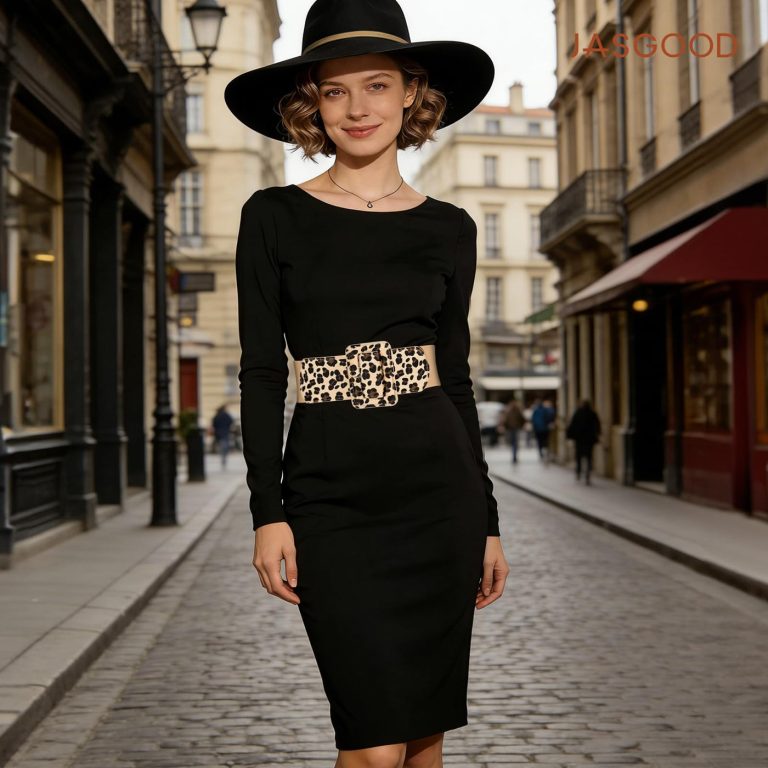
| Dress and jacket | A dress with comfortable shoes and a light tailored layer. | A waist accent that sits comfortably over the fabric. |
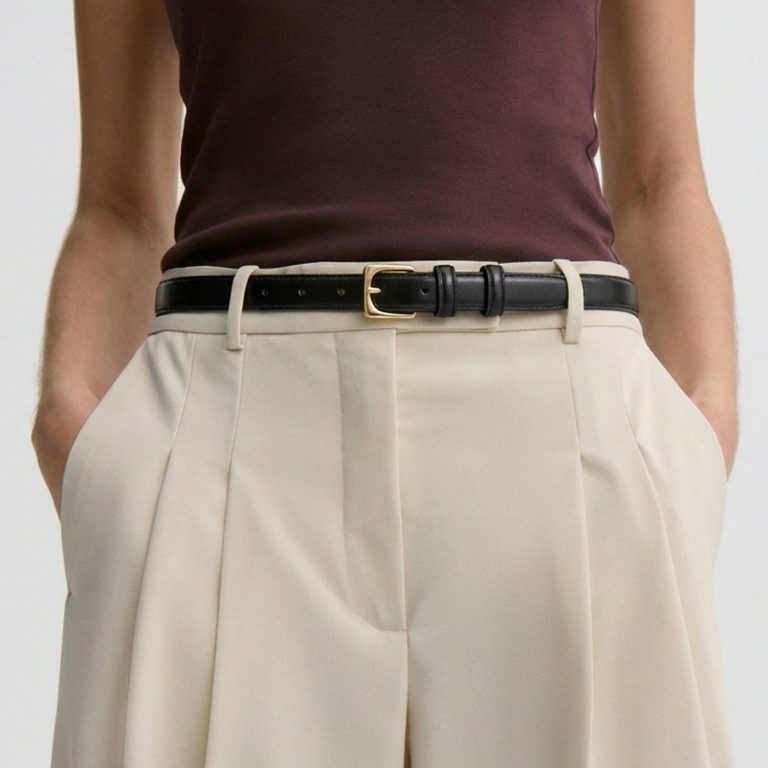
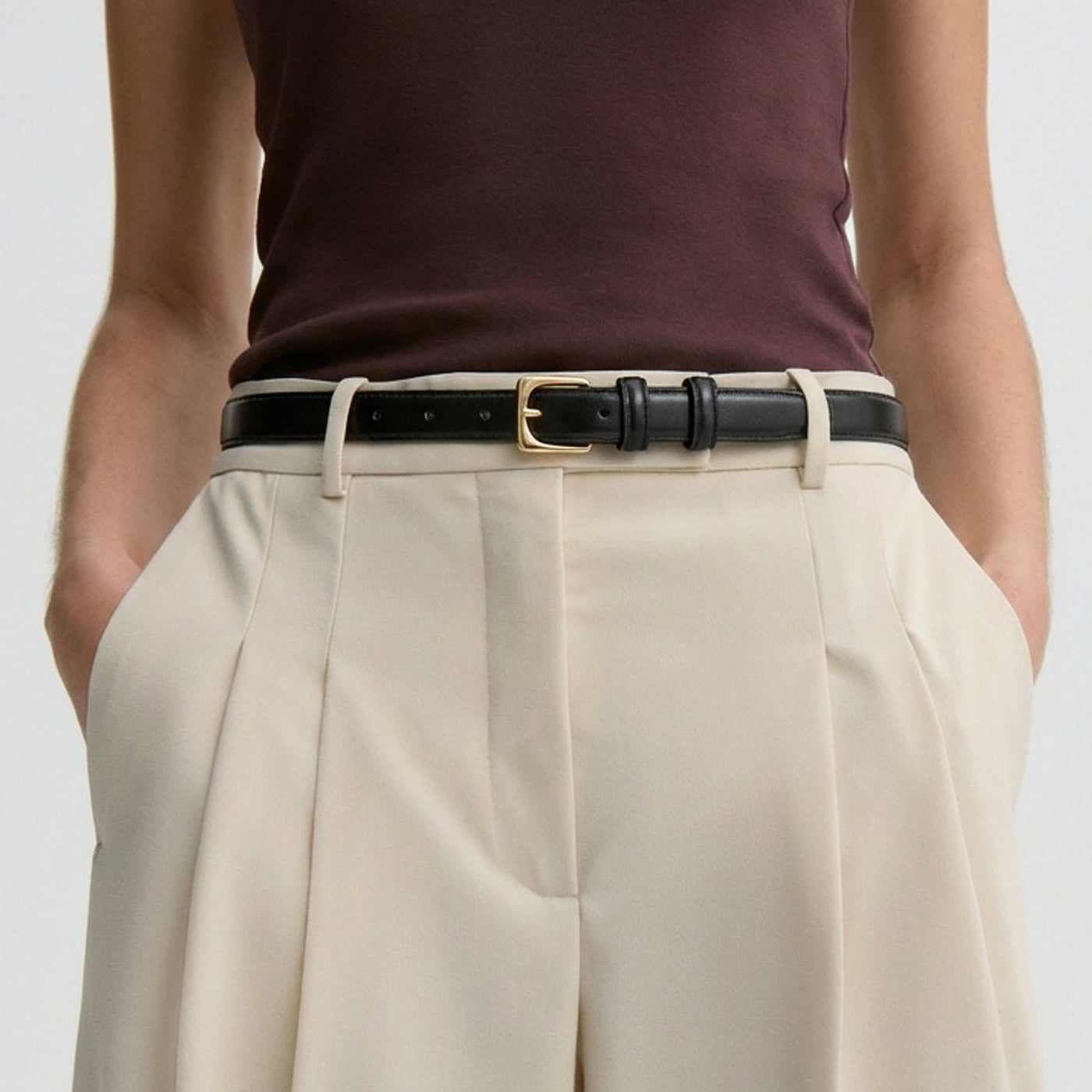
For the compact-buckle approach, JASGOOD’s slim square-buckle belt is one option to compare.
Check its width and fit range against your work trousers, then use the outfit ideas below to choose the color.
Four outfits, with the reason each belt works
1. Cream tailoring, a white shirt and a brown belt
Try cream or beige trousers with a white shirt, a brown belt and loafers. The belt separates similar light tones and gives the waist a clear finish. A small square or rounded buckle keeps the detail contained.
Add a matching or tonal jacket for a coordinated look. If the trousers have a high waistband, keep the shirt tuck light; thick folds and a heavy buckle can feel crowded when you sit.
For a subtler version, choose a belt closer to the trousers’ color. For more contrast, try black and repeat it in the shoes. The silhouette can stay the same while the mood changes.
2. Navy trousers, a pale-blue shirt and black shoes
A plain black belt gives this combination a restrained finish. It connects with black loafers or lace-up shoes and leaves the shirt and tailoring as the main features. Keep the buckle low-profile under a jacket.
If you prefer brown shoes, start with a brown belt in a similar color family. A perfect shade match is unnecessary; look for a combination that feels deliberate in daylight.
3. Chinos, a knit polo and casual loafers
Try stone chinos, an olive or navy polo and a brown belt. A lightly textured strap suits the relaxed pieces. Tuck the polo if you want the belt visible; leave it untucked if the hem and fit suit the outfit better.
In a more relaxed workplace, a simple woven belt can work too. Look at the buckle and overall finish as well as the material. A bulky sporty closure may feel different from a discreet buckle, even in the same color.
4. A simple dress, a tonal belt and an open blazer
Use a belt close to the dress color to suggest a waistline without adding a strong contrast. Keep the blazer open so its front edges frame the outfit. Loafers, flats or boots can each work with the dress’s length.
If the dress already has a waist seam or tie, compare the original shape first. Adding another belt is optional. Our knit-dress styling guide shows how to adjust fabric without over-tightening.
Choose the width by fit and proportion
Measure the inside opening of the belt loops on the trousers you wear to work. A 1.25-inch or 1.5-inch belt may be suitable, but width alone does not define how formal a belt looks.
The buckle, strap finish, thickness and surrounding clothes all affect the result. A narrow decorative belt can be more noticeable than a wider plain one. Compare the whole outfit before treating any measurement as a dress rule.
Trousers with side adjusters or a clean waistband may not need a belt at all. Avoid forcing a belt onto clothes that were designed to fit without one.
Make color and hardware easy
Start with the shoes: black with black, or brown within a similar warm or cool family, is an easy way to connect separate pieces. Then check the combination against the trousers.
Use one repeated detail: a buckle can echo a watch or a small piece of jewelry. Mixed metals are also an option; the pieces do not need to match exactly to look considered.
Choose a focal point: if the blouse has a strong print or the jacket has bold buttons, try a quieter belt. If the rest of the outfit is simple, a distinctive buckle can provide the detail.
The desk-day comfort check
- Fasten the belt over the clothes you actually plan to wear, including any tucked layers.
- Sit in a chair and lean forward. Check for pressure from the buckle and the upper and lower strap edges.
- Stand and walk. The belt should help the trousers stay in place without gathering the waistband into deep folds.
- Close your jacket, if you will wear it closed. Check that the buckle and belt tip do not create an uncomfortable lump.
If you keep loosening the belt during the day, check the available adjustments and the trousers’ fit. More convenient adjustment can help, but it cannot compensate for a waistband that is consistently too tight.
Common questions
Do I need a leather belt for the office?
That depends on the dress code and outfit. A smooth, understated finish is a useful starting point for conservative tailoring. For casual offices, other materials may work; compare the actual construction and care instructions.
Can I wear a gold buckle to work?
Yes, where the dress code permits it. A compact gold-tone buckle can be subtle. Size, shine and decoration matter more to the overall effect than the metal color alone.
How many office belts do I need?
Start with the belt that suits your most-worn trousers and shoes. Add another only when it solves a specific gap, such as a different loop width or color palette. There is no required two-belt wardrobe.
Choose for the clothes you already wear
Browse JASGOOD office belts, then check the sizing guide and canvas versus leather comparison. Choose the fit first, and use the buckle and color to finish the outfit.