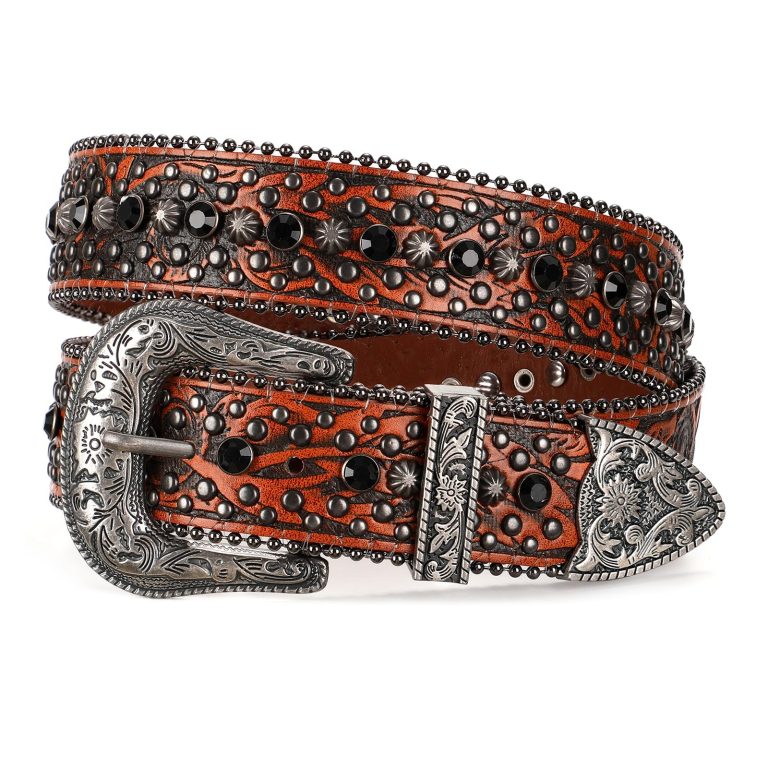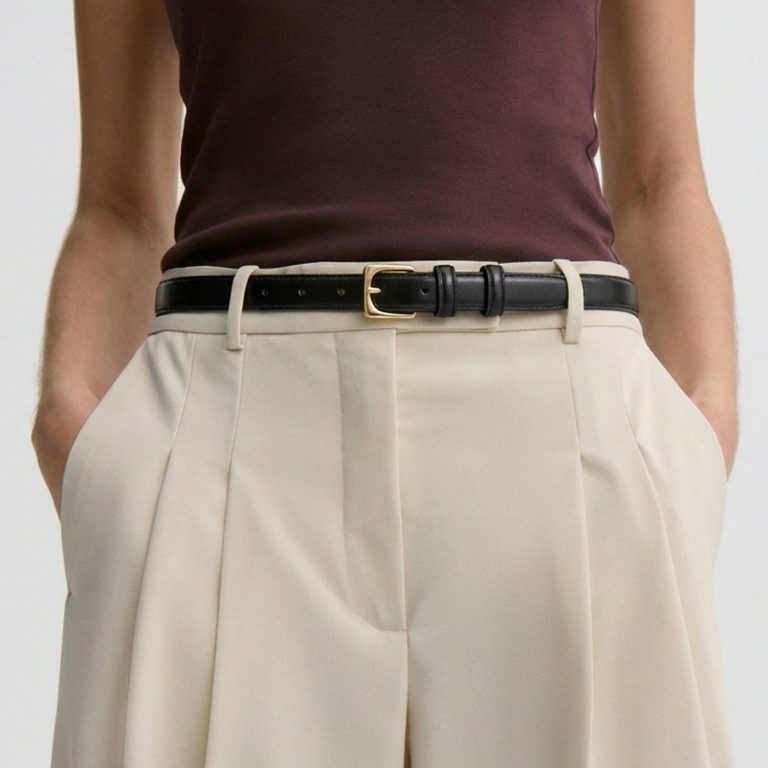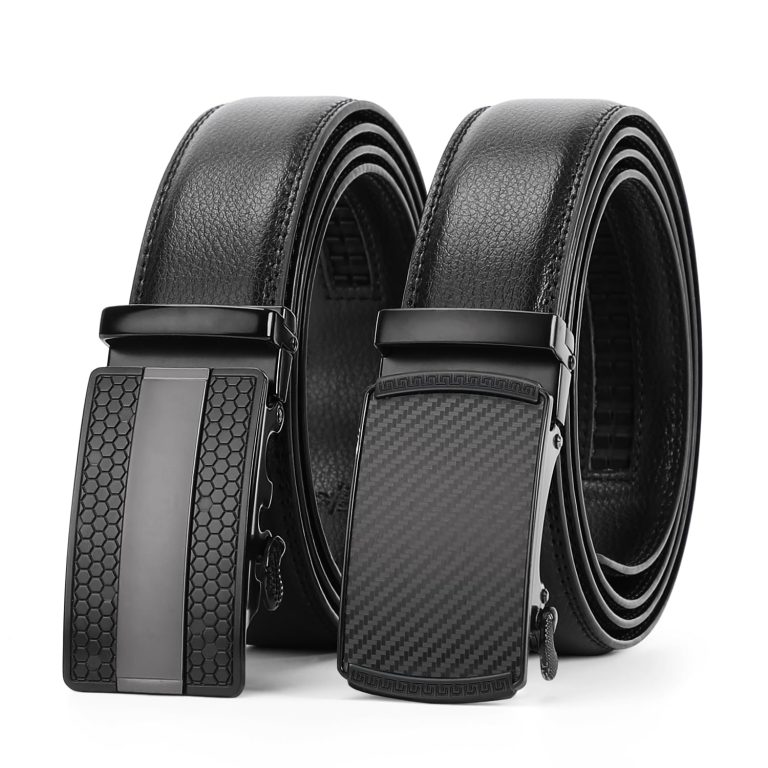
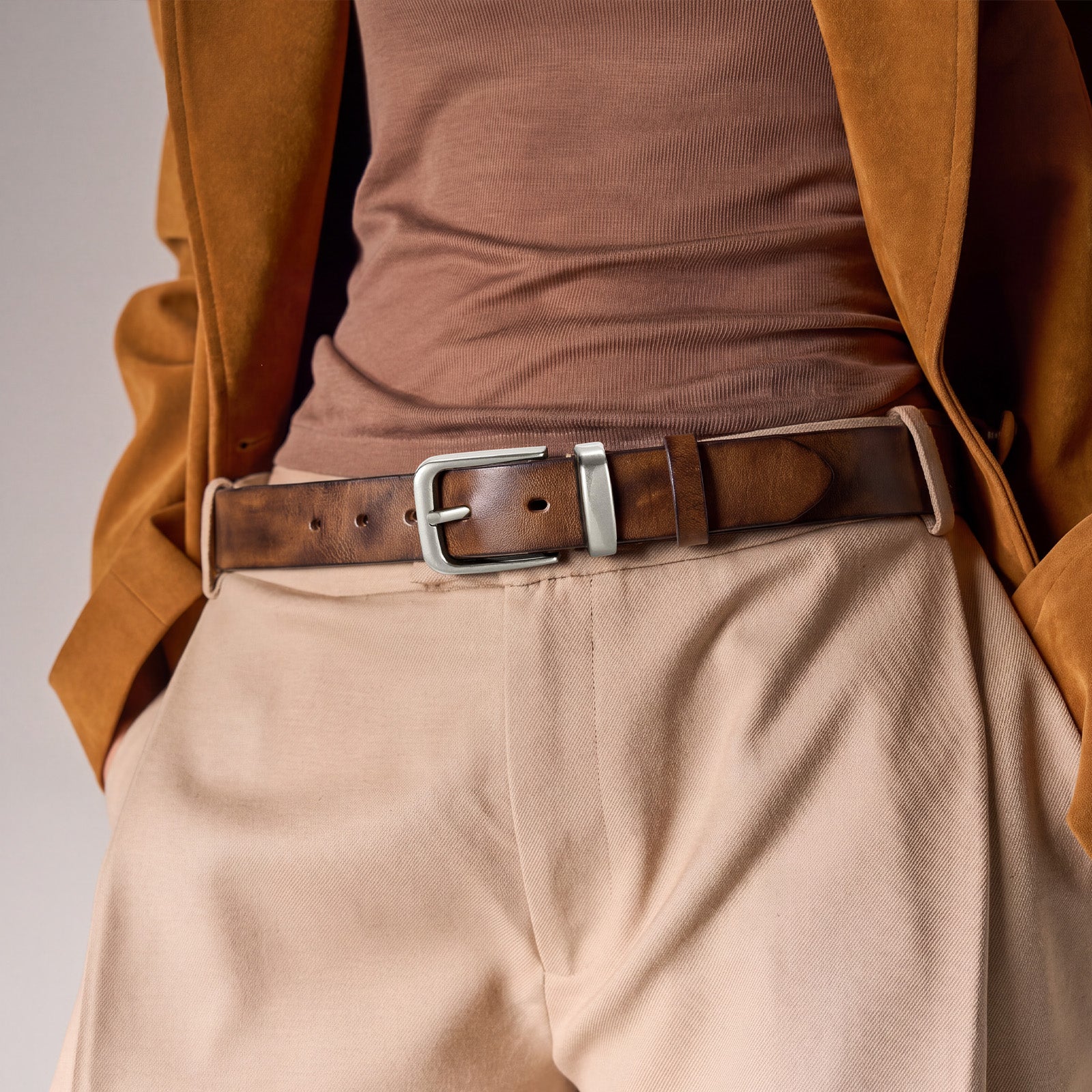
A leather belt needs a gentle routine: remove surface dust, keep it away from heat, and store it without a tight fold. Before adding any cleaner or conditioner, check what the strap is made from and follow its care instructions.
In this guide
Start with the material, not a bottle of conditioner
A smooth leather strap, a suede belt and a coated synthetic belt can look similar in a small product photo. Their surfaces need different treatment. Read the product description and care label before you begin.
| Belt surface | A sensible first step | Before using a product |
|---|---|---|
| Smooth leather | Remove dust with a clean, soft, dry cloth. | Check whether the maker permits cleaner or conditioner on that finish. |
| Suede or nubuck | Follow the maker’s instructions for its raised surface. | Do not apply a cream intended for smooth leather. |
| Faux leather or coated material | Follow the coating’s own cleaning instructions. | Leather conditioner is not automatically suitable. |
| Unknown material | Stop after a light dry wipe. | Ask the seller to identify the strap and recommended care. |
These differences matter when browsing JASGOOD classic leather belts too.
Check the selected product’s material and care instructions before deciding whether it suits the maintenance routine you want.
A simple routine after wearing
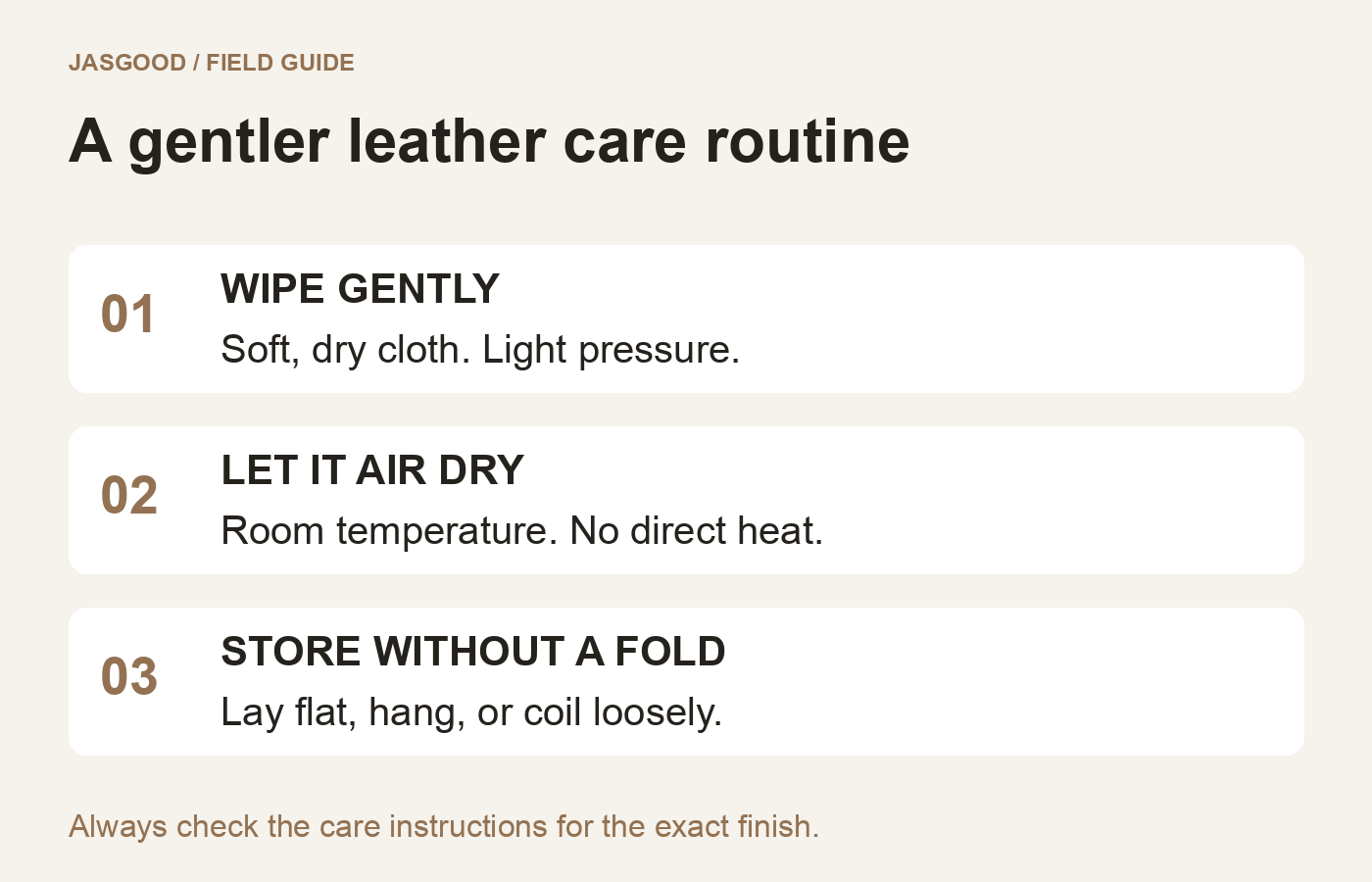
- Unbuckle before removing. Slide the strap out of the loops instead of pulling it through while still tightly bent around the buckle.
- Wipe gently. Use a soft cloth to lift dust from both sides. Use a separate clean section for the buckle so dirt from the hardware does not rub into the strap.
- Let it air. If the belt feels damp, leave it in a ventilated room before putting it away. Do not seal a damp belt inside a bag or drawer.
- Look at the stress points. Check the hole you use, the buckle attachment and the edges. Notice a loose screw or lifted edge early, before it becomes a larger repair.
What to do if a leather belt gets wet
Blot visible moisture with a soft, dry cloth. Take the belt off and let it dry at room temperature, away from direct sun, radiators and hair dryers. Avoid rubbing hard at a wet mark.
Wait until it is dry before assessing the finish. If a stain remains, or the leather feels distorted, contact the seller or a leather specialist. Adding oil to a wet patch is not a reliable repair.
Does every leather belt need conditioner?
No single schedule suits every finish. “Twice a year” may sound convenient, but it ignores the leather, its surface treatment, climate and use. Start with the belt maker’s recommendation.
If conditioner is approved, test a very small amount on a hidden area and let it dry as directed. Check for darkening or residue before treating a visible section. More product is not a shortcut to better results.
Do not substitute cooking oil, hand cream or an alcohol wipe. Their ingredients are not selected for your belt’s finish. Keep cleaners away from decorative inserts, stitching and hardware unless the instructions cover them.
Store it without creating a hard bend
Lay the belt flat, hang it from a suitable support, or make a loose coil without forcing it. Give the buckle enough space that it does not press a dent into the strap beside it.
A dry cupboard away from direct sunlight is a better home than a windowsill or hot car. If you rotate belts, let the one you just wore dry first. Rotation creates drying time; it does not promise a particular lifespan.
Common care questions
Can I wash it in the washing machine?
Do not put a leather belt in a washing machine. A care label that permits cleaning of another fabric item does not cover the attached leather strap or buckle.
Will conditioner fix peeling?
Peeling, separated layers and a split near a fastening point need assessment rather than more conditioner. Ask whether the strap can be repaired or replaced. Stop relying on a fastening that is coming apart.
Are all creases a problem?
A bend where a belt fastens is different from an opening crack or loose layer. Check whether the surface is simply creased or whether the material is separating. A close photo helps a seller assess the difference.
Choose a belt you can maintain
When shopping, look for a clear material description and care advice. Our leather belt buying guide explains the construction details worth checking.
For JASGOOD products, start with the brand’s care guidance: keep the belt dry and wipe gently with a soft cloth. Ask about the exact model before using a treatment.
Care reference: JASGOOD FAQ and Leather Working Group’s product care guidance. Specific product instructions take priority.