To choose a leather belt that lasts, inspect the construction as well as the material name. Look for a clear strap description, sound edges and holes, a secure fastening, and a size you can adjust comfortably.
In this guide
A useful product page should help you answer those questions. A premium-sounding label or a dramatic lifespan claim cannot replace clear photos and specific details.
Read leather terms without treating them as a ranking
Leather descriptions tell you something about a material or its surface, but they do not grade every part of a finished belt. The strap, lining, hardware and assembly all deserve attention.
| Term on the listing | What it tells you | What to check next |
|---|---|---|
| Full-grain leather | The grain surface has not been removed by corrective mechanical treatment. | Strap construction, finish, edges and hardware still matter. |
| Corrected-grain leather | The grain has been partly removed and the surface finished. | Ask how the belt is built and how that finish should be maintained. |
| Genuine leather | A broad material description, not a complete quality specification. | Request the leather type, lining and whether the strap has multiple layers. |
| Bonded or reconstituted material | A different construction from an intact leather strap. | Read the stated composition and layer information. Do not assume it behaves like full-grain leather. |
| Faux or vegan leather | An alternative material description that needs more detail. | Check the actual composition, coating and care advice. |
In particular, “genuine leather” does not automatically mean the bottom of a quality ladder. It is too broad to settle the purchase. Ask what the strap is made from and how it is assembled.
When comparing JASGOOD classic leather belts, use the material description as a starting point.
Then check the construction details below before deciding which belt suits your routine.
Five details worth inspecting
1. The strap and its layers
Look for a side view. A single-piece strap and a lined, stitched dress belt are different constructions; either needs to be well made for its intended use. Visible layers are not automatically a defect.
What needs attention is separation, lifted lining or unexplained filler. If you cannot tell from the photos, ask for the strap construction and thickness. Do not sharply fold a belt to “test” it.
2. The edges
Edges may be left natural, burnished, painted or folded. Look for a consistent finish suited to the design. Peeling edge paint or loose sections on a new belt deserve a closer look.
A natural edge is not automatically unfinished workmanship, and stitching is not automatically proof of strength. Judge whether the chosen construction is neat and secure.
3. The holes or adjustment track
On a pin-buckle belt, inspect the holes you expect to use. They should be cleanly formed, without splits extending into the strap. On a ratchet belt, check how the track and release work.
Choose a size that leaves useful adjustment. A belt that only just closes can keep the same end hole under strain and leaves little room to accommodate different layers or sitting comfort.
4. The buckle and attachment
Check the pin, clasp or release for rough movement and sharp edges. Look at how the buckle joins the strap: screws, snaps and stitched attachments each have their own maintenance and replacement options.
If replaceability matters to you, confirm it in the listing. A removable buckle does not mean every replacement buckle will fit; strap width and the attachment system must match.
5. The finished fit
Try the belt through the actual trousers, then sit down. The strap should move through the loops without force, and the fastening should not press uncomfortably. Leave enough tail to use the keeper neatly.
Questions to ask when shopping online
- What is the strap made from, including its lining or backing?
- Is it a single piece or a layered construction? Can I see its edge and underside?
- What are the strap width and usable fit range?
- How does the buckle attach, and can it be replaced?
- What care does this finish need, and what happens if the item arrives with a defect?
A seller may not publish every detail. A clear answer to a specific question is more useful than guessing from a glossy product photo or a material label.
Put the checklist to work
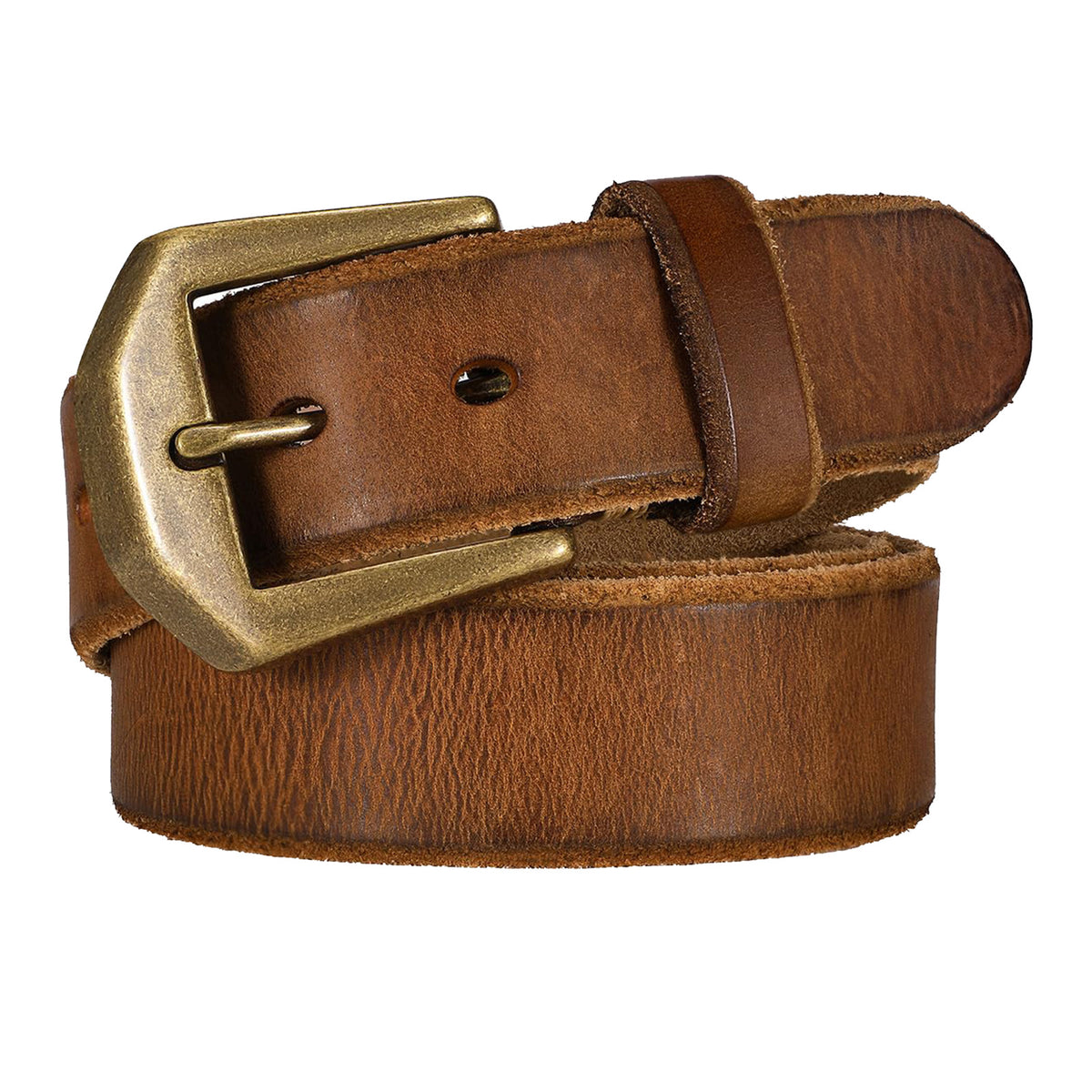
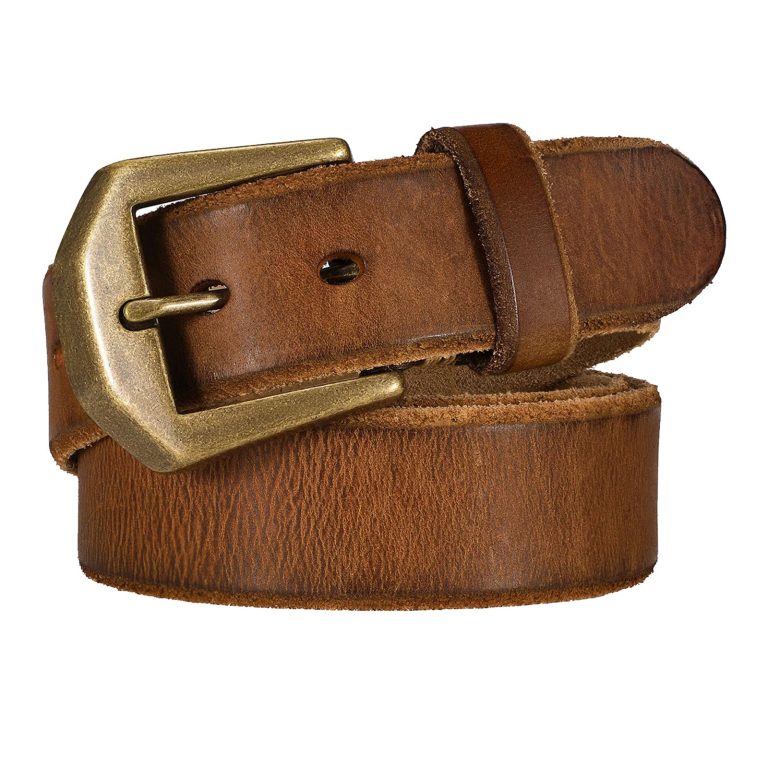
For example, the JASGOOD 1.5-inch full-grain leather belt identifies its material and width and describes a cut-to-fit system. Use those as specific details to check against your needs.
The label does not tell you whether your trouser loops are large enough, or which length to order. Compare the size information, look at the buckle attachment and read the trimming instructions before making any cut.
What happens after purchase matters too
Keep the belt away from unnecessary heat and soaking, and follow its care instructions. Check a removable fastening occasionally. If a hole starts to split or layers separate, address it instead of tightening further.
Our leather belt care guide covers a gentle routine. If you are still deciding on a material, compare canvas and leather for the outfits you wear most.
Common buying questions
Does a thicker belt always last longer?
No. Thickness is one construction detail. A thick strap that fights narrow loops or feels rigid at the waist may be the wrong choice. Select a construction that fits the job and the garment.
How many years should a good belt last?
There is no honest single number for every wearer. Frequency of use, fit, moisture, maintenance and construction all affect wear. Look for a sound product and clear aftercare instead of an unsupported promise.
Is a lined leather belt worse than a single-piece one?
Not automatically. Lining and multiple layers can be part of the intended design. Check how they are attached and finished rather than treating every layered strap as the same material or quality.
Terminology reference: Leather Working Group definitions. Product example: the linked JASGOOD listing. Neither is a lifespan test.