A belt hole that looks slightly oval is not the same as a split running toward the edge of the strap. If you notice a belt hole stretching, inspect the surrounding material and the fastening before wearing the belt again. Adding another hole will not repair damage around the one that is already failing.
In this guide
Inspect the hole with the belt relaxed
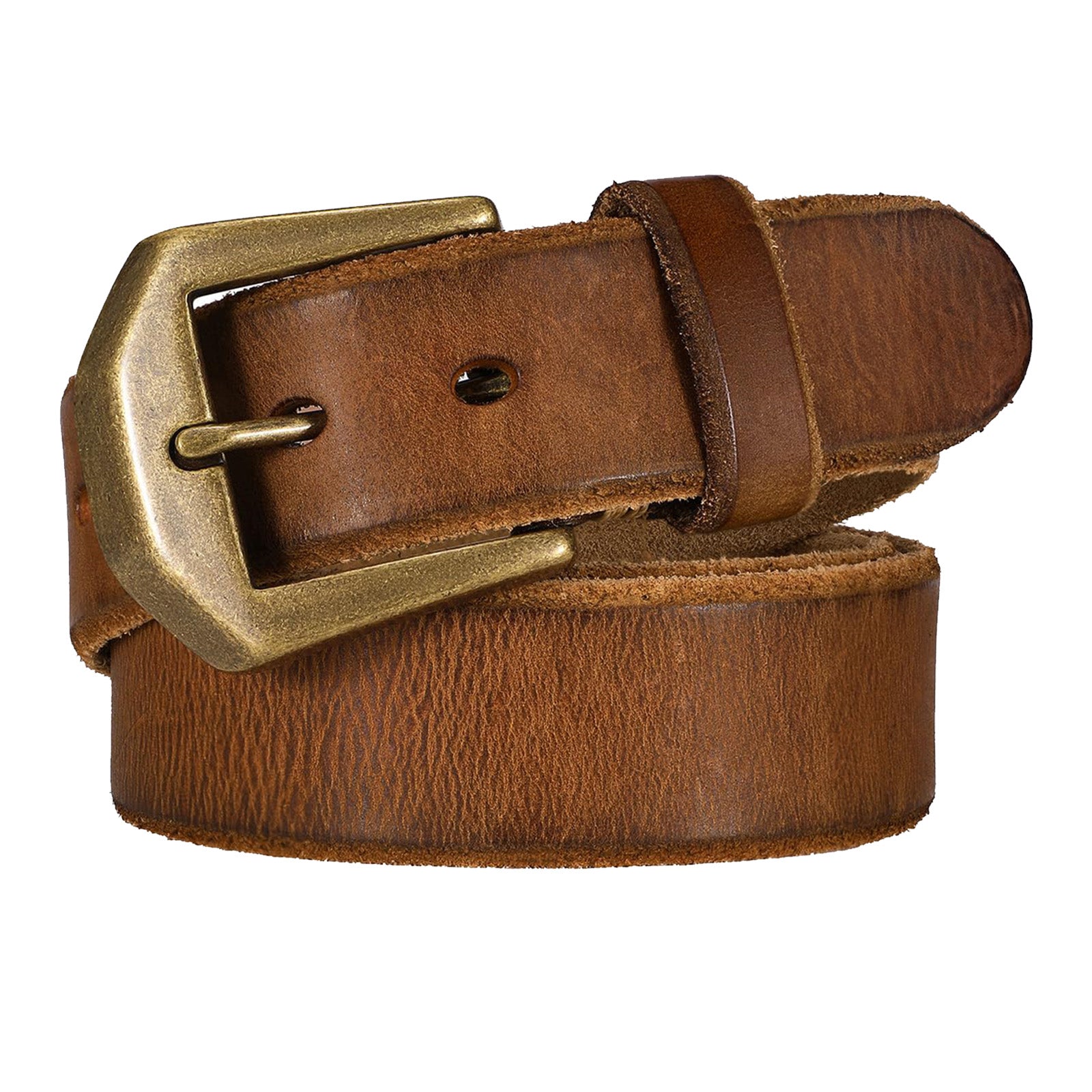
Take the belt off and lay it on a well-lit surface. Look at both sides of the hole you use most often. Check for a tear extending beyond the opening, separating layers, lifted coating or material thinning near the strap edge.
Look at the buckle pin too. It should sit through the intended hole without being forced sideways. If the pin, buckle frame or its attachment is bent or loose, have that fastening assessed instead of focusing only on the visible hole.
If the strap needs replacing, compare the size ranges and buckle details in JASGOOD pin-buckle belts. Use your actual wearing measurement and the trousers’ loop space. A material description or a thicker-looking strap does not by itself establish how long a belt will last.
Check whether the belt is doing too much work
Put the trousers on without the belt and assess the waistband. If the trousers need a strong pull to stay in position, consider whether a different trouser fit or tailoring would solve the underlying problem. Moving to a tighter belt hole can increase strain without improving how the trousers sit.
Think about when the tension changes. Thick tucked layers, long seated periods or wearing the same belt at a different rise can all alter the space required. Re-measure over the actual outfit rather than choosing a hole simply because it is the one you used last week.
Know the limits of adjustment
When a belt is intact but its fitting range is wrong, a repair specialist may be able to assess a permitted sizing change. That decision depends on the construction and available material. It is not the same as creating a fresh hole next to a tear.
Do not punch between damaged openings, seal a split with household glue or push an oversized pin through a smaller hole. These shortcuts change the fastening without establishing that the strap can hold securely.
A practical decision sequence
If the opening is slightly elongated, the surrounding strap remains intact and the fastening appears secure, compare its condition with the maker’s care and inspection advice. Keep checking the area instead of assuming all changes are harmless.
If a split is spreading, layers are lifting at the load point or the pin no longer holds consistently, stop relying on that fastening. Ask the maker or a leather repair professional whether a repair is appropriate, or replace the belt. Do not keep tightening it to compensate for movement at the damaged opening.
Choose the next fit from the outfit
Suppose the same hole looks stressed each time you wear a thick sweater tucked into narrow-waisted trousers. Assess that clothing combination as well as the belt. The replacement should fit comfortably over the layers you actually wear, with the buckle sitting naturally.
Save the useful measurements from an undamaged, comfortable belt if you have one. For other signs of fastening failure, our guide to when to replace a belt covers the strap, buckle attachment and adjustment mechanism together.