Men who hate belts often dislike a particular problem: a buckle that presses, holes that never fit quite right or trousers that need constant tightening. Identify that problem before buying another belt with the same drawbacks.
In this guide
Start with the trousers
Put on the trousers without a belt and check the waistband. If it is substantially too loose, a belt can create gathers rather than a comfortable fit.
Consider another size, a different cut or an appropriate alteration. Trousers with suitable side adjusters or an elastic waistband may already provide the support you want.
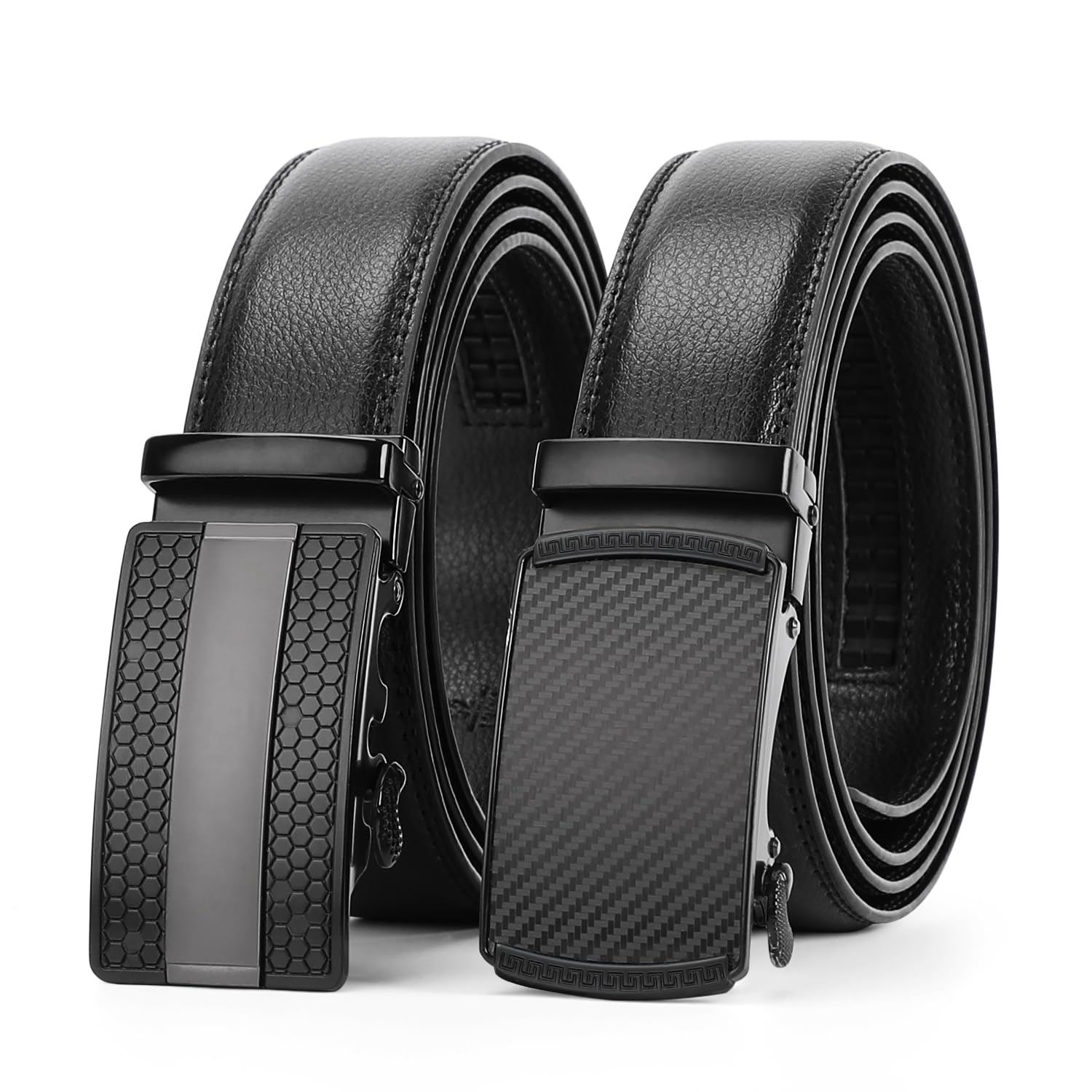
If the main problem is coarse adjustment between holes, compare JASGOOD sliding ratchet belts. Check the selected mechanism, fitting range and release method; finer adjustment is useful only if the whole belt feels comfortable.
Match the solution to the complaint
The buckle digs in
Compare the hardware’s depth and where it sits over the trouser button. Try a lower-profile design and keep bulky tucked fabric away from the center.
Sit for several minutes before deciding. A smaller-looking buckle is not automatically more comfortable if its back shape still presses.
One hole is tight and the next is loose
A compatible ratchet, ring or other adjustable mechanism may offer a more useful setting. Learn how the particular design secures and releases, rather than assuming all no-hole belts work alike.
The belt feels stiff
Compare constructions with the clothing you wear most. A more flexible strap may feel different, but material labels alone cannot predict comfort.
Check that the belt still supports the waistband and does not twist inside oversized loops.
The tail is always in the way
Choose a suitable fitting range and keeper arrangement. A much longer strap can remain inconvenient even when the buckle closes correctly.
Only shorten a design when the maker explicitly allows it and explains the method.
Try a realistic test outfit
Use your most frequently worn trousers, not an unusually forgiving pair. Tuck the usual shirt, sit, bend and walk before making the choice.
Notice whether the new belt solves the original complaint. If it introduces another one, compare a different construction or revisit the trousers themselves.
You do not have to wear one every time
A belt is useful when it supports the garment or gives the finish you want. If the trousers fit securely and their design works without it, leaving the belt off can be a practical, intentional choice.