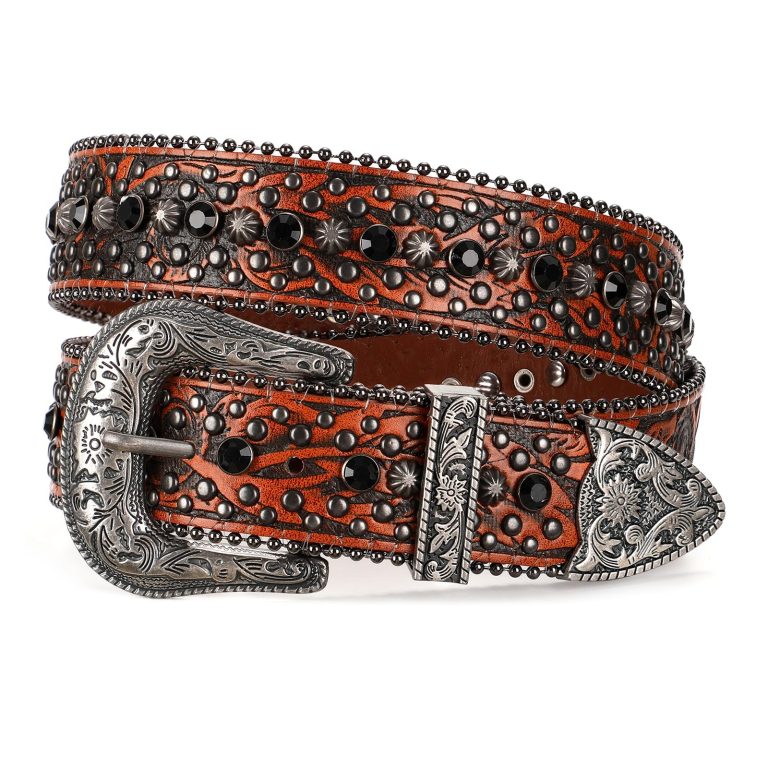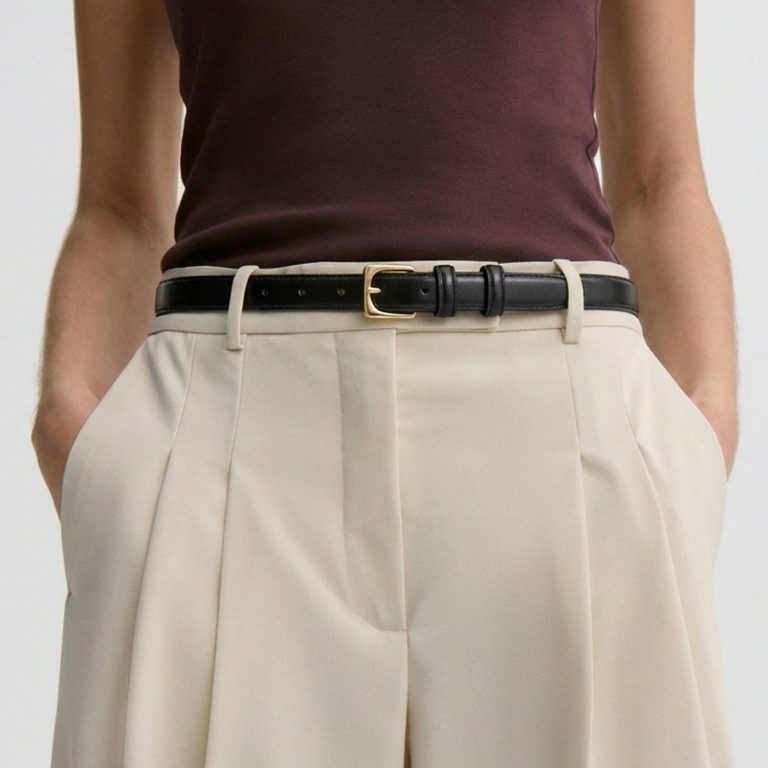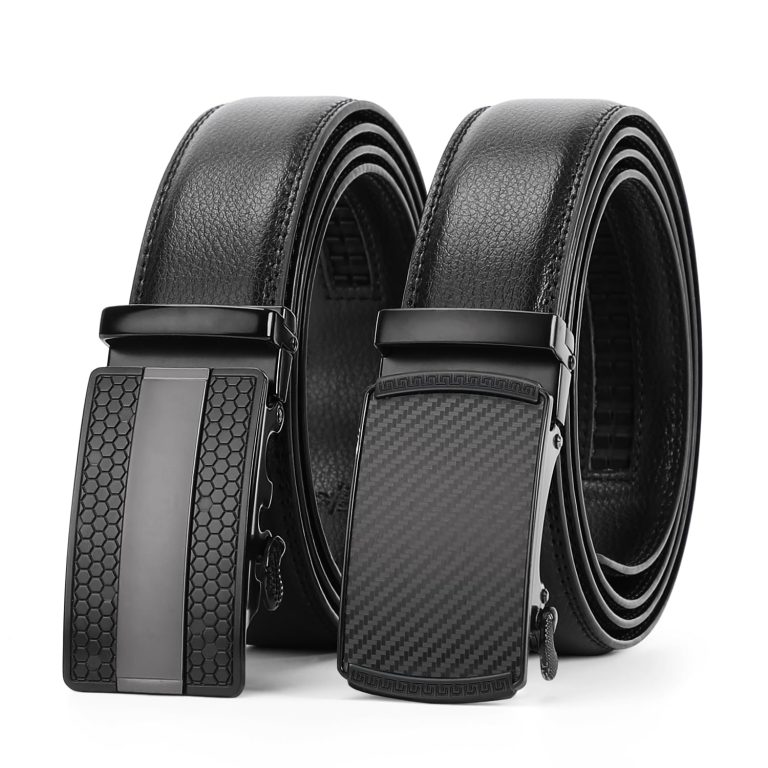
You can measure for a belt without a flexible tape by using a non-stretch cord or strip of paper and a ruler. The important part is measuring where the belt will actually sit over your clothing, then checking what the seller means by its listed size.
In this guide
Choose something that will not stretch
Use a flat ribbon, thin cord or paper strip that is long enough to go around the wearing position. Avoid elastic, a stretchy drawstring or a thick rope. Pulling stretchy material tight changes the result, while a bulky rope can sit differently from a strap.
Put on the trousers or dress you intend to belt. For trousers, route the measuring material through the loops so it follows the waistband. For a belt worn over a dress, choose the intended waist or hip position first. Keep the material flat and comfortably in contact with the clothing.
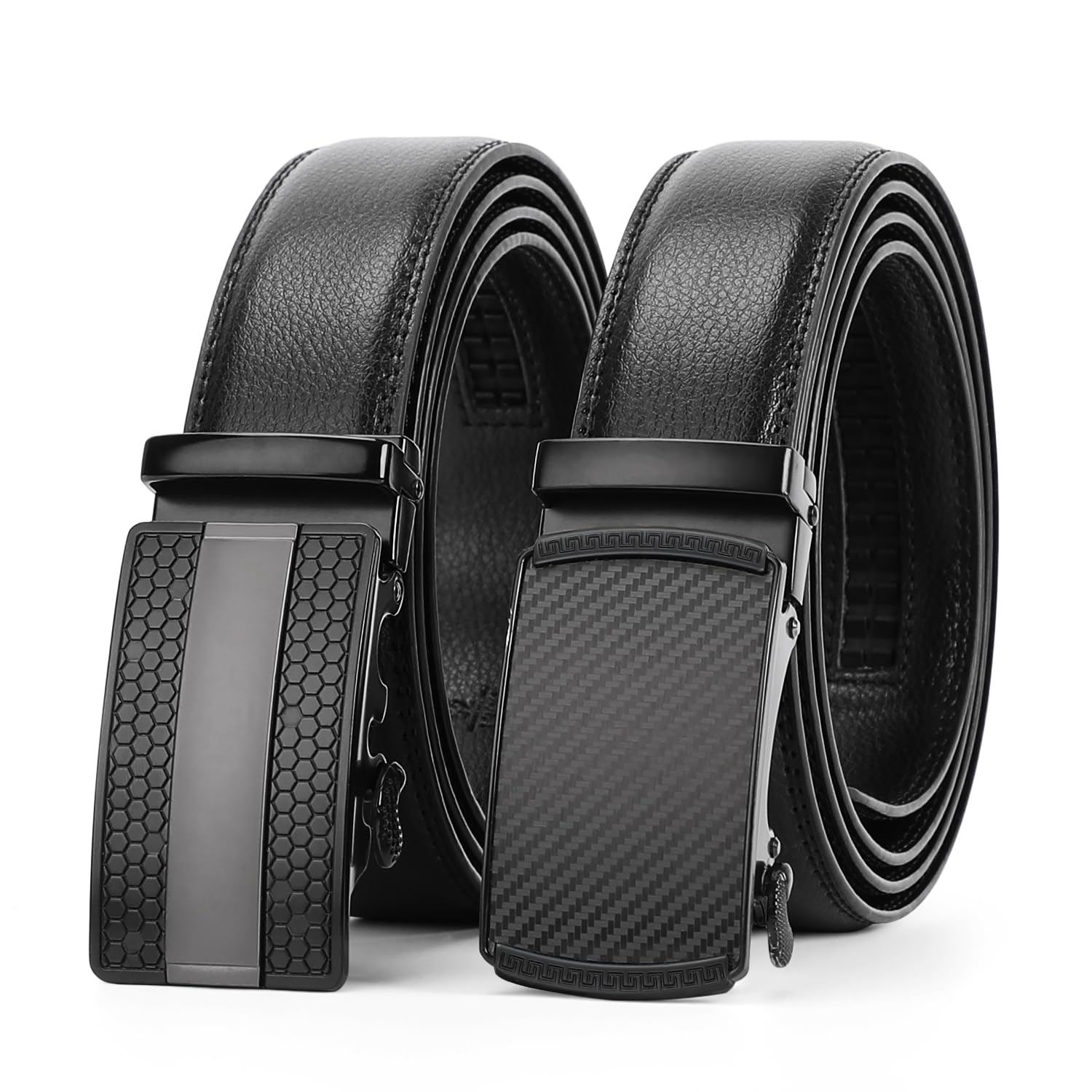
Once you have that measurement, compare it with the stated fit ranges in JASGOOD ratchet belts if you want an adjustable fastening. Check the selected model’s chart: a strap’s total length and the circumference it fits are not automatically the same measurement.
Mark the meeting point
Hold one end at a clear reference point. Bring the rest around your waist without pulling it tight, then mark where the two ends meet. A helper can make this easier if keeping the cord level causes you to twist or hold your breath.
Remove the cord carefully and lay it straight beside the ruler. Measure from the starting end to the mark. If the ruler is shorter than the cord, mark off one ruler length at a time on a flat surface, then add the sections. Do not stretch the cord while straightening it.
Repeat the process from the beginning. If the results differ, check whether the material slipped to a different height, crossed over itself or compressed your clothing. Repeatable measurements are more useful than an overly precise number produced by a poor setup.
Use an existing belt as a second check
If you own a belt that fits well with the same trousers, compare its working length. For a pin-buckle belt, the seller may ask for a measurement to the hole you use; follow the seller’s diagram for the starting point. Do not substitute the length to the decorative tip.
For a chain, stretch or ratchet belt, check the appropriate chart rather than copying the measuring method for a pin buckle. In particular, do not pull an elastic belt fully taut and assume that is a comfortable wearing size.
Turn the number into a useful purchase
Suppose your cord gives a consistent measurement over a tucked shirt. Use that number to compare the product’s stated wearing range, then check whether the belt will also need to fit over a thicker layer. Measure that second outfit separately instead of adding an arbitrary allowance.
Keep the measurement and its context together: which trousers, which wearing position and whether a shirt was tucked in. If two product sizes overlap, consult the seller’s guidance on tail length and adjustment room. Our belt sizing guide explains the difference between a wearing measurement and the label on your trousers.