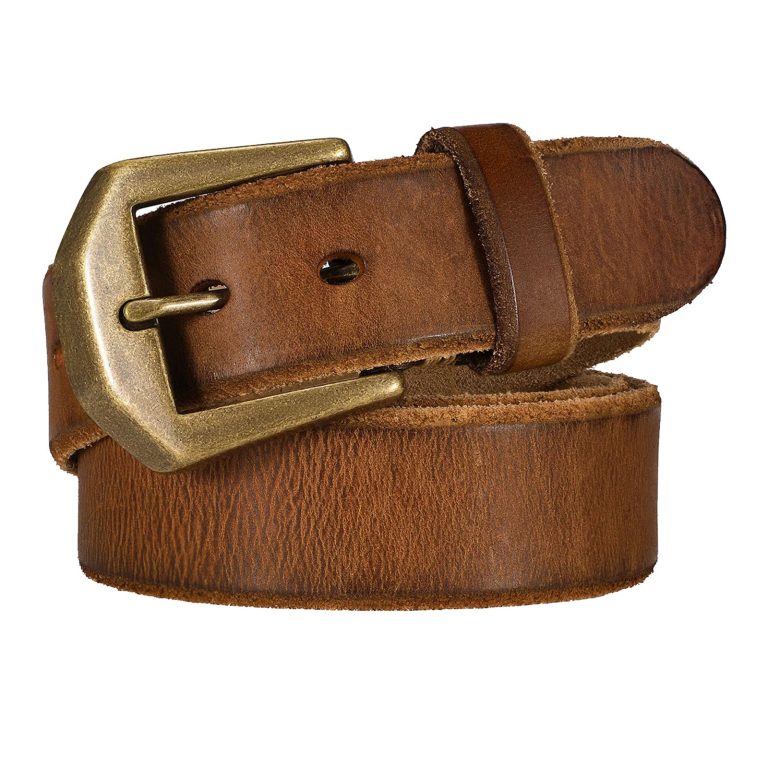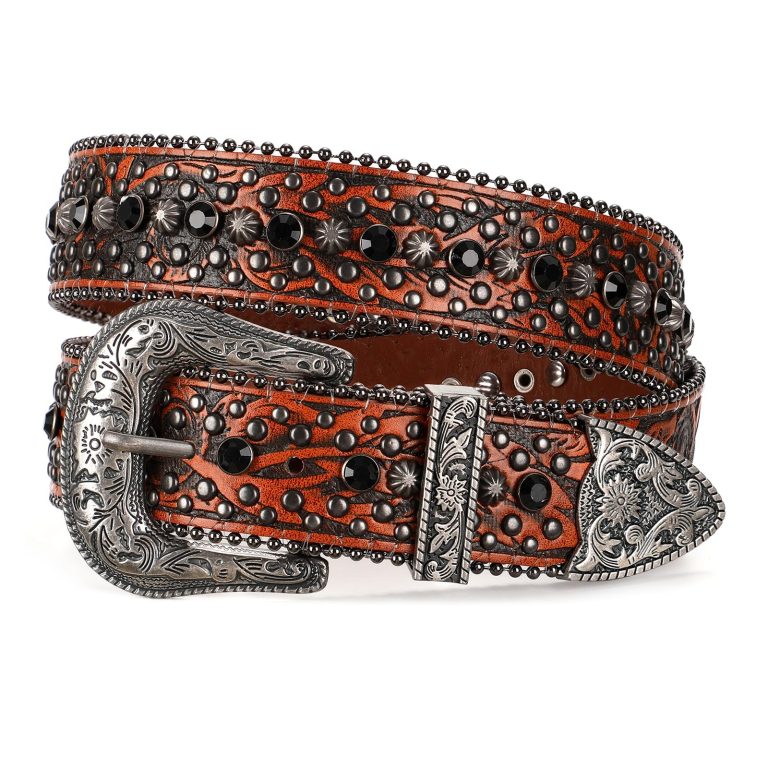
One belt can work at the waist and hips if its usable adjustment range covers both positions comfortably. Check both measurements and finished looks. Total strap length alone cannot tell you whether the belt will fasten well in both places.
In this guide
Measure the two actual outfits
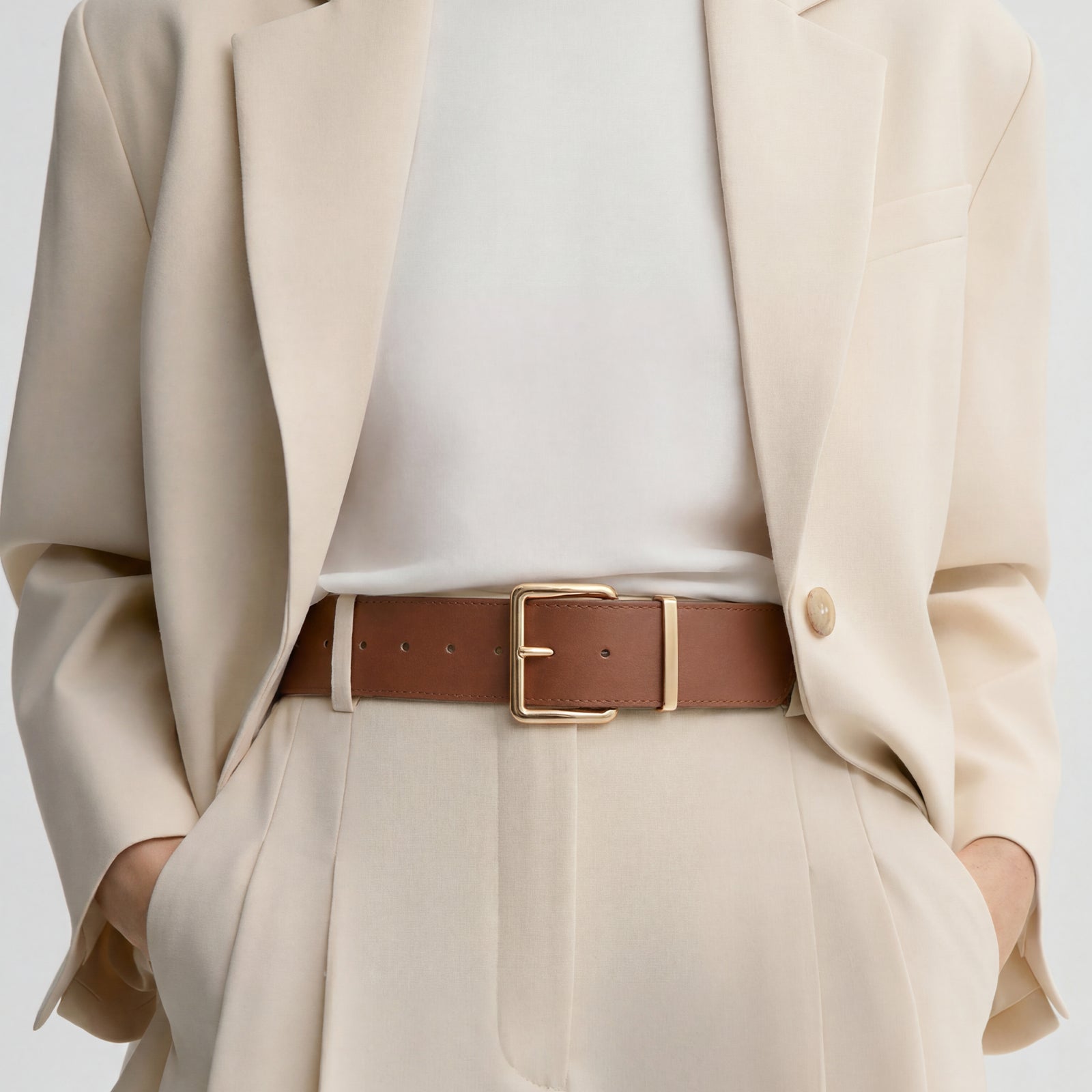
For a waist belt, measure over the dress or top where you want the strap to sit. For trousers, follow their loops. Do not pull low-rise trousers upward to match a measurement taken at your natural waist.
Write down each result with the outfit beside it. Include a tucked layer if you plan to wear one. The smaller and larger measurements define the range you need to compare with the product chart.
When browsing JASGOOD everyday belts, look for a stated fit range that includes both measurements. Then inspect the buckle and keeper arrangement; enough adjustment does not always produce the tail length you want.
Compare working range, not the end-to-end length
A pin-buckle chart may show usable holes, while a chain chart may separate the main section and extension. An elastic belt may have a specified wearing range. Follow the diagram for the selected model.
As a hypothetical example, suppose your two outfits measure 30 and 35 inches at their intended positions. A seller’s confirmed 29–36-inch wearing range includes both; a listing that only says “36 inches long” leaves the question unresolved.
This is an example of reading a range, not a recommendation to choose those exact measurements. Check how the seller defines the figures and whether the endpoints are intended for comfortable everyday use.
Check the smaller setting carefully
At the waist, more of the strap may extend beyond the buckle. Find out where that tail will finish and how it is held. A keeper that works at one setting may be awkwardly positioned at another.
For a decorative chain, consider the hanging section at both positions. More spare length can create a different drape, but it should not catch on clothing or seating.
Check the larger setting too
At the hips, confirm that the fastening still engages as intended and the tip reaches its keeper. Do not count an extra-long decorative end as usable fastening length unless the product says it is.
Try sitting in the lower-rise outfit. A belt that closes while standing may still press or pull when seated. Assess the outfit as worn rather than judging the range only on a table.
Decide whether one belt is actually convenient
A slim adjustable belt may serve two outfits well. A broad shaped belt chosen to sit neatly over a dress may not behave the same way through trouser loops, even when its circumference works.
If switching positions requires an awkward tail, extreme elastic tension or a change the maker does not permit, separate belts may be the simpler option. Versatility is useful only when both versions remain comfortable.
Keep both measurements for future shopping. Our belt measuring guide explains how wearing circumference differs from a trouser size label.