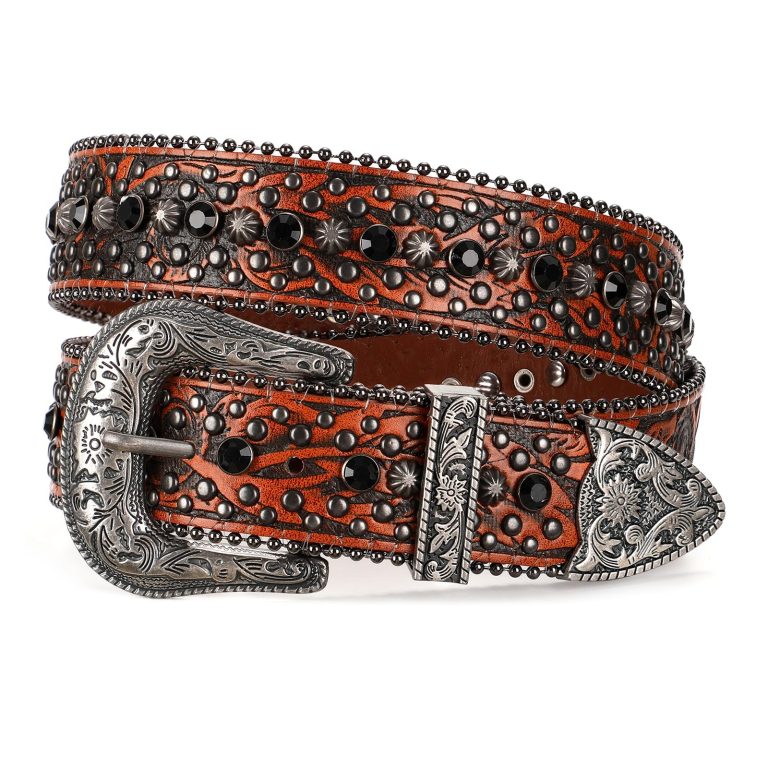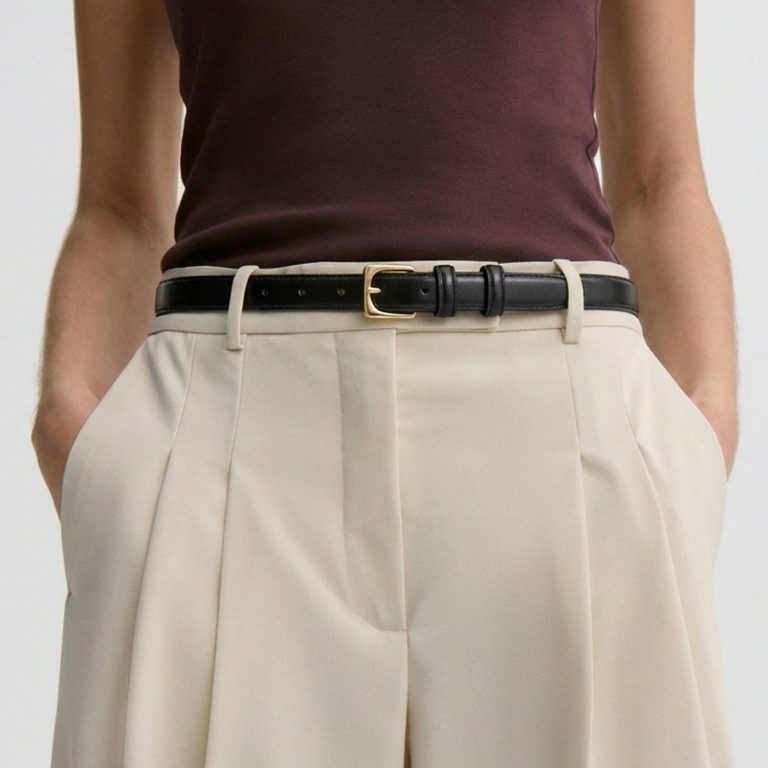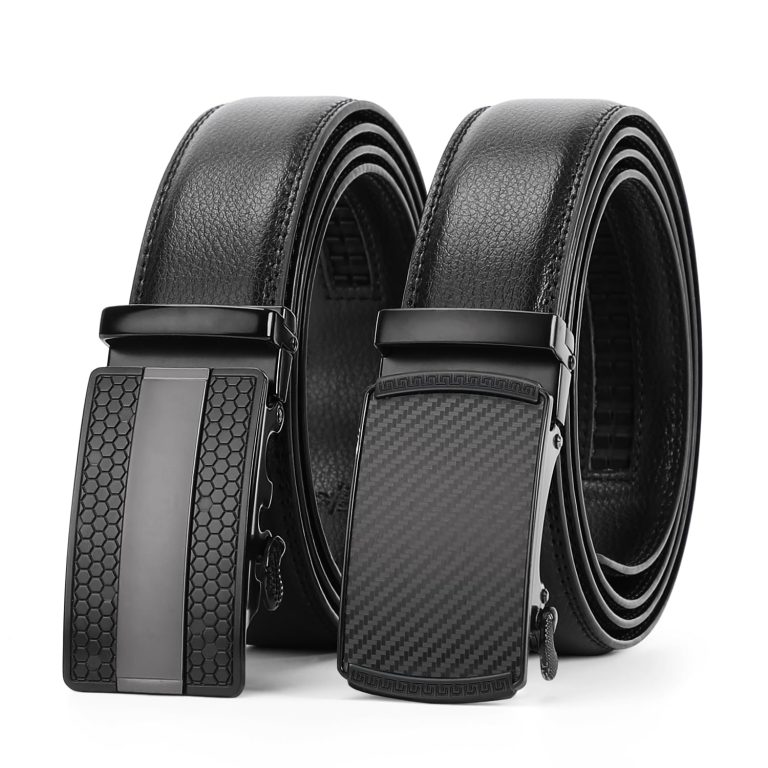
Useful belt fit photos show the whole item, a clear view of the problem and the measurement reference points. The seller needs to distinguish a size issue from a damaged fitting or unsuitable clothing. One close-up is rarely enough.
In this guide
Identify the belt before taking pictures
Find the product name, selected size and order reference. Keep the exact variant separate from the general collection name. Two belts that look similar can use different length labels or adjustment systems.
Read the seller’s size diagram so you know where a measurement should start and finish. For a pin buckle, that may involve a particular hole; for another mechanism, the required reference can be different.
If you are comparing a replacement from JASGOOD pin-buckle belts, open the exact model’s listing alongside your photos. Match the fastening and chart, not just the color or apparent strap length.
Take one overall picture
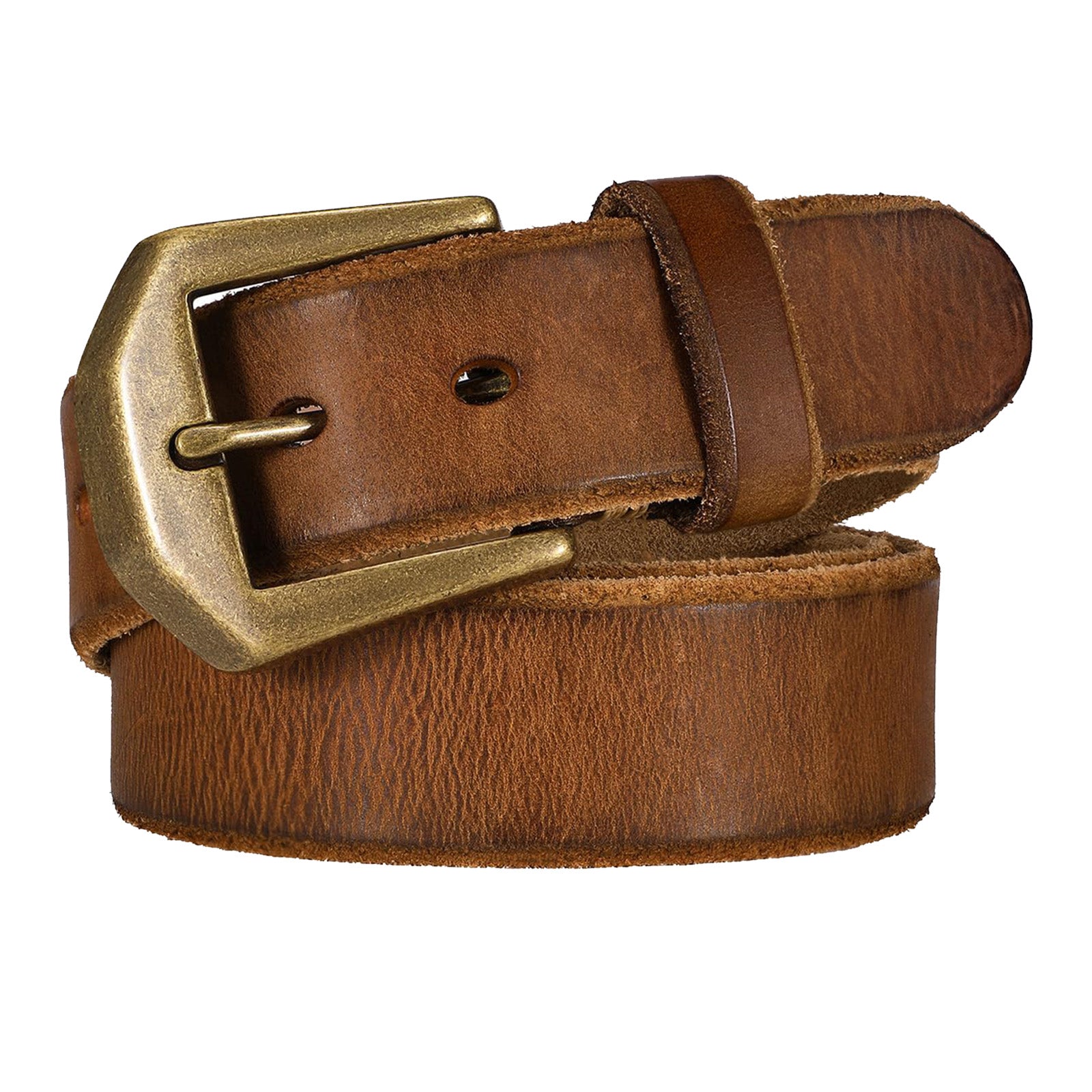
Lay the relaxed belt on a plain surface in good light. Include the buckle, keeper, strap and tip. Arrange it so the route is visible, without hiding a damaged area under a coil.
If the issue is at the buckle attachment, take a second picture of the reverse. A front frame photograph may conceal the part that connects it to the strap.
Show the specific contact point
Move closer for the hole, clasp, track, keeper or loop involved. Keep the camera steady and the relevant edges in focus. Include enough surrounding material to show where the feature sits on the belt.
For a tip that will not pass a trouser loop, photograph both openings separately and then the point of resistance. Do not force it through just to demonstrate the problem.
Make a measurement photograph readable
Place a ruler or tape flat beside the strap and show its zero point as well as the endpoint. Keep the camera above the surface rather than at a steep angle that makes the scale hard to interpret.
State what you measured: total length, usable length to a particular hole, strap width or the clothing’s loop opening. A clear number without a defined start and end can still lead to the wrong advice.
Add a short description of the movement
Explain when the problem happens and whether it also occurs with the belt off the clothing. For example: “The tip passes the keeper on the table but catches beside the front trouser loop while worn.”
A brief video can help for a movement or sound problem, if the seller accepts it. Show only gentle normal operation; repeated forcing can change the fault you are trying to document.
Send only the details needed
You do not need to include your face or unrelated personal information. Crop an outfit picture to the relevant clothed area, and remove address labels or payment details from the background.
Finish with a specific question: which size chart applies, whether the parts are compatible, or whether the condition needs repair. Keep the belt unchanged while waiting for advice so the photographs still describe its current state.