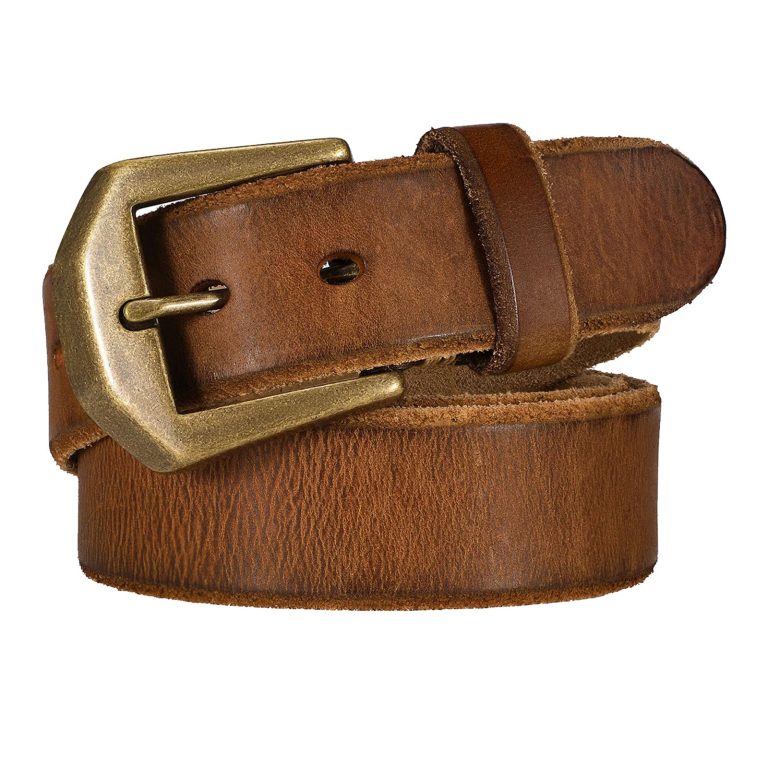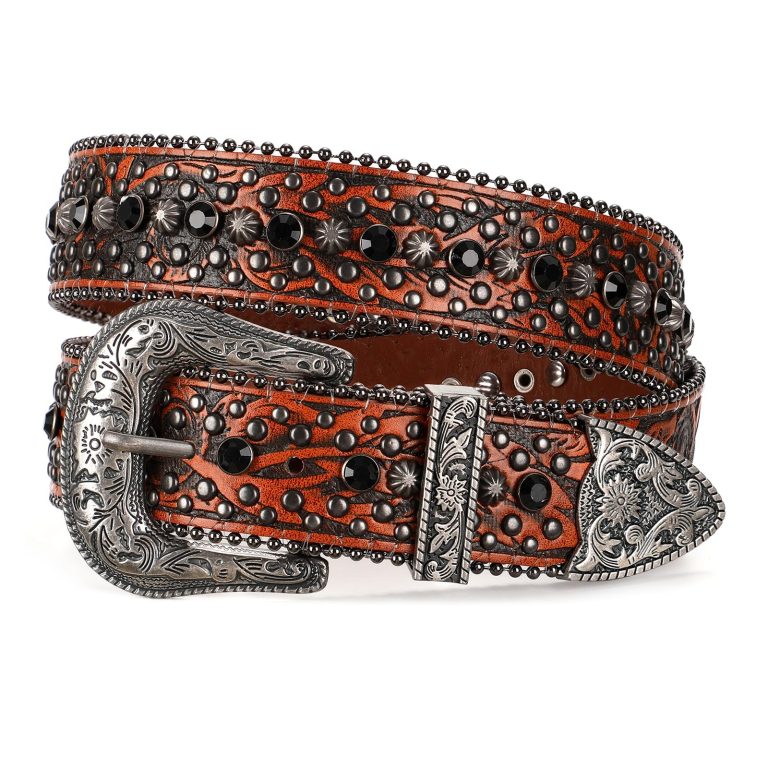
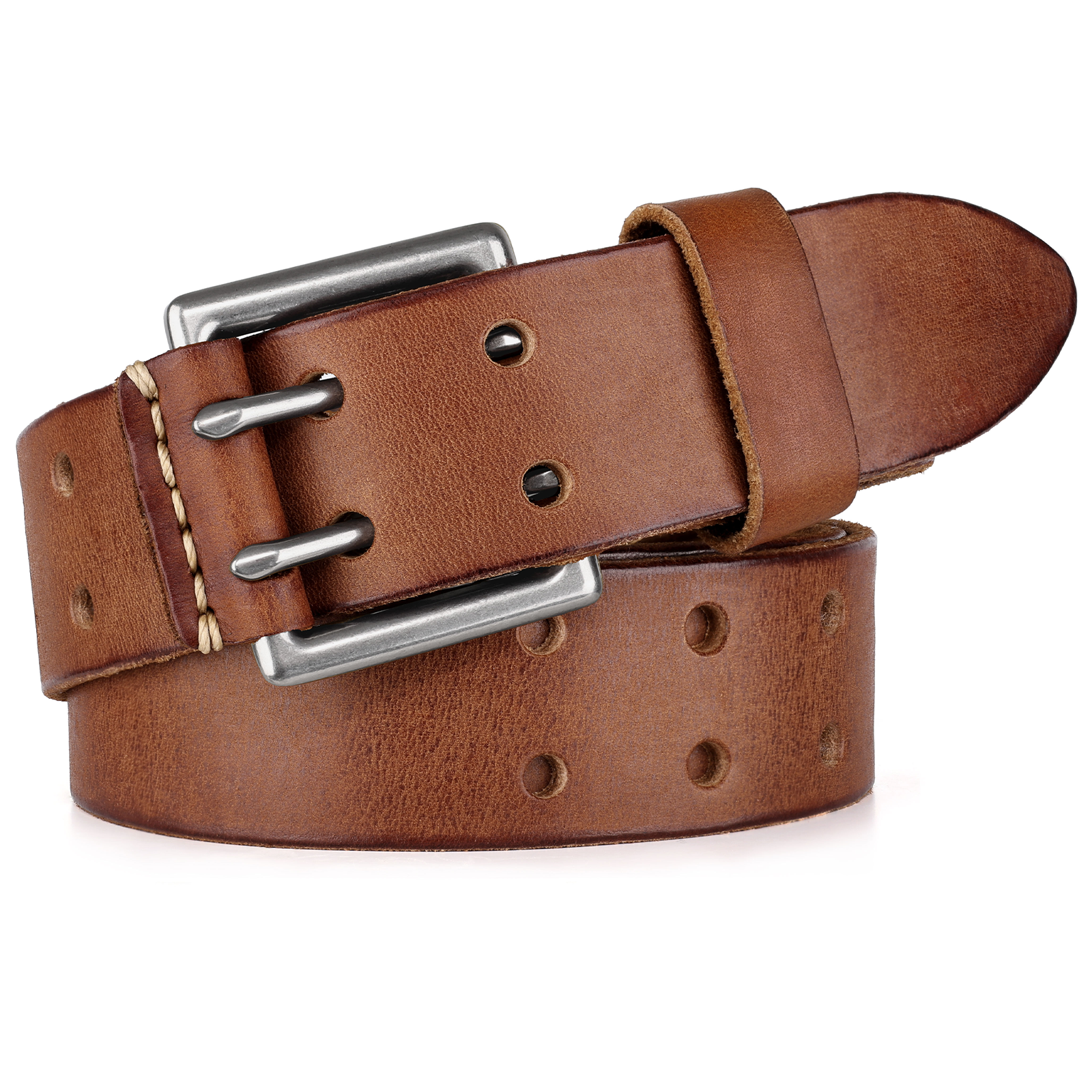
A double-prong belt buckle uses two pins with matching holes, so alignment becomes part of the fastening routine. Choose it because you like its appearance and handling. Two pins alone do not establish that a complete belt is stronger than another design.
In this guide
Look at the buckle and strap as one system
Check that the pictured strap has the openings the buckle needs. A double-pin frame should not be paired with an unrelated single-hole strap simply because their widths look similar.
Compare the overall frame height too. Two pins can sit within different buckle shapes, so count the pins and measure the hardware separately. Your trouser loops and seated position still set practical limits.
JASGOOD’s Full Grain Heavy Duty Work Leather Belt is a double-prong example with paired holes. Use its chart and photographs to check the actual arrangement, rather than treating the product name as a performance test.
Compare the daily fastening
- Single pin: guide one pin through the intended hole, then settle the frame and secure the tail.
- Two pins: keep the strap flat and guide both pins into their matching pair before settling the frame.
Try the routine with the belt relaxed if you can inspect it before purchase. The useful question is whether you can fasten and release it comfortably, including while wearing your usual layers.
If one pin sits correctly while the other is forced sideways, that is not a feature to work around. Check alignment, the correct holes and the condition of the parts.
Choose the look with your trousers
A paired-hole strap introduces a repeated detail even beyond the buckle. With plain jeans and a simple shirt, that pattern can become part of the outfit without needing a large decorative frame.
For quiet tailoring, compare how much of the perforated strap remains visible after fastening. A single-pin belt may give the simpler line you want, but neither mechanism determines the whole outfit’s formality.
Use the same fit checks for both
Measure over the intended trousers, check the usable adjustment range and make sure the tip reaches its keeper. Sit down before deciding that a frame is comfortable.
For example, if both designs fit your jeans but one is awkward to release with a tucked shirt, ease of handling is a useful deciding factor. More hardware is not automatically more convenient.
Keep the original matched parts unless the manufacturer confirms a replacement. The strap construction, attachment and condition matter alongside the number of pins.