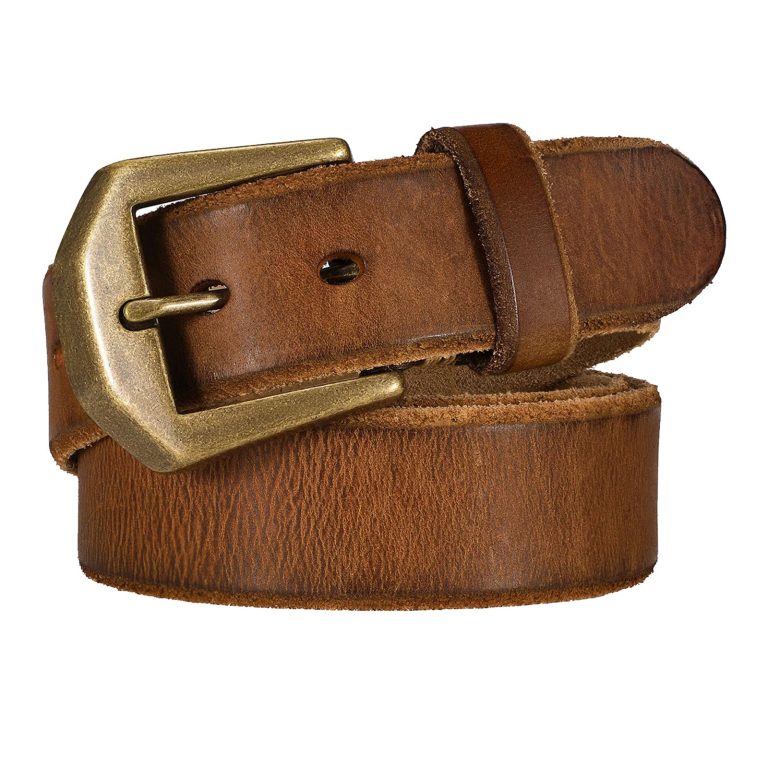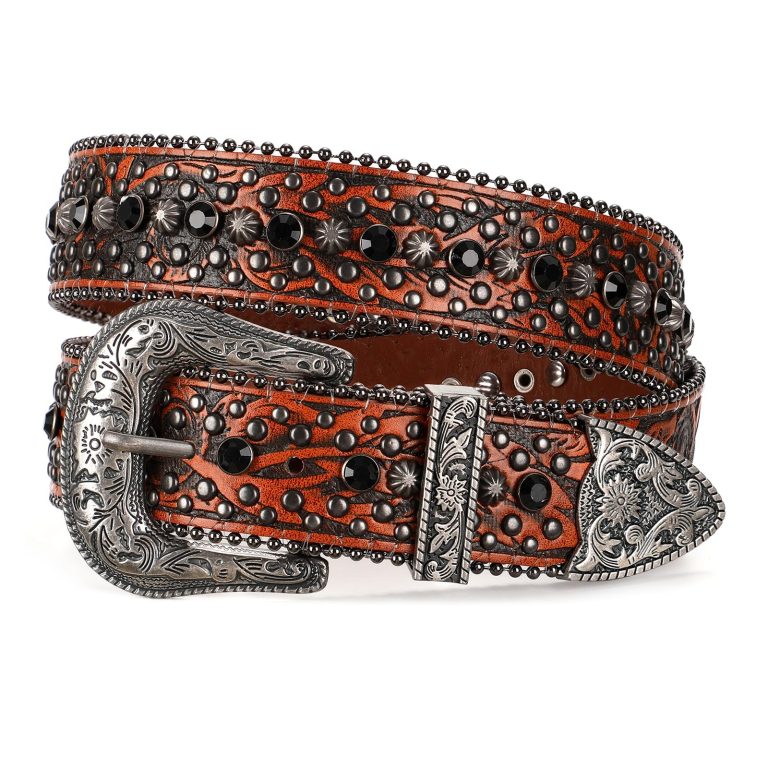
Tooled leather belt patterns can include scrolling flowers, leaves, geometric borders and repeated decorative forms.
In this guide
Describe what you can see first; a pattern does not carry one universal meaning simply because it appears on a Western-style belt.
Separate appearance from provenance
A product photo can show the design, but it cannot by itself prove how the pattern was made. Look for an explicit description of tooling, embossing or other production methods.
Likewise, a Western-inspired appearance does not establish a particular maker, community or cultural origin. For a belt with documented provenance, use the maker’s own account rather than guessing from motifs.
Explore JASGOOD Western belts as contemporary styling options. Compare the selected listing’s material, pattern description and buckle details, without treating a decorative design as evidence of a specific craft tradition.
Three pattern families to compare
Floral scrolls and leaves
Curving forms can add movement to a plain strap. Try them with a simple shirt and jeans so the pattern remains easy to read around the waistband.
If the shirt is also floral, compare the scale of the two designs. One quieter element can help prevent the waist area from feeling crowded.
Geometric repeats
Repeated shapes or borders create a more regular rhythm. They can work well with plain denim, cotton trousers or a solid-colored dress.
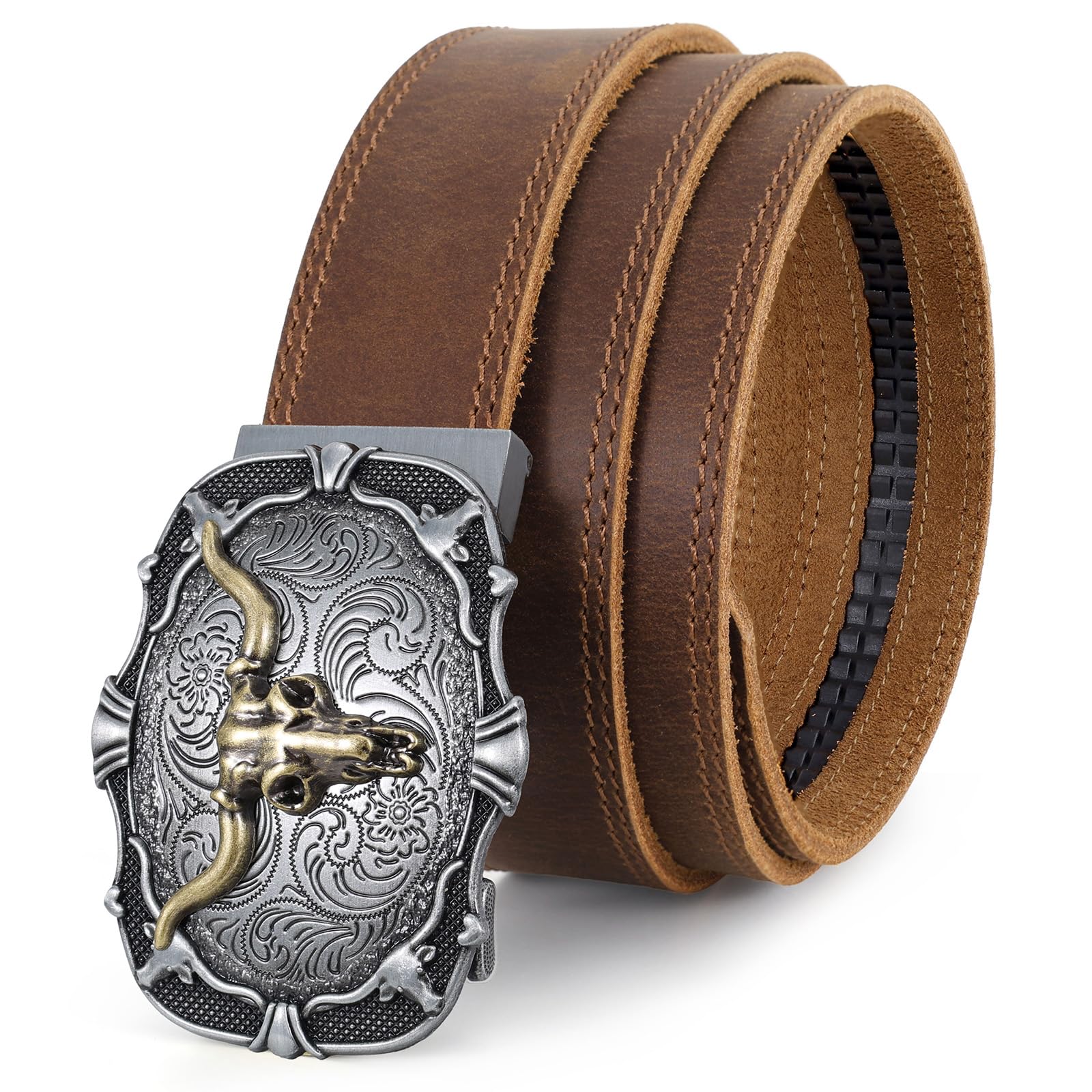
Check how the pattern meets the buckle. A large plate buckle may cover part of the design and become the stronger focal point.
A decorated edge and quieter center
A border pattern offers detail without filling the whole strap. This can be an approachable choice when you want a Western influence in everyday clothing.
Compare the belt both close up and from a normal conversational distance. Fine details may read mainly as texture from farther away.
Inspect construction alongside decoration
Check stitching, edges, fastening and the area around the holes. A striking surface pattern does not replace a suitable width, reliable closure or comfortable fit.
If the listing uses terms such as handmade or hand-tooled, look for information that explains the claim. Ask the seller when the distinction matters to your purchase.
Care for the actual finish
Follow the manufacturer’s instructions for the material and surface treatment. Avoid aggressive scrubbing inside recessed patterns or saturating the belt to remove dust.
Choose a pattern for its visual role in your outfit, and keep historical or symbolic claims tied to a documented source rather than an attractive but unsupported story.