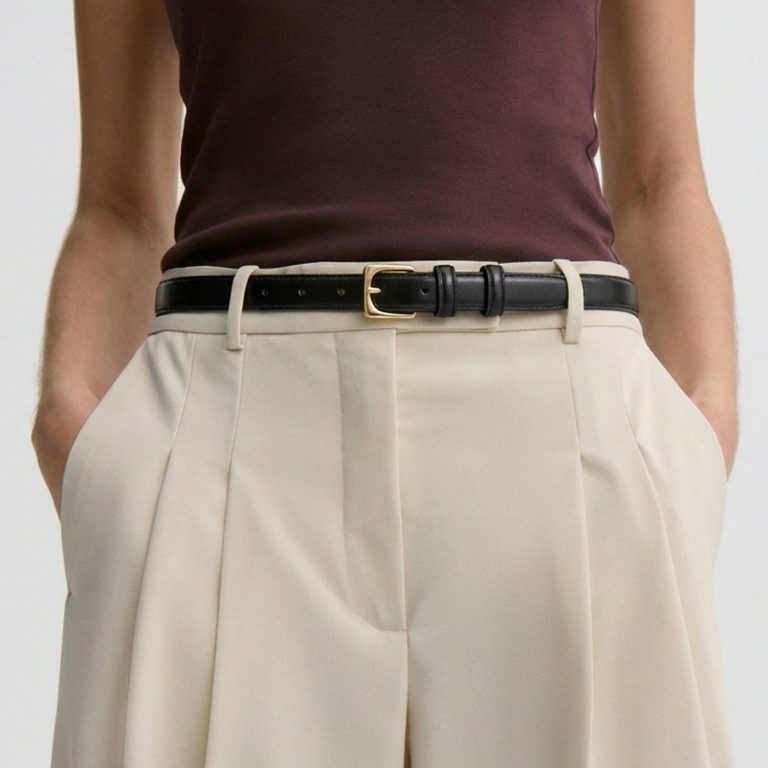
A shirt bunching above your belt usually needs a better distribution of fabric, not a tighter strap. Reset the tuck with the belt loose, spread the excess around the waistband and leave enough room to sit and reach comfortably.
In this guide
Start with the shirt and trousers
Put the trousers at their intended rise and fasten their own closure. Check that the fly and side seams sit naturally. If the waistband is already twisted, the belt can hold that twist in place.
Unbunch the shirt below the waistband. Pull it down gently, then ease a little fabric back out by moving normally. A tuck stretched tight while standing can pull out or feel restrictive as soon as you sit.
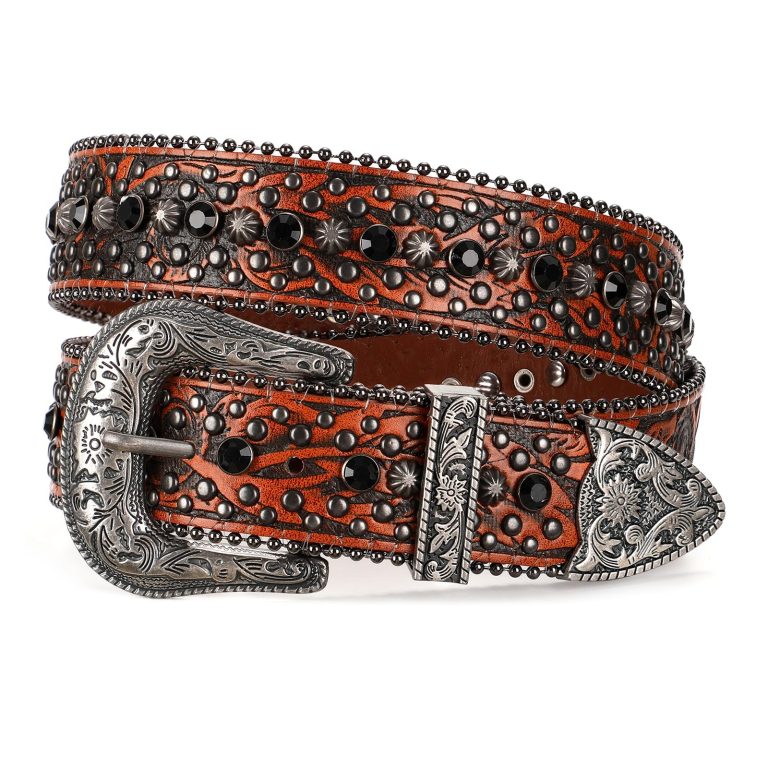
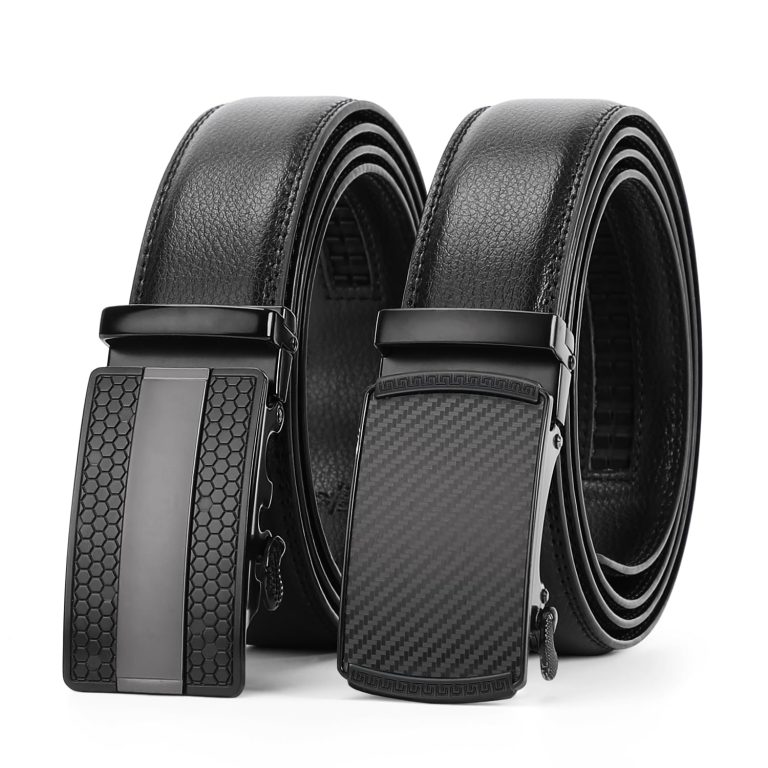
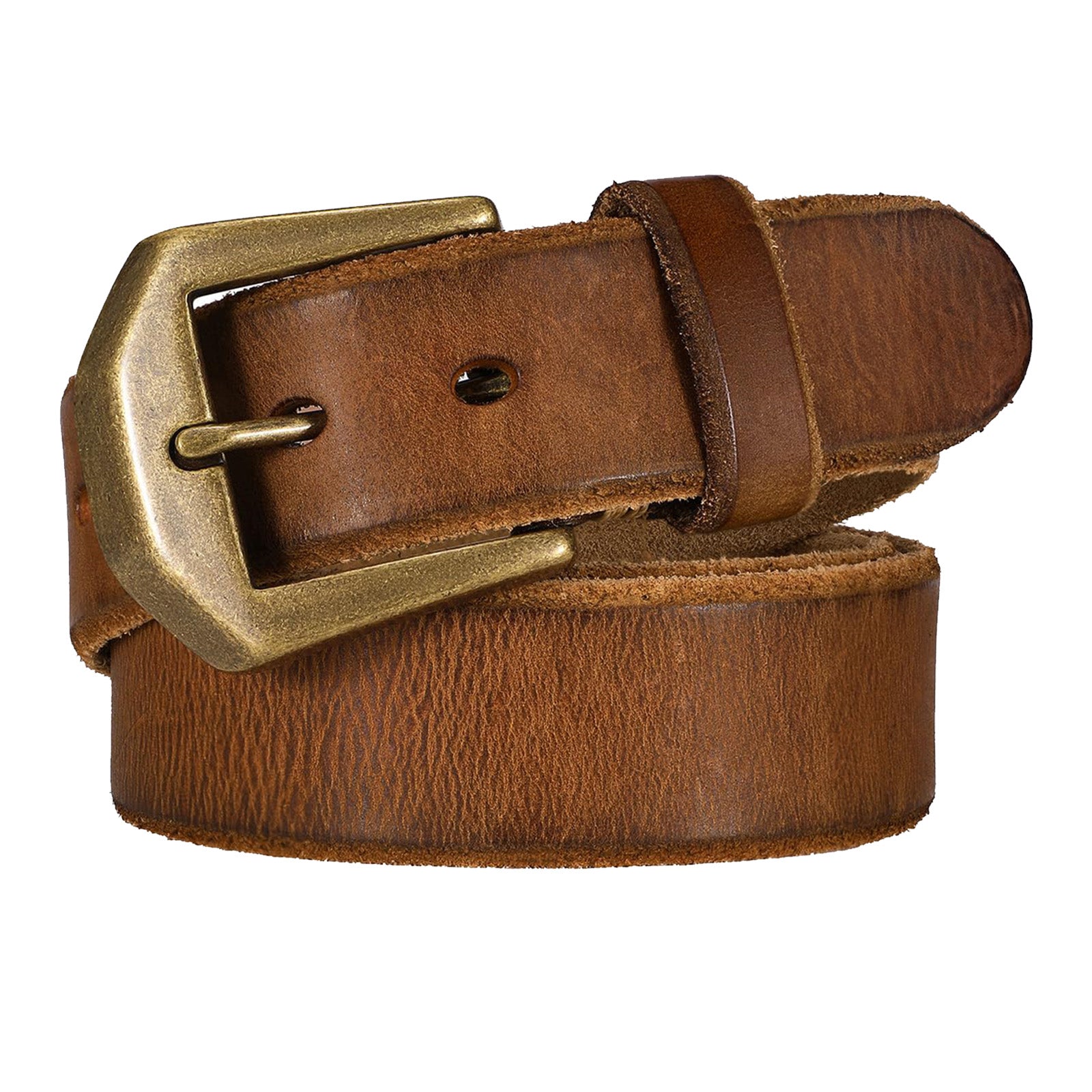
Once the fabric is settled, a simple frame from JASGOOD pin-buckle belts can provide a quiet finish. Choose a width that passes easily through the loops; a larger buckle will not solve a bulky tuck.
Move volume away from one large fold
Look at the front, sides and back in a mirror. If most of the excess sits beside the fly, loosen the belt and distribute it toward the sides instead of pressing one thick fold under the buckle.
A small fold at each side can help with a roomy woven shirt. Keep those folds shallow and even. If they become thick ridges, the shirt may simply contain more fabric than those trousers comfortably accommodate.
Button plackets, pockets and side seams should still hang naturally. Do not keep pulling one side downward to make the front look flat if it twists the rest of the shirt.
Fasten the belt after arranging the tuck
Thread the strap flat through every loop. Tighten only enough for the intended support, then look again at the fabric above and below the belt. Deep waistband gathers suggest that more tension is not helping.
Sit, stand and reach forward as you would at work. Reset any fold that forms beside the buckle. A little movement in a tucked shirt is normal; an outfit should not need to stay motionless to look tidy.
Match the tuck to the shirt
For a long, roomy cotton shirt, an even full tuck may give the cleanest office line. For a shorter casual shirt, a small front tuck can show the belt while leaving the sides relaxed, if the setting suits that look.
A thick sweater is a different case. Packing its full hem into a narrow waistband can create more bulk than changing the belt will remove. Try wearing it outside the trousers or choose an outfit with more room for the layer.
Recognize a clothing-fit limit
If the same fold returns immediately despite a relaxed belt and an even tuck, compare another shirt with those trousers. This helps separate excess shirt volume from an overly roomy or tight trouser waistband.
For instance, a trim shirt may lie well under the same belt that looks bulky over an oversized blouse. The useful change is then the shirt-and-trouser combination, rather than buying a stronger belt.
Finish by checking the complete outfit from a few steps away. Aim for a comfortable, intentional line, not a perfectly flat close-up that disappears as soon as you move.